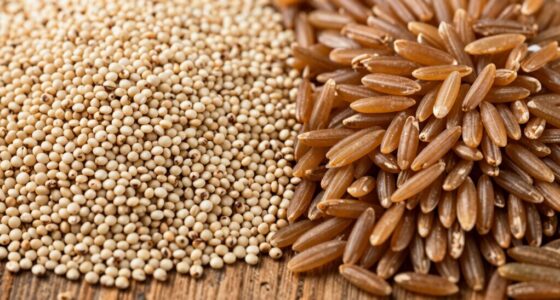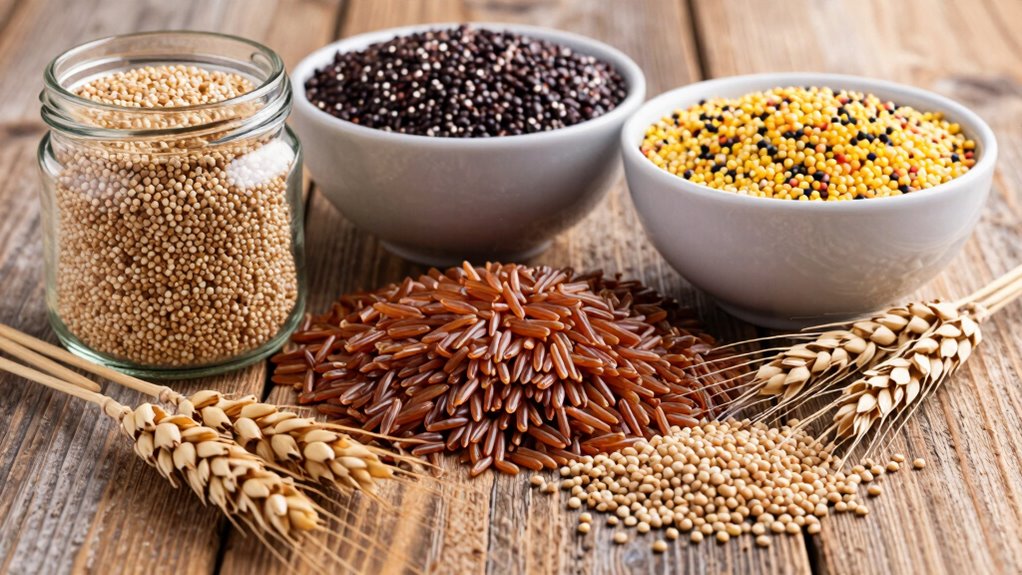
If you’re starting to incorporate whole grains into your diet, focus on familiar options like oats, brown rice, quinoa, barley, and whole wheat. Look for clear labels and the whole grain stamp to guarantee authenticity. Use different grains in your meals—try oats in smoothies or swap white rice for brown. Incorporating these simple staples can boost your health and make healthy eating easier. Keep exploring to learn how to select, cook, and enjoy them even more.

Get health and wellness essentials delivered free — and shop member deals
- Fast, free delivery on millions of items
- Access to Prime Big Deal Days deals on October 6–7
- Prime Video, Amazon Music and more included
Key Takeaways
- Include common whole grains like oats, brown rice, quinoa, barley, and whole wheat for diverse, nutrient-rich options.
- Always check ingredient labels for “whole” before grain names and look for official whole grain stamps.
- Recognize darker, richer-colored grains as more authentic, minimally processed options.
- Incorporate whole grains gradually to support digestion and maximize health benefits.
- Prepare grains in bulk, store properly, and substitute refined grains with whole grain alternatives for easy integration.
As an affiliate, we earn on qualifying purchases.
What Are Whole Grains and Why Do They Matter?
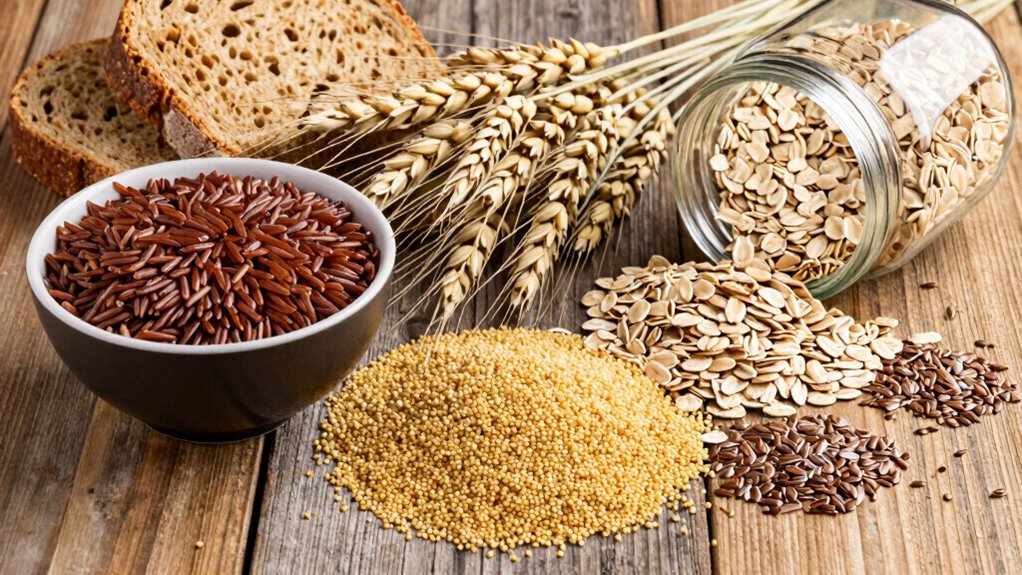
Have you ever wondered what makes whole grains different from refined grains? The main difference lies in grain processing. Whole grains include all parts of the grain kernel—the bran, germ, and endosperm—retaining their natural nutrients. Refined grains, on the other hand, have been processed to remove the bran and germ, stripping away fiber, vitamins, and minerals. Dietary guidelines recommend choosing whole grains for better health, as they support digestion, heart health, and weight management. Eating whole grains can also help reduce the risk of chronic diseases like diabetes and certain cancers. Grain processing plays a crucial role in preserving the nutritional value of grains, helping you make smarter choices that align with these guidelines and boost your overall wellness. Additionally, selecting minimally processed whole grains supports sustainable living by reducing food waste and energy consumption during production. Understanding the nutritional benefits of whole grains can further motivate healthier eating habits.
As an affiliate, we earn on qualifying purchases.
How to Spot Whole Grains When Shopping
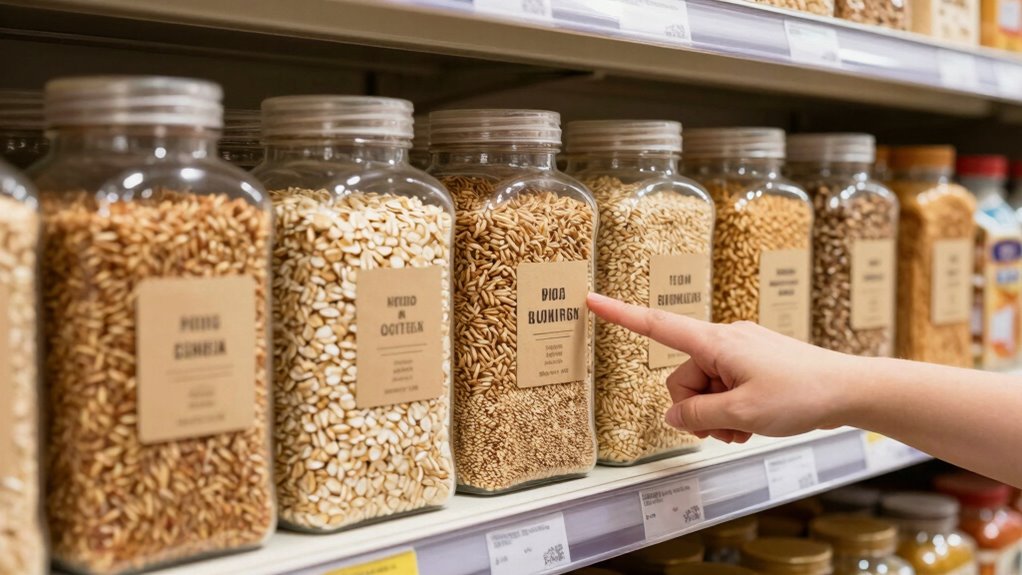
When shopping for whole grains, you should check the ingredient list for the word “whole” before anything else. Look for official whole grain stamps on packaging to quickly identify authentic options. Also, recognize that whole grains often have a darker, richer color compared to refined grains. To ensure you’re selecting genuine whole grains, it’s helpful to familiarize yourself with common whole grain varieties and their typical packaging. Additionally, understanding recovery and wellness strategies can support your overall healthy eating habits. Being aware of labeling regulations can also help you better understand what qualifies as a true whole grain product. Knowing how market trends influence product labeling can further aid in making informed choices, and staying updated on industry standards can help you identify credible certifications.
Check Ingredient List Carefully
Ever wonder how to quickly identify whole grain products at the store? The key is checking the ingredient list for label accuracy and ingredient transparency. Look beyond the front packaging—labels can be misleading. Make sure whole grains are listed as one of the first ingredients, meaning they’re a primary component. Be wary of products that list “wheat flour” or “enriched flour,” as these aren’t whole grains. Transparency helps you make smarter choices, so read carefully and avoid vague terms like “multigrain” or “made with whole grains” unless the ingredients confirm it. By paying attention to the ingredient list, you can confidently select products that truly contain whole grains, supporting your goal of healthier eating habits. Understanding label terminology is essential for making informed decisions when shopping. Additionally, familiarizing yourself with kitchen labels can further improve your ability to identify genuine whole grain products.
Look for Whole Grain Stamps
Looking for a quick and reliable way to identify whole grains on packaging? The Whole Grain Stamp is your best tool. It’s a clear indicator that the product contains a significant amount of whole grains, making shopping easier. Be aware that not all products with whole grain labels are genuinely whole grain; some may only contain small amounts or use misleading marketing. This can contribute to diet misconceptions, where you think you’re eating healthily but aren’t. By looking for the Whole Grain Stamp, you cut through the confusion and get straightforward confirmation. Remember, grain labeling can be tricky—so trust the stamp as your shortcut to better choices. Incorporating whole grain products into your diet can also support your overall health goals. It simplifies shopping and helps you stay on track with your healthy eating goals.
Recognize Whole Grain Colors
While the Whole Grain Stamp helps you identify genuine whole grain products quickly, paying attention to the colors of grains can also guide your choices. Grain color, a key aspect of visual identification, varies from light to dark, indicating different types and processing levels. Typically, whole grains will have a more natural, earthy tone, unlike refined grains which are often paler. Using this visual cue, you can spot whole grains at a glance.
| Grain Color | Visual Identification |
|---|---|
| Darker hues | Less processed, more fiber |
| Lighter shades | Possibly refined or bleached |
As an affiliate, we earn on qualifying purchases.
Top Whole Grains Beginners Should Know
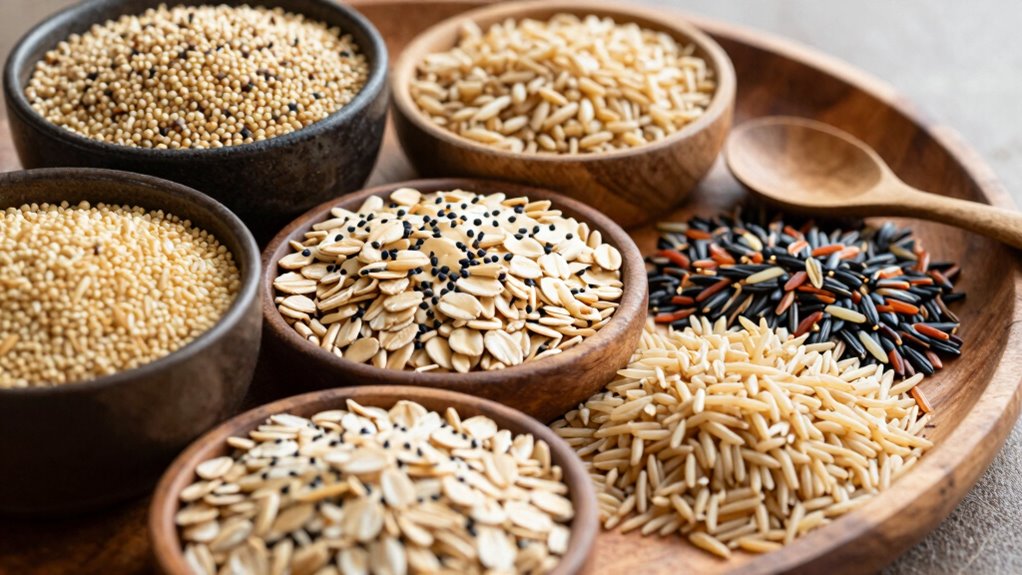
You’ll want to know the common whole grains like oats, brown rice, and quinoa, which are easy to find and versatile. Understanding their nutritional benefits helps you make smarter choices to boost your health. Plus, incorporating them into your meals is simple with quick tips and tasty ideas. Additionally, choosing sustainable grains supports environmentally friendly farming practices and reduces your ecological footprint. Being aware of grain processing methods can also help you select less refined options that retain more nutrients. Exploring industry insights can provide you with valuable information on the most efficient and effective equipment for preparing and cooking these grains. For example, understanding processing techniques can help you identify grains that are minimally processed for maximum health benefits. Being informed about processing methods allows you to make better choices in selecting grains that preserve their nutritional integrity.
Common Whole Grain Types
Knowing the most common whole grains can make it easier to incorporate healthier options into your diet. Many people have whole grain myths, like thinking they’re all the same or hard to cook. In reality, grains like oats, brown rice, quinoa, barley, and whole wheat are versatile and accessible. Grain texture comparisons reveal that oats are soft and creamy, perfect for breakfast, while barley offers a chewy bite, great for soups. Quinoa is light and fluffy, making it a good rice substitute, and whole wheat provides a hearty, nutty flavor. Familiarizing yourself with these grain types helps you choose the right one for your meal, making healthy eating simpler and more enjoyable. Understanding grain varieties can further enhance your ability to select and prepare the best options for your dietary needs. Incorporating knowledge about grain processing methods can also help you choose the most nutritious options available.
Nutritional Benefits Overview
Understanding the nutritional benefits of different whole grains can help you make smarter choices when building a healthier diet. Whole grains are minimally processed, which means they retain more nutrients compared to refined grains. Grain processing methods often remove parts of the grain, like the bran and germ, reducing nutrient preservation. By choosing minimally processed whole grains, you get a higher intake of fiber, vitamins, minerals, and antioxidants. For example, oats and brown rice offer fiber for digestion, while quinoa provides complete protein and essential amino acids. Knowing these benefits allows you to select grains that support your energy levels, digestion, and overall health. Prioritizing nutrient-rich, less processed options guarantees you maximize the health benefits of each serving.
Easy Incorporation Tips
Getting started with whole grains is easier than you might think. The key is proper grain storage—keep your grains in airtight containers in a cool, dark place to maintain freshness and prevent pests. This makes meal prep simpler, allowing you to quickly grab what you need without hassle. When incorporating grains into your meals, start by substituting white rice or pasta with options like quinoa, barley, or bulgur. Prepare larger batches ahead of time and store leftovers for easy use throughout the week. Cooking grains in advance saves time and encourages consistent healthy choices. Incorporating whole grains becomes second nature when you have a plan for storage and meal prep. Soon, you’ll enjoy the benefits of healthier eating with minimal effort. proper grain storage is an essential step that helps preserve the quality and nutritional value of your grains. Additionally, understanding the types of whole grains can help diversify your meals and maximize health benefits.
As an affiliate, we earn on qualifying purchases.
How to Cook Whole Grains Perfectly
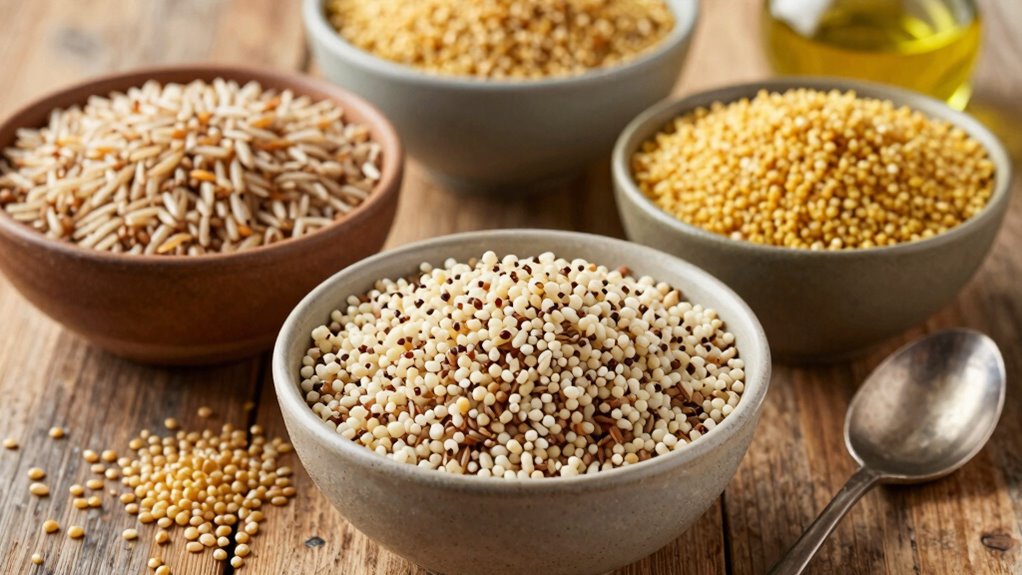
Cooking whole grains perfectly requires a bit of attention to detail, but once you get the hang of it, it becomes a simple part of your routine. Start by rinsing the grains to remove any debris and improve texture. Use the right cooking techniques: generally, combine grains with water or broth in a ratio specified on the package, then bring it to a boil. Reduce the heat to low, cover, and simmer until tender—timing varies by grain type. To enhance flavor, consider adding a pinch of salt or aromatics like garlic or herbs during cooking. Avoid overcooking, which can make grains mushy. Once cooked, let the grains sit off heat for a few minutes to absorb remaining moisture and improve texture. Properly cooked grains become tender and flavorful, ready for any dish. Incorporating cooking techniques and understanding grain types can help ensure consistent results every time. Paying attention to water-to-grain ratios can also significantly impact texture and quality.
Easy Ways to Add Whole Grains to Your Meals
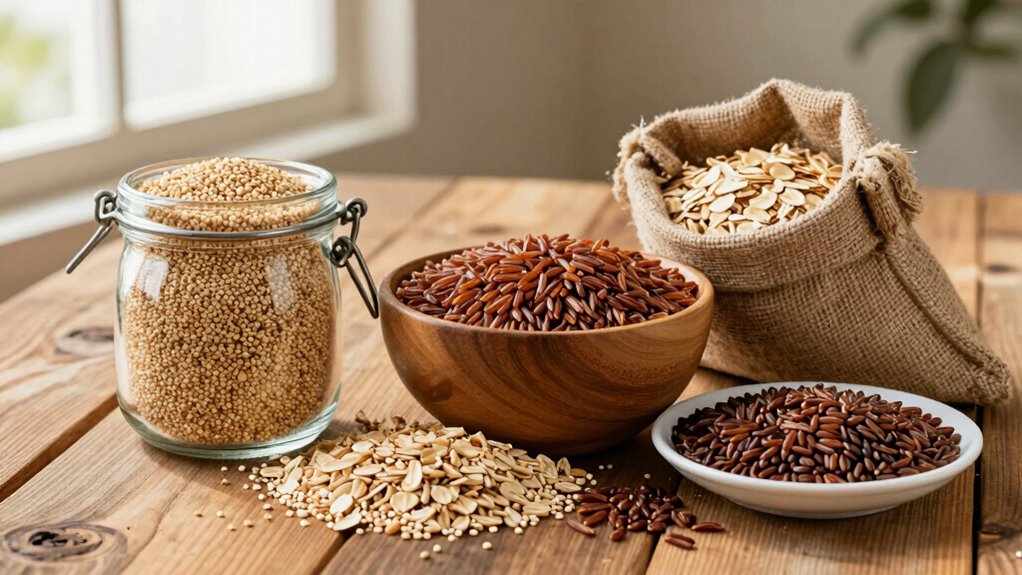
Adding whole grains to your meals is easier than you might think, and small adjustments can make a big difference in your diet. You can incorporate them effortlessly with simple meal prep ideas and flavor pairing suggestions. For example, swap white rice for brown rice or quinoa in your stir-fries and salads. Mix oats into smoothies or yogurt for added texture and nutrients. Try whole grain bread or wraps for sandwiches. Experiment with herbs, spices, or citrus to enhance flavor and make whole grains more appealing. These small changes boost your fiber intake without complicated cooking. Incorporating metaphysical topics can also make preparing whole grains more convenient and enjoyable. Keep it simple and creative to enjoy the health benefits of whole grains every day.
Common Mistakes When Switching to Whole Grains
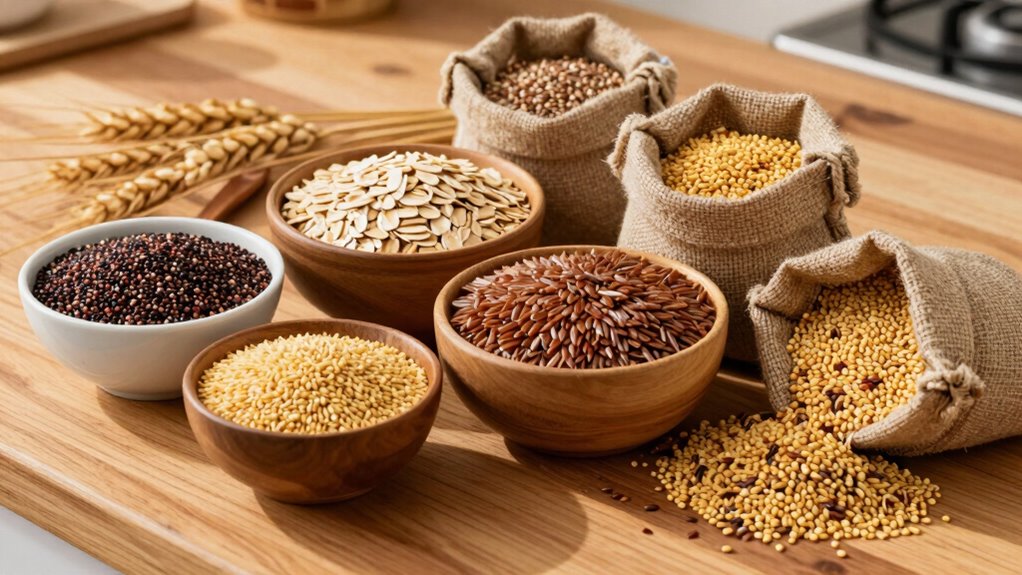
One common mistake people make when switching to whole grains is not gradually introducing them into their diet. Jumping in too quickly can lead to digestive discomfort and discourage continuation. Additionally, be cautious of misleading labels; some products labeled “multigrain” or “wheat” may not be truly whole grain. Always check ingredient lists to confirm. Another mistake is assuming all whole grains retain all nutrients. Overprocessing or improper storage can cause nutrient loss, reducing their health benefits. Relying on misleading labels without reading ingredients can leave you consuming products that aren’t genuinely whole grain. To avoid these pitfalls, introduce whole grains slowly, verify labels carefully, and opt for minimally processed options to maximize nutrient retention and ease your progression.
How to Choose the Right Whole Grain Products
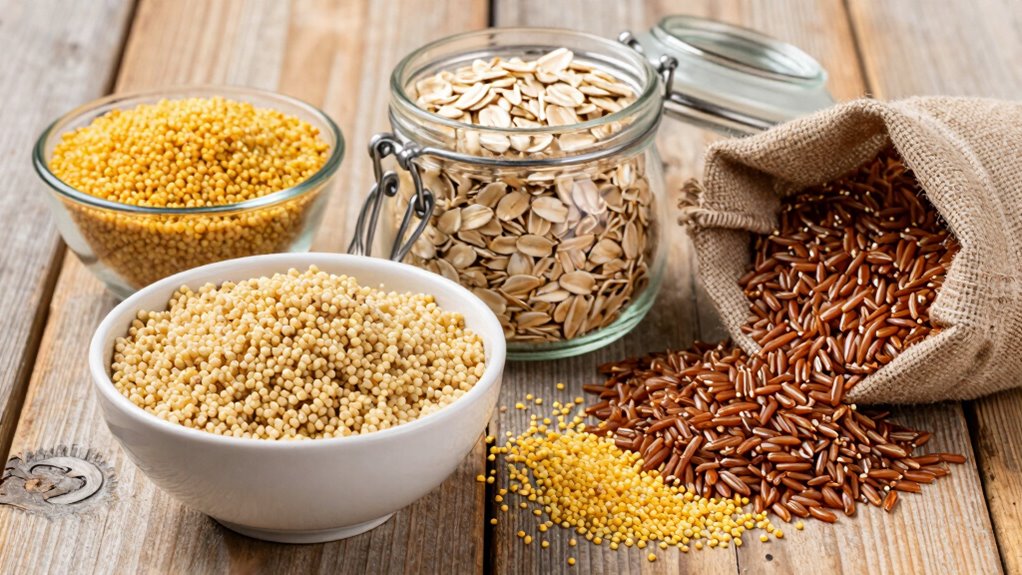
Choosing the right whole grain products starts with reading labels carefully. Look for products labeled “100% whole grain” or “whole wheat” to guarantee you’re getting genuine whole grains. Check the ingredient list—whole grains should be the first ingredient. Pay attention to grain storage; store grains in airtight containers in a cool, dark place to maintain freshness and prevent spoilage. Also, consider the product shelf life—opt for packages with a longer shelf life to ensure freshness over time. When shopping, watch out for added sugars or preservatives that can reduce the health benefits. By choosing wisely, you’ll enjoy fresher grains that retain nutritional value longer, making your healthy eating journey easier and more effective.
Benefits of Making Whole Grains a Regular Part of Your Diet
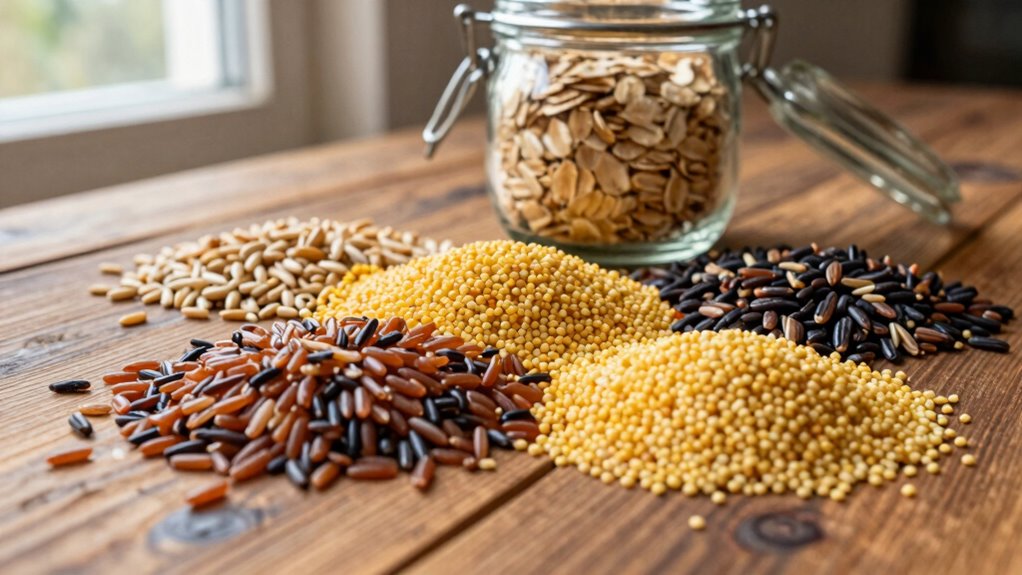
Making whole grains a regular part of your diet offers numerous health benefits that can improve your overall well-being. Incorporating whole grains aligns with dietary guidelines, which emphasize fiber, vitamins, and minerals essential for good health. Eating whole grains regularly can help regulate digestion, control blood sugar levels, and support weight management. Proper grain storage guarantees your grains stay fresh and retain nutrients, making it easier to include them consistently. When you choose whole grains over refined options, you reduce your risk of chronic conditions like heart disease and type 2 diabetes. Making this switch creates healthier habits and boosts your energy levels. By prioritizing whole grains, you invest in a balanced diet that benefits your long-term health and vitality.
Frequently Asked Questions
Are All Whole Grains Gluten-Free?
Not all whole grains are gluten-free. Some, like wheat, barley, and rye, contain gluten and can trigger sensitivities or celiac disease. If you’re looking for gluten-free options, always check labels and opt for grains like rice, quinoa, millet, or buckwheat. Be aware of cross-contamination concerns in processing facilities, which can introduce gluten into otherwise safe grains. Always choose certified gluten-free products to guarantee safety.
Can I Eat Whole Grains if I Have Digestive Issues?
If you have digestive sensitivity or grain intolerance, eating whole grains might cause discomfort. You should start slowly, choosing easily digestible options like oats or rice, and monitor how your body reacts. Consulting a healthcare professional can help identify which grains are suitable for you. Remember, everyone’s different, so listening to your body and adjusting your intake accordingly guarantees you enjoy the benefits without upsetting your digestion.
How Long Do Cooked Whole Grains Stay Fresh?
Cooked whole grains stay fresh for about 4 to 6 days when stored properly. Remarkably, properly stored grains can last twice as long as improperly stored ones. Use airtight containers and keep them in the fridge to extend their shelf life. Always check for signs of spoilage, like off smells or mold, before eating. Following storage tips ensures your grains stay delicious and safe for up to a week.
Are There Any Allergenic Whole Grains I Should Avoid?
If you have gluten sensitivity or grain allergies, you should avoid wheat, barley, and rye, as they contain gluten and may trigger reactions. Also, some people are allergic to oats or corn. Always read labels carefully and opt for gluten-free grains like quinoa, rice, or millet if you have sensitivities. Consult with a healthcare provider for personalized advice to guarantee you choose safe, nutritious options.
What Are Some Quick Snack Ideas With Whole Grains?
You can enjoy quick whole grain recipes like whole grain crackers with hummus, popcorn, or whole wheat toast topped with avocado or nut butter. Grain-based snack ideas also include granola bars, rice cakes, or trail mix with oats and whole grains. These options are easy to prepare and perfect for on-the-go snacking, helping you incorporate more whole grains effortlessly into your day.
Conclusion
Switching to whole grains isn’t just about healthier eating; it’s about embracing a vibrant, nourishing lifestyle. While refined grains may tempt with convenience, whole grains offer richness, texture, and lasting energy. Think of it as trading a fleeting spark for a steady flame—your body’s fuel for vitality and wellness. So, step beyond the white aisle, and discover the wholesome power waiting in your grains. Your health deserves nothing less than the best.
Fall Picks
fall essentials
As an affiliate, we earn on qualifying purchases.