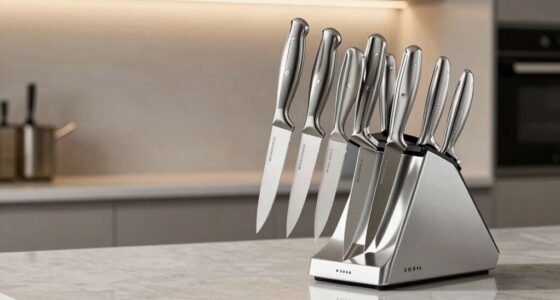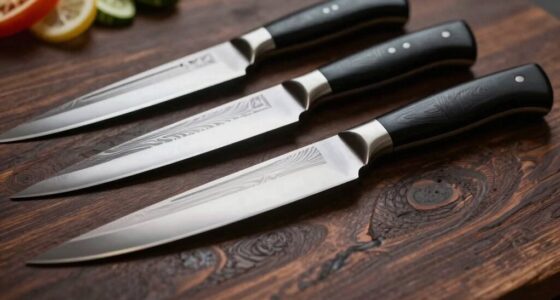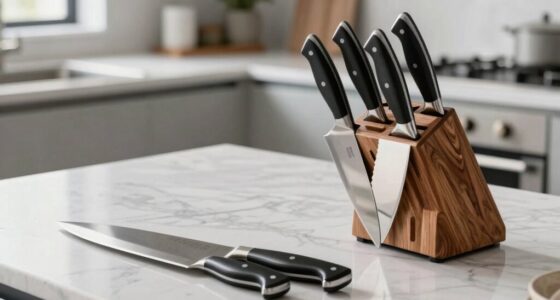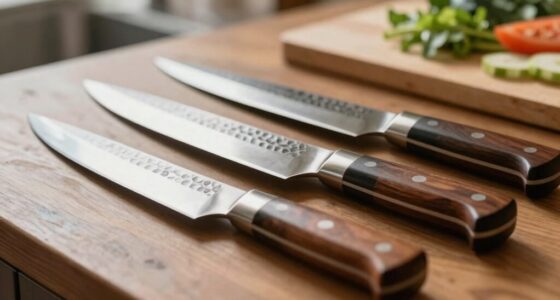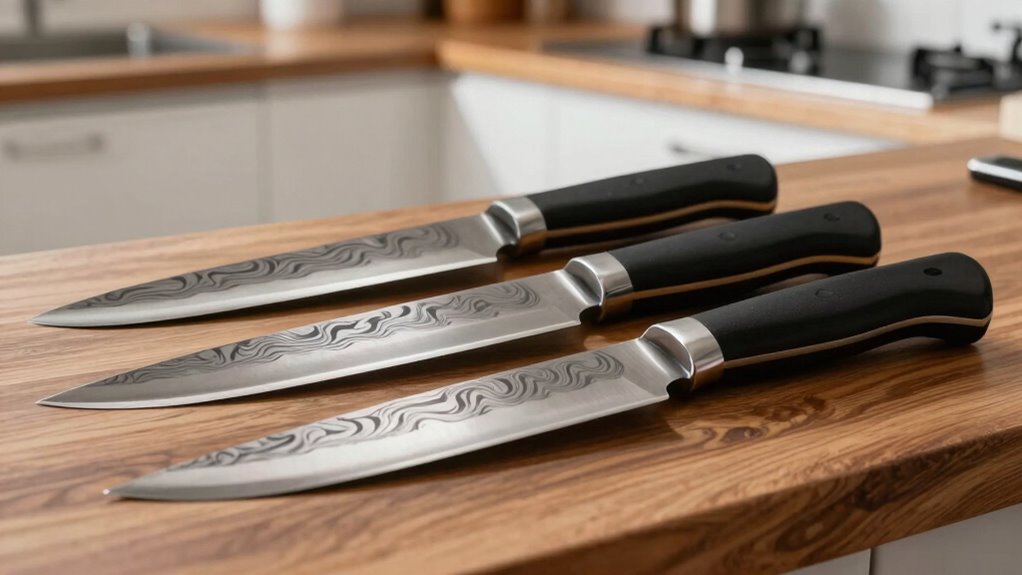

To choose a Japanese knife set without overspending, focus on essential blades like a gyuto, nakiri, and petty knife to match your cooking needs. Opt for high-carbon stainless steel for durability and easy maintenance, but avoid overly fancy handles if comfort is your priority. Consider how the weight and handle design fit your hand to prevent fatigue. If you want to learn more tips on picking the perfect set, keep exploring these key factors for smart decision-making.

Get health and wellness essentials delivered free — and shop member deals
- Fast, free delivery on millions of items
- Access to Prime Big Deal Days deals on October 6–7
- Prime Video, Amazon Music and more included
Key Takeaways
- Focus on essential knives like gyuto, nakiri, and petty to avoid unnecessary tools and save money.
- Choose high-quality, durable steel that offers good edge retention and corrosion resistance for long-term value.
- Prioritize ergonomic handle design and balanced weight for comfort and safety during extended use.
- Consider maintenance needs; select steels that match your care routine to reduce long-term upkeep costs.
- Buy a well-reviewed, reputable set within your budget, avoiding overly cheap or overly expensive options.
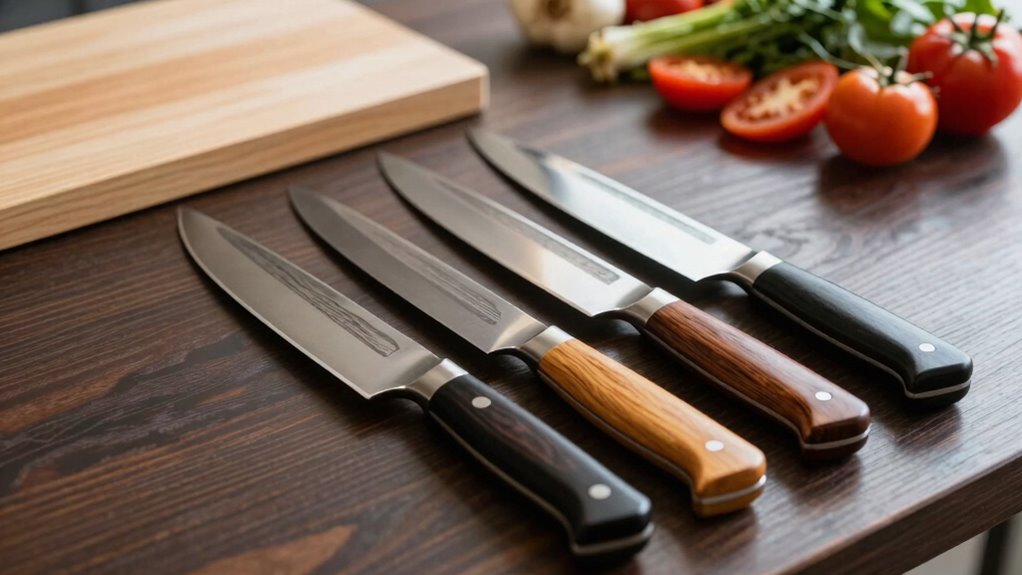
Choosing the right Japanese knife set can considerably elevate your cooking experience. When you’re selecting a set, it’s essential to consider not just price but how well the knives fit your needs and how you’ll maintain them over time. Knife maintenance plays a crucial role in preserving the sharpness and longevity of your investment, so understanding the care required for different types of knives is key. Proper knife maintenance, including regular honing and careful sharpening, will ensure your blades stay effective and safe to use. You’ll want to choose a set that aligns with your willingness to care for them, so you don’t end up with knives that quickly become dull or damaged.
Knife material selection is another critical factor in your decision. Japanese knives are typically crafted from various types of steel, each offering different benefits. High-carbon stainless steel, for example, provides excellent edge retention and easy maintenance, making it a popular choice for home cooks. On the other hand, softer steels may be more affordable but require more frequent sharpening. Keep in mind that the material impacts not only how sharp the knives stay but also how resistant they are to rust and staining. If you prefer knives that are low-maintenance and durable, focusing on high-quality, corrosion-resistant steels will save you time and effort in the long run.
As you compare different sets, consider the types of knives included and how they suit your cooking style. A good Japanese set often features a variety of blades like a gyuto (chef’s knife), nakiri (vegetable knife), and petty (paring knife), each designed for specific tasks. Matching these tools to your culinary habits ensures you get the most value from your purchase without overspending. Remember, you don’t need to buy the most expensive set; instead, look for a balanced combination of quality, usability, and price. When evaluating these options, pay attention to how the handle design and weight influence your comfort during prolonged use, as ergonomic factors are crucial in choosing the right set. Additionally, considering blade composition can help you determine which knives will best suit your maintenance preferences.
Lastly, pay attention to the handle design and weight, as these factors influence comfort and control. A well-balanced knife that feels comfortable in your hand makes cooking more enjoyable and safer. When you consider knife maintenance, material selection, and ergonomic design, you’re better equipped to choose a Japanese knife set that meets your needs without breaking the bank. Additionally, understanding the different steel types used in Japanese knives can help you select a set aligned with your maintenance preferences and durability expectations. Choosing a suitable steel type that matches your lifestyle will also ensure your investment remains effective over time. With the right set, proper care, and a bit of practice, you’ll enjoy precision cuts and improved cooking results every time.
Japanese knife set gyuto nakiri petty
As an affiliate, we earn on qualifying purchases.
As an affiliate, we earn on qualifying purchases.
Frequently Asked Questions
Are Japanese Knives Suitable for Beginners?
Yes, Japanese knives are suitable for beginners, especially if you focus on proper knife maintenance and storage. They’re sharp and precise, making chopping easier, but require careful handling to avoid damage. To keep them in top shape, regularly hone and sharpen your blades, and store them properly in a knife block or protective sleeve. This way, you guarantee longevity and safety, making your cooking experience enjoyable and efficient from the start.
How Often Should Japanese Knives Be Sharpened?
You should sharpen your Japanese knives every 6 to 12 months, depending on usage. For example, a home cook who uses their knife daily might need to sharpen it twice a year. Proper knife maintenance and sharpening techniques, like honing regularly and professional sharpening when needed, keep your blades in top shape. Consistent care prevents dullness, ensuring precise cuts and prolonging the life of your Japanese knives.
What Is the Best Material for a Japanese Knife Handle?
The best material for a Japanese knife handle depends on your preferences and needs. Traditional handles are often made of wood, offering excellent knife handle ergonomics and a classic feel, but require more maintenance. Modern handles use synthetic materials like Pakkawood or resin, providing durability and ease of cleaning. Consider whether you prefer the traditional aesthetic and feel or the low-maintenance benefits of modern handles when choosing your knife.
Can I Use Japanese Knives for All Types of Cutting?
Yes, you can use Japanese knives for all types of cutting, but proper knife maintenance and kitchen safety are essential. Japanese knives excel at slicing, dicing, and precision cuts, but avoid using them on hard surfaces like glass or stone, which can damage the blade. Regularly sharpen and clean your knives, and handle them carefully to prevent accidents. This guarantees your knives stay sharp, safe, and effective for all your cooking needs.
How Long Do Japanese Knives Typically Last?
Japanese knives can last a lifetime with proper care. They often stay sharp for years if you store them carefully, like in a dedicated knife storage block, and commit to regular blade maintenance. Neglecting these steps might make your knife dull faster, but with love and attention, your Japanese knife can become a treasured family heirloom, slicing through vegetables and fish effortlessly for decades to come.
high-carbon stainless steel Japanese knives
As an affiliate, we earn on qualifying purchases.
As an affiliate, we earn on qualifying purchases.
Conclusion
Choosing the right Japanese knife set doesn’t have to break the bank. Focus on quality, your specific needs, and budget. Remember, a well-chosen set can last for years and elevate your cooking. Did you know that Japanese knives are often crafted with super-hard steel, making them incredibly durable? Investing wisely means enjoying sharp, efficient knives for years to come. Now, you’re ready to pick a set that balances quality and affordability!
ergonomic Japanese kitchen knives
As an affiliate, we earn on qualifying purchases.
As an affiliate, we earn on qualifying purchases.
affordable Japanese chef knife set
As an affiliate, we earn on qualifying purchases.
As an affiliate, we earn on qualifying purchases.
Fall Picks
fall essentials
As an affiliate, we earn on qualifying purchases.