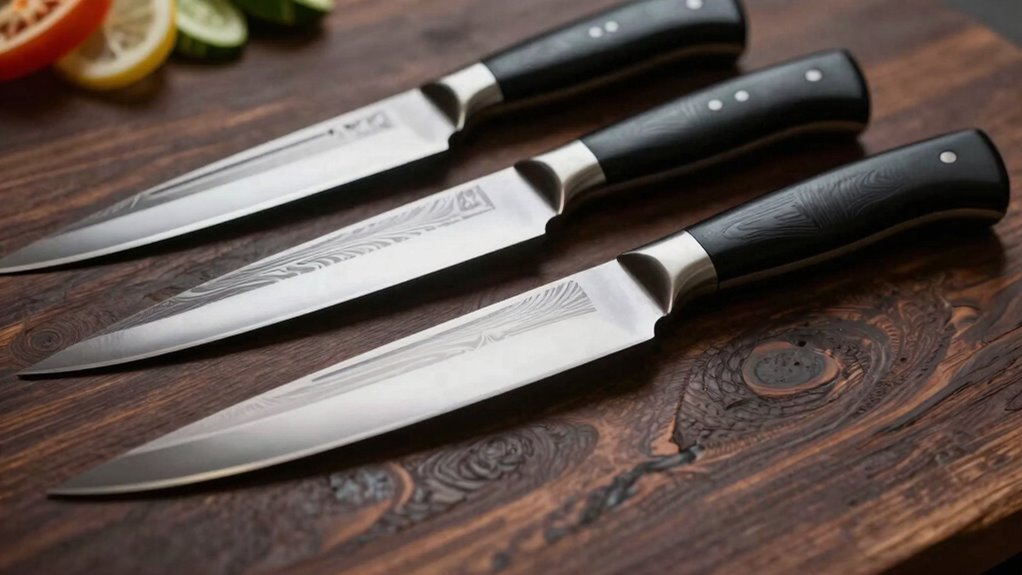
A high-quality Japanese knife set is worth paying for because it offers exceptional sharpness, durability, and precise control. You’ll benefit from blades made by skilled artisans, crafted from top-grade steels like VG-10 or AUS-8 that stay sharp longer and resist chipping. The handles are designed for comfort and grip, reducing fatigue during prep. Well-balanced, resilient blades and ergonomic handles make all the difference. Curious about more features that elevate your kitchen experience? Keep exploring to find out.
Key Takeaways
- High-quality steels like VG-10 or AUS-8 ensure sharpness, edge retention, and durability for long-term use.
- Traditional forging techniques enhance blade strength, resilience, and resistance to chipping or corrosion.
- Ergonomically designed handles made from natural materials provide comfort, control, and slip resistance.
- Proper balance between blade and handle improves control, reduces fatigue, and ensures precise cuts.
- Durable construction and materials ensure the knives maintain performance and appearance over years of regular use.
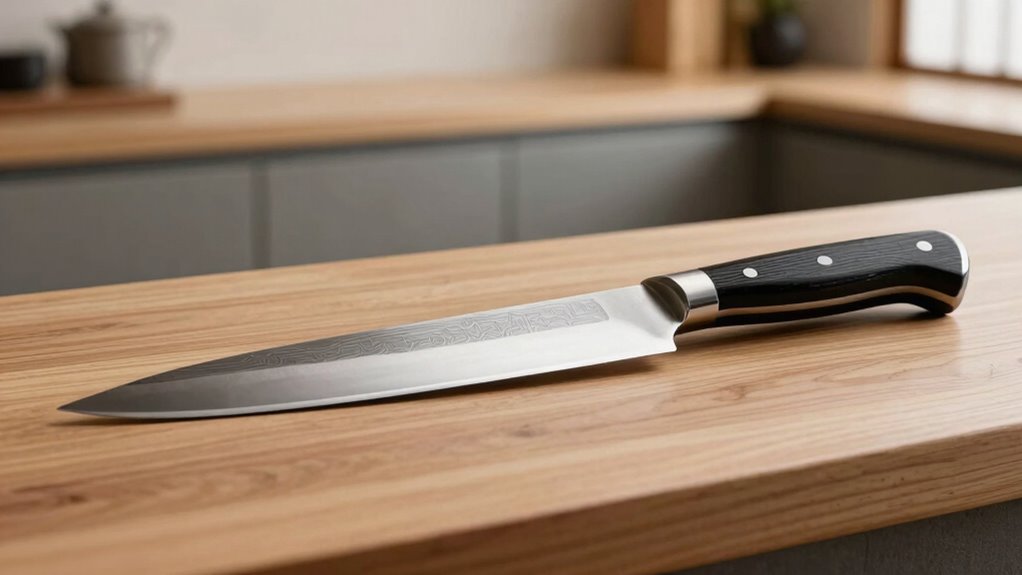
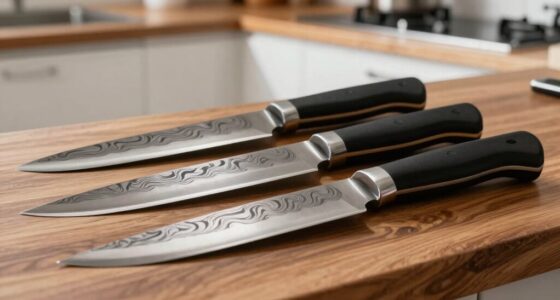
Japanese knife sets are renowned for their exceptional craftsmanship, sharpness, and precision. When you’re choosing a set, one of the first things you’ll notice is the quality of the blade craftsmanship. Japanese knives are often forged by skilled artisans who pay meticulous attention to every detail. The blades are typically handcrafted from high-quality steel, such as VG-10 or AUS-8, which guarantees they hold their edge longer and can be sharpened to an incredibly fine point. You’ll find that many Japanese knives feature a razor-sharp edge that’s honed to a microscopic level, making slicing through vegetables, fish, or meat effortless. The craftsmanship isn’t just about sharpness; it’s about the blade’s overall balance, flexibility, and durability. A well-made blade resists chipping and corrosion, which means your investment lasts longer and performs better over time. Blade durability is a key factor to consider when selecting a set that will stand up to regular use. Additionally, the forging process often involves traditional methods that enhance the strength and resilience of the blades, further ensuring longevity. Incorporating traditional techniques can significantly improve the overall quality and performance of the knives.
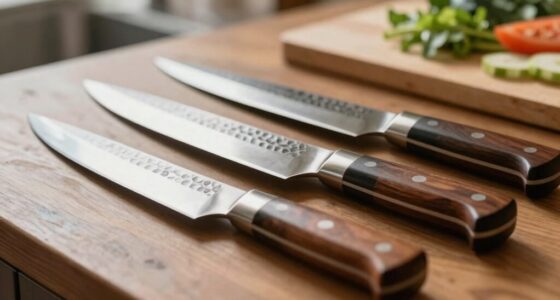
Equally important is handle ergonomics, which profoundly impacts your comfort and control. Japanese knife handles tend to be designed with precision and user comfort in mind. You’ll often find that they are crafted from natural materials like wood or composite, shaped to fit naturally into your hand. The ergonomic design reduces fatigue during prolonged use, allowing for more precise cuts without discomfort. Some handles are rounded and smooth, offering a secure grip that minimizes slipping, even when your hands are wet. Others are more angular, providing a different tactile feel that some chefs prefer for certain tasks. The weight distribution between the handle and blade is carefully balanced, so you feel confident wielding the knife without unnecessary strain. If you’re considering a set, pay attention to how the handle feels in your hand. A comfortable, well-designed handle makes all the difference in achieving clean, controlled cuts and maintaining precision during lengthy prep work.
Japanese VG-10 steel chef knife set
As an affiliate, we earn on qualifying purchases.
As an affiliate, we earn on qualifying purchases.
Frequently Asked Questions
How Often Should Japanese Knives Be Sharpened?
You should sharpen your Japanese knives every 6 to 12 months, depending on how often you use them. Regular sharpening helps maintain edge retention and guarantees precise cuts. Use proper sharpening techniques, like honing or professional sharpening, to keep the blades in top shape. If you notice your knives becoming dull quickly or requiring more effort to cut, it’s time to sharpen them again. Proper care prolongs their sharpness and performance.
What Is the Best Storage Option for Japanese Knife Sets?
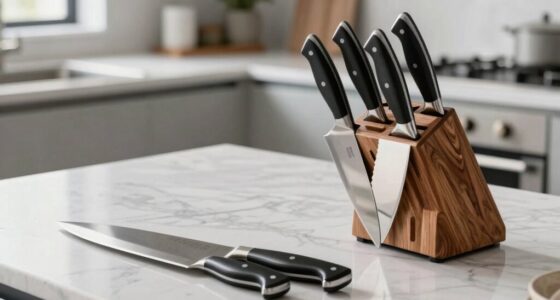
Honestly, the best storage for your Japanese knife set isn’t just a fancy drawer—it’s a knife block or a magnetic strip. These options keep your knives safe and sharp, preventing accidents and damage. Knife storage and safety precautions go hand in hand; proper storage minimizes dulling and injury risks. So, skip the cluttered drawer and invest in a dedicated block or strip, because your knives deserve the best care.
Are Japanese Knives Suitable for Left-Handed Users?
Yes, Japanese knives can be suitable for left-handed users, especially if they feature ambidextrous design or left-handed ergonomics. Many brands now offer knives designed for both hands, ensuring comfort and precision. Look for models that specify ambidextrous handles or left-handed ergonomics, as these will provide better control and reduce fatigue. Choosing the right knife enhances your slicing experience and makes food prep more efficient.
How Do I Maintain the Quality of Japanese Knives?
Did you know that proper knife care can extend your Japanese knives’ lifespan by up to 50%? To maintain their quality, focus on regular knife edge maintenance by honing and sharpening appropriately. Also, improve your cutting technique—use a gentle rocking motion and avoid cutting on hard surfaces. These habits help prevent dulling and chipping, ensuring your knives stay sharp, precise, and in top condition for years to come.
What Materials Are Japanese Knife Blades Typically Made From?
Japanese knife blades are typically made from high-quality steel, focusing on blade composition that balances sharpness and durability. Common materials include high-carbon steel, which offers excellent edge retention, and layered or Damascus steel, valued for both strength and aesthetic appeal. These blades are designed for material durability, ensuring they stay sharp longer and resist chipping. Understanding the blade composition helps you choose knives that perform well and last through frequent use.
ergonomic Japanese kitchen knife handles
As an affiliate, we earn on qualifying purchases.
As an affiliate, we earn on qualifying purchases.
Conclusion
Choosing the right Japanese knife set is like finding the perfect partner in the kitchen—each blade’s unique qualities enhance your cooking experience. I once watched a home cook transform a simple meal into a masterpiece just by switching to a sharper, well-balanced knife. Remember, investing in quality tools isn’t just about durability; it’s about revealing your culinary potential. So, pick wisely, and let your knives become your most trusted kitchen companions.
professional Japanese knife sharpening kit
As an affiliate, we earn on qualifying purchases.
As an affiliate, we earn on qualifying purchases.
traditional forged Japanese knives
As an affiliate, we earn on qualifying purchases.
As an affiliate, we earn on qualifying purchases.