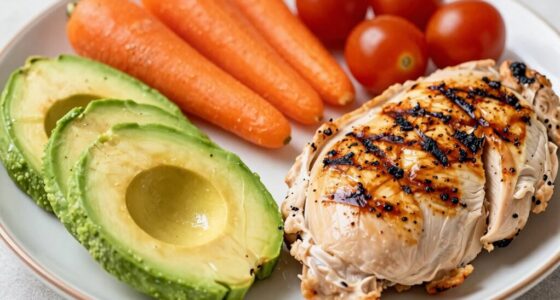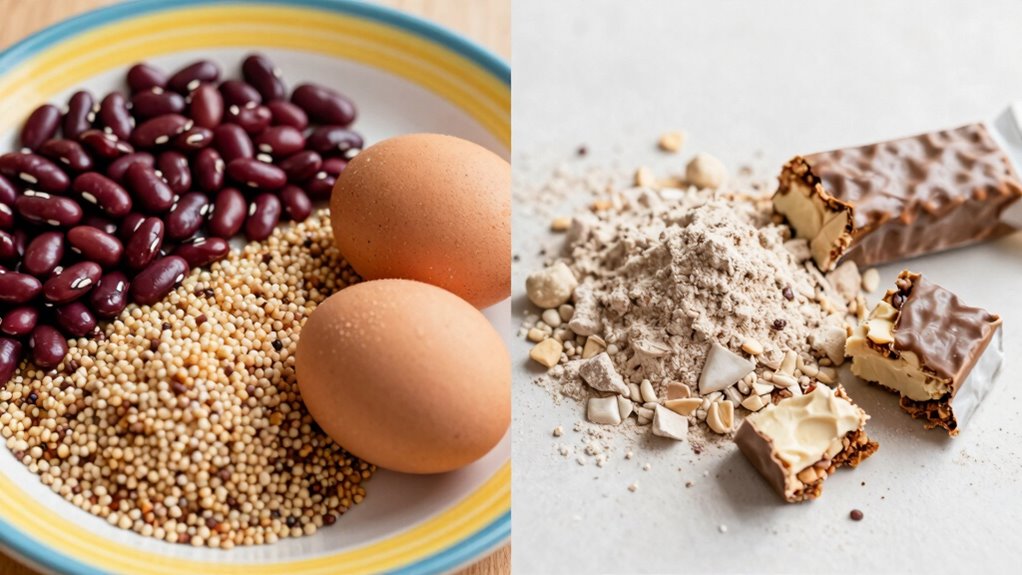

Understanding the difference between complete and incomplete proteins helps you make smarter food choices. Complete proteins, found in animal products and some plant sources like soy, have all nine essential amino acids your body needs. Incomplete proteins, usually plant-based, lack one or more of these amino acids, but you can combine foods like beans and rice to form a complete protein. Keep exploring to discover how to optimize your diet for better health and nutrition.

Get health and wellness essentials delivered free — and shop member deals
- Fast, free delivery on millions of items
- Access to Prime Big Deal Days deals on October 6–7
- Prime Video, Amazon Music and more included
Key Takeaways
- Complete proteins contain all nine essential amino acids; incomplete proteins lack one or more.
- Animal products are naturally complete sources, while many plant-based proteins are incomplete.
- Combining plant sources (e.g., beans and rice) can create a complete protein profile.
- Consuming complete proteins supports muscle growth, enzyme production, and overall health.
- Recognizing protein quality aids in effective meal planning and preventing amino acid deficiencies.
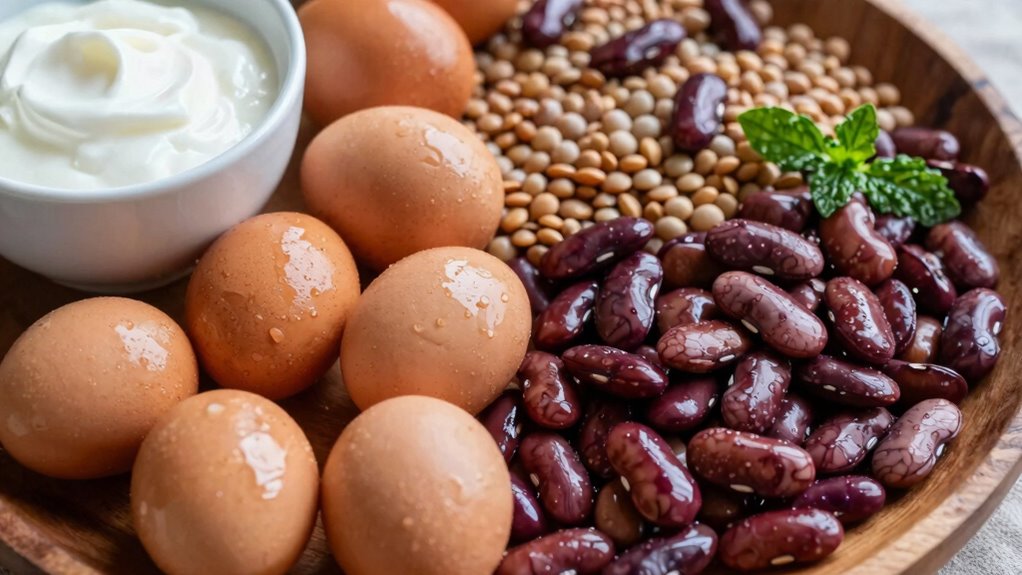
Ever wondered what sets different protein sources apart? It all comes down to the quality of the protein, particularly whether it’s complete or incomplete. When you look at plant-based sources, you’ll notice they often have different amino acid profiles compared to animal products. Amino acids are the building blocks of protein, and essential amino acids are those your body can’t produce on its own. For peak health, you need a variety of these amino acids, and that’s where complete proteins come into play. Complete proteins contain all nine essential amino acids in sufficient amounts, providing a balanced profile that supports muscle repair, enzyme production, and overall bodily functions. Animal proteins, like eggs, dairy, and meat, are naturally complete, making them straightforward sources for meeting your amino acid needs.
Complete proteins contain all nine essential amino acids essential for muscle repair and overall health.
In contrast, many plant-based sources tend to be incomplete. They lack one or more essential amino acids, which can make it seem like they’re less effective for meeting your nutritional goals. However, this doesn’t mean you can’t get all the amino acids you need from a plant-based diet. The trick is combining different plant sources—such as beans and rice or hummus and whole wheat bread—to create a complete amino acid profile. This concept, called complementary proteins, allows you to enjoy the benefits of plant-based eating without missing out on essential amino acids. This strategy is especially helpful if you’re vegetarian or vegan, as it guarantees your diet remains balanced and nutritious. Additionally, understanding amino acid profiles can help you choose the best sources for your dietary needs. Knowing which combinations provide complementary proteins can optimize your meal planning and ensure nutritional completeness. Recognizing the importance of protein quality can also assist in making informed dietary choices that support long-term health.
Understanding the difference between complete and incomplete proteins is fundamental when planning your diet. If you rely solely on incomplete plant sources, you might unintentionally fall short of your amino acid needs, which can impact muscle growth, recovery, and overall health. Incorporating plant-based protein sources that are naturally complete, like soy and chia seeds, can make your dietary choices more flexible. Knowing which sources are complete can help you optimize your nutrition without relying solely on animal products. Ultimately, by understanding the amino acid profiles of different proteins, you can craft a balanced, nutrient-rich diet that supports your health and fitness goals. Whether you prefer animal foods or plant-based options, knowing what differentiates complete from incomplete proteins helps you make smarter, more informed choices.
As an affiliate, we earn on qualifying purchases.
Frequently Asked Questions
Can Vegetarians Get Enough Complete Proteins Without Animal Products?
Think of building a rainbow with only a few colors—you need all hues for the full spectrum. As a vegetarian, you can get enough complete proteins by combining vegan protein sources like quinoa, soy, and chia seeds. These plant-based amino acids work together, creating a complete protein profile. By mixing diverse plant foods, you guarantee your body receives all essential amino acids, just like a vibrant rainbow.
Do All Plant Proteins Qualify as Incomplete Proteins?
Not all plant proteins qualify as incomplete proteins. Many plant sources, like soy and quinoa, provide complete proteins with all essential amino acids, thanks to amino acid synergy. However, some plant proteins may have lower protein bioavailability, meaning your body absorbs fewer nutrients. To guarantee you get enough, mix different plant sources throughout the day, combining foods to maximize amino acid intake and optimize overall protein quality.
How Do Combining Different Plant Proteins Improve Amino Acid Profiles?
They say, “Don’t put all your eggs in one basket,” and that’s true for plant proteins. Combining different plant proteins enhances amino acid synergy, creating a more complete amino acid profile. By embracing plant protein diversity, you guarantee your body gets all essential amino acids it needs. This strategic pairing improves protein quality, making your plant-based diet more balanced and effective for muscle growth, repair, and overall health.
Are There Any Health Risks Associated With Consuming Only Incomplete Proteins?
Consuming only incomplete proteins generally doesn’t pose significant health risks if you eat a varied diet, as your body absorbs protein efficiently when combining different sources. However, poor digestion or absorption issues could limit your nutrient intake. To maximize protein absorption and digestive efficiency, make sure you include a mix of plant proteins throughout the day. If your diet lacks variety, you might risk amino acid deficiencies, but most healthy individuals won’t experience serious problems.
How Do Cooking and Processing Affect Protein Completeness?
Cooking and processing can alter protein completeness by causing protein denaturation, which unfolds the protein structure. This process can reduce enzyme activity, impacting how your body digests and utilizes proteins. However, it doesn’t necessarily make incomplete proteins complete. Some cooking methods may destroy certain amino acids, but combining different plant proteins still helps you get all essential amino acids. So, proper cooking preserves nutritional value while ensuring your body can effectively use the proteins.
plant-based complete protein sources
As an affiliate, we earn on qualifying purchases.
As an affiliate, we earn on qualifying purchases.
Conclusion
Understanding the difference between complete and incomplete proteins helps you make better food choices. For example, if you’re a vegetarian, combining beans and rice guarantees you get all essential amino acids, just like a balanced meal. Think of your body as a puzzle; complete proteins fit perfectly on their own, while incomplete ones need a little help. By choosing wisely, you’ll support your health and keep your energy levels steady.
As an affiliate, we earn on qualifying purchases.
As an affiliate, we earn on qualifying purchases.
Fall Picks
fall essentials
As an affiliate, we earn on qualifying purchases.