

When you eat a meal high in refined carbs like white bread or sugary snacks, your blood sugar spikes quickly and then crashes, making you feel sleepy. These carbs boost serotonin and melatonin, hormones that promote drowsiness. Your body responds by releasing insulin and redirecting blood flow to digestion, which reduces circulation to the brain. Staying hydrated and choosing balanced meals can help, and if you keep exploring, you’ll discover even more ways to stay alert after lunch.

Get health and wellness essentials delivered free — and shop member deals
- Fast, free delivery on millions of items
- Access to Prime Big Deal Days deals on October 6–7
- Prime Video, Amazon Music and more included
Key Takeaways
- High carbohydrate meals cause blood sugar spikes, leading to insulin release and increased serotonin and melatonin, which promote sleepiness.
- Refined carbs cause blood sugar crashes afterward, resulting in fatigue and drowsiness.
- Dehydration reduces blood flow to the brain, worsening feelings of tiredness after lunch.
- Post-meal blood flow shifts to digestion, decreasing circulation to the brain and causing fatigue.
- Proper meal timing and hydration support circulation and help maintain alertness after lunch.
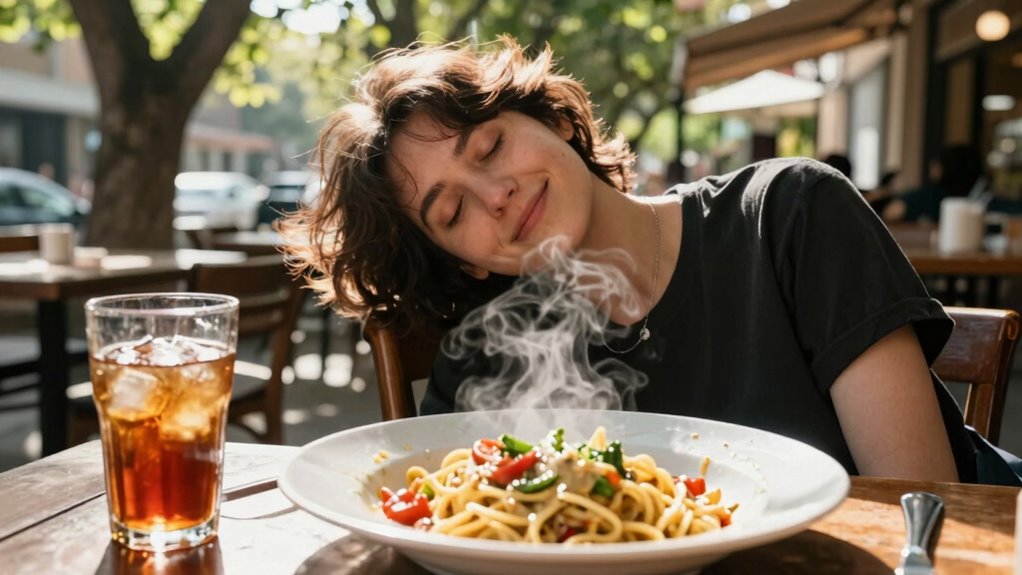
Have you ever noticed how you often feel drowsy after lunch? That sluggishness isn’t just in your head—it’s a real, biological response to what you eat and drink. Your meal composition plays a crucial role in this sleepy feeling. When you sit down to lunch, what you choose to eat can influence how tired you feel afterward. Meals high in carbohydrates, especially refined carbs like white bread, pasta, or sugary snacks, cause your blood sugar to spike quickly. This surge triggers a release of insulin, which helps your body absorb sugar but also makes your body produce more tryptophan, an amino acid that crosses your brain barrier and boosts the production of sleep-inducing chemicals like serotonin and melatonin. That’s why a carb-heavy lunch can make you feel drowsy—it’s your body’s way of responding to these biochemical changes.
But it’s not just about what’s on your plate. Hydration effects also play a significant role in post-lunch sleepiness. When you don’t drink enough water during the day, dehydration can set in, leading to fatigue and sluggishness. After eating, your body directs blood flow to your digestive system to process the meal, which can slightly decrease blood flow to your brain, making you feel tired. If you’re dehydrated, this effect intensifies because your body is already under stress from lack of fluids, amplifying the sleepy sensation. Drinking water during and after your meal helps maintain blood flow and supports digestion, reducing the likelihood of feeling overly sleepy. It also prevents dehydration-related fatigue, which can mimic or worsen post-lunch drowsiness. Incorporating hydration into your routine can significantly improve your alertness after eating. Proper hydration supports circulation and helps keep your energy levels steady, especially during busy afternoons. Additionally, staying mindful of your meal timing can help regulate your energy levels throughout the day. Being aware of the biochemical responses triggered by different foods can further help you make smarter choices to stay alert.
hydration water bottles for daily use
As an affiliate, we earn on qualifying purchases.
As an affiliate, we earn on qualifying purchases.
Frequently Asked Questions
Can Certain Foods Make You Sleepier After Lunch?
Yes, certain foods can make you sleepier after lunch. Foods high in tryptophan, like turkey or cheese, boost sleepiness due to their food composition. Additionally, large or carbohydrate-rich meals can increase blood sugar levels, leading to a crash later. Meal timing also plays a role; eating heavy meals at noon can cause drowsiness, so opt for lighter options and balance your food choices for sustained energy.
Does Skipping Lunch Affect Your Energy Levels?
Skipping lunch can lower your energy levels because it disrupts your meal timing and nutrient balance. When you skip this meal, your blood sugar drops, making you feel sluggish and less alert. Maintaining regular meal timing with balanced nutrients helps sustain your energy throughout the day. So, don’t skip lunch often; instead, choose nutritious options to keep your energy steady and avoid dips in productivity.
How Much Does Hydration Influence Post-Lunch Sleepiness?
Like a well-tuned engine, your hydration levels and electrolyte balance directly impact your post-lunch alertness. When you’re properly hydrated, your body functions smoothly, reducing fatigue and sleepiness. Dehydration disrupts electrolyte balance, leading to sluggishness and drowsiness. Staying hydrated helps maintain energy, sharpens focus, and keeps that midday slump at bay. So, drink enough water, and your body stays balanced, helping you feel more awake after lunch.
Are There Specific Drinks That Help Prevent Afternoon Drowsiness?
To prevent afternoon drowsiness, try drinks like herbal teas, which offer caffeine alternatives that boost alertness without jitters. Green tea provides a gentle caffeine lift, while peppermint or ginger teas can invigorate your senses naturally. You might also consider lemon water or infused water, which hydrate and refresh. These drinks help you stay energized, focus better, and avoid the sluggishness that often follows lunch.
Does the Time of Day Impact How Sleepy You Feel After Eating?
Like a knight in shining armor arriving just in time, your body’s response to a meal varies with the time of day. Meal timing influences sleep regulation, making you feel sleepier after lunch than dinner. In the afternoon, your body naturally dips in alertness, so eating then can heighten drowsiness. If you want to stay awake, consider lighter meals then and save larger ones for times when your body’s less prone to fatigue.
As an affiliate, we earn on qualifying purchases.
Conclusion
So, next time you find yourself yawning after lunch, remember—the answer isn’t just about what you ate but what’s happening inside your body. Your digestion kicks into gear, redirecting blood flow and energy, leaving you drowsy. But what if there’s more to uncover? Could there be simple tricks to stay alert? Stay curious—you might just discover the secret to enjoying your midday break without the crash. The real solution could be closer than you think.
As an affiliate, we earn on qualifying purchases.
insulated water bottles for hydration
As an affiliate, we earn on qualifying purchases.
As an affiliate, we earn on qualifying purchases.
Fall Picks
fall essentials
As an affiliate, we earn on qualifying purchases.