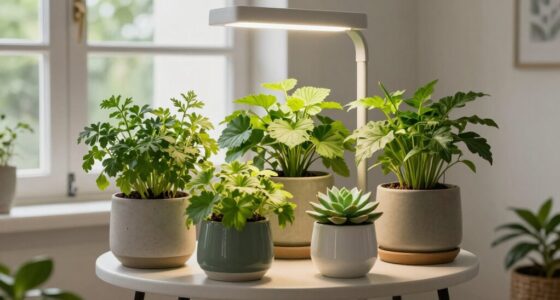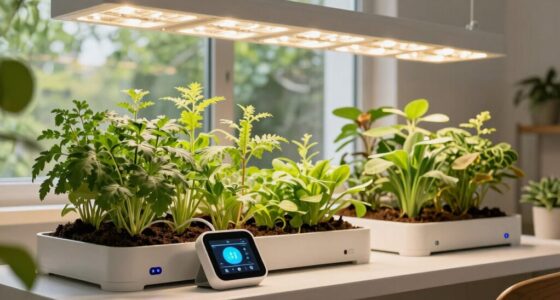

One of the biggest mistakes is choosing a smart indoor garden with inadequate lighting or the wrong type of grow lights, which can lead to weak, leggy plants. Another common error is neglecting proper soil selection, risking poor drainage or nutrient deficiencies. Failing to monitor light and soil conditions regularly can cause growth issues or plant stress. To avoid these pitfalls, focus on the essentials, and you’ll discover tips to keep your garden thriving.
Listen free for 30 days with Audible
Thousands of audiobooks and originals — cancel anytime.
As an affiliate, we earn on qualifying purchases.
Key Takeaways
- Neglecting proper lighting options; choose a smart garden with adjustable, full-spectrum grow lights suited for indoor plants.
- Ignoring soil quality; opt for a system with high-quality, well-draining potting mixes and soil testing features.
- Overlooking plant-specific needs; select a garden that allows customization for different plant light and soil requirements.
- Failing to consider maintenance features; prioritize systems with automatic watering, monitoring, and easy soil management.
- Ignoring size and space; ensure the garden fits your available area and supports the growth of your intended plants.
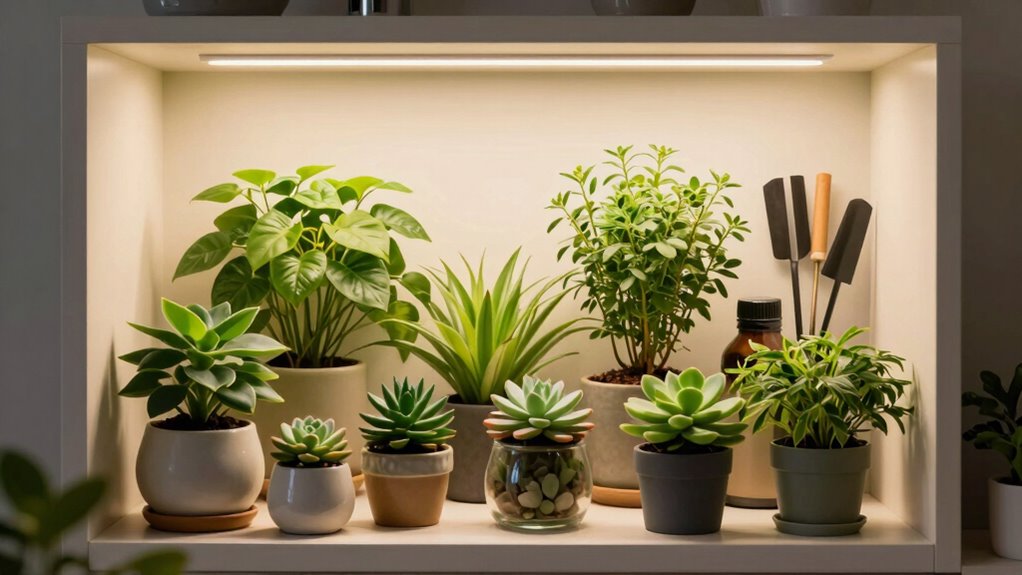
Starting an indoor garden can be exciting, but many beginners make common mistakes that can hinder their success. One of the biggest errors is overlooking the importance of proper garden lighting. Without adequate light, your plants won’t thrive, and you might end up with leggy, weak growth. You might think that a simple lamp will do, but not all light sources are suitable for plants. Invest in grow lights designed specifically for indoor gardening; they provide the right spectrum and intensity that promote healthy growth. Position your lights at the correct distance from your plants—too close and you risk burning them, too far and they won’t receive enough light. Consistency is key, so setting a daily schedule for your grow lights ensures your plants get the right amount of illumination to flourish.
Another common mistake involves soil selection. Many beginners assume any soil will work, but choosing the wrong type can lead to poor drainage, root rot, or nutrient deficiencies. Instead, opt for a high-quality potting mix formulated for indoor plants. These mixes typically contain the right blend of organic matter, drainage agents, and nutrients necessary for healthy root development. Avoid using garden soil from outside, as it can contain pests, diseases, or compacted materials that hinder root growth. You should also consider the specific needs of the plants you’re growing; some may require more acidic or alkaline soil. Testing your soil’s pH and adjusting it if needed can significantly improve plant health. Incorporating soil testing into your routine can further optimize your plant’s environment and health. Additionally, understanding the importance of proper soil in supporting plant growth can help prevent common issues like nutrient deficiencies. Proper soil management practices, including regular fertilization and watering, can also make a significant difference in plant vitality. Remember that maintaining appropriate moisture levels in the soil is essential for preventing both overwatering and dehydration. Take the time to research what your specific plants need and invest in quality products to meet those needs. By doing so, you’ll set yourself up for a successful, thriving indoor garden that brings you joy and fresh produce or lush greenery year-round. Avoid these common pitfalls, and your indoor gardening journey will be much more rewarding.
full spectrum LED grow lights for indoor plants
As an affiliate, we earn on qualifying purchases.
As an affiliate, we earn on qualifying purchases.
Frequently Asked Questions
How Do I Choose the Right Plant for My Indoor Garden?
To select the right plant for your indoor garden, focus on plant selection based on your space and light conditions. Consider soil compatibility; some plants thrive in well-draining soil, while others need moisture-retentive options. Pick plants that match your environment and your ability to care for them. Research their growth needs to guarantee they’ll flourish indoors, making your gardening experience enjoyable and successful.
What Is the Ideal Lighting Setup for Different Indoor Plants?
Think of your indoor garden as a concert hall; each plant needs the right spotlight. For most, artificial lighting mimics sunlight with a full light spectrum, providing the essential wavelengths for growth. Place plants with high light needs under bright, full-spectrum LEDs, and keep low-light plants closer to softer, indirect artificial light. Adjust your setup as seasons change, ensuring every leaf gets the perfect glow to thrive.
How Often Should I Water and Fertilize My Indoor Garden?
You should water your indoor garden when the top inch of soil feels dry, typically once a week, but adjust based on your plant’s needs. Follow a consistent watering schedule and avoid overwatering. For fertilization, use a balanced liquid fertilizer every 2-4 weeks during active growth. Keep an eye on your plants for signs of over or underfeeding, and follow fertilization tips to maintain healthy, thriving indoor plants.
Can I Set up an Indoor Garden in a Small Apartment?
Setting up an indoor garden in a small apartment is like fitting a lush oasis into a cozy space. You can definitely do it with compact hydroponic systems designed for small areas. Focus on aromatic herbs, which thrive in limited space and add fresh flavor to your cooking. Use vertical gardening or shelf setups to maximize space, and you’ll enjoy a thriving garden without feeling cramped.
What Are Common Pests and How Can I Prevent Them Indoors?
You’ll want to identify pests early through pest identification to prevent damage. Common indoor pests include spider mites, aphids, and fungus gnats. To prevent them, maintain proper humidity, avoid overwatering, and keep your garden clean. Natural remedies like neem oil, insecticidal soap, or introducing beneficial insects can help control pests without chemicals. Regular inspections and quick action will keep your indoor garden healthy and pest-free.
high quality potting soil for indoor gardening
As an affiliate, we earn on qualifying purchases.
As an affiliate, we earn on qualifying purchases.
Conclusion
Avoiding these common mistakes will save you from indoor gardening chaos—think of it as turning your tiny space into a lush, green rainforest rather than a barren desert. By choosing the right setup, lighting, and plants, you’ll transform your home into an oasis where herbs and veggies thrive effortlessly. Remember, a smart garden is your secret weapon for a greener, fresher life—almost like having a personal jungle right in your living room! Happy gardening!
automatic indoor plant watering system
As an affiliate, we earn on qualifying purchases.
As an affiliate, we earn on qualifying purchases.
soil pH tester for indoor plants
As an affiliate, we earn on qualifying purchases.
As an affiliate, we earn on qualifying purchases.
Fall Picks
fall essentials
As an affiliate, we earn on qualifying purchases.