
To choose a reverse osmosis system without overspending, focus on a model with effective filtration capabilities, like NSF or ANSI certifications, that match your needs. Consider your household size for capacity, and opt for durable, low-maintenance units with straightforward installation. Balance features against your budget, avoiding unnecessary extras. Prioritize systems that offer reliable performance and easy upkeep. If you keep these tips in mind, you’ll find a solution that provides clean water without breaking the bank—more tips are ahead.
Key Takeaways
- Prioritize NSF or ANSI certifications to ensure effective filtration without unnecessary features.
- Match system size and capacity to your household’s water needs to avoid overspending.
- Choose durable, low-maintenance systems with long-lasting filters to reduce ongoing costs.
- Opt for DIY-installation models if experienced, or budget for professional setup to ensure correct installation.
- Balance filtration performance with your budget, avoiding costly features that don’t improve water quality.
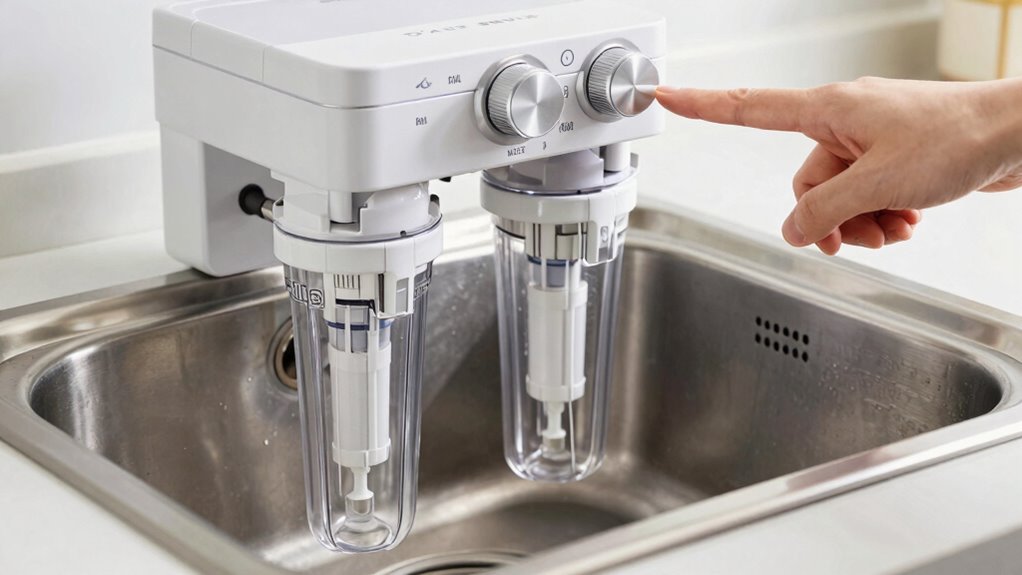
Choosing the right reverse osmosis (RO) system can reliably improve your water quality and guarantee your household gets clean, safe water. When you’re exploring different options, it’s vital to focus on how the system handles water filtration efficiently and how straightforward the system installation process is. A good RO system should effectively remove contaminants like chlorine, lead, and other impurities while fitting within your budget. Prioritize systems with certifications from reputable organizations, such as NSF or ANSI, which validate their filtration capabilities. This way, you can be confident that the system you select genuinely improves water quality without unnecessary extras that drive up costs.
Choose an NSF-certified RO system for effective filtration and easy installation within your budget.
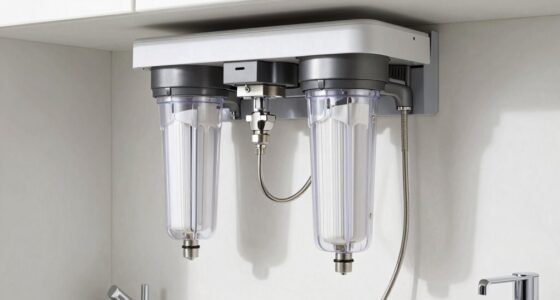
As you evaluate your options, consider the size and capacity of the system. If you have a large household, you’ll want a unit that offers a higher daily water output to meet your needs without constantly running out of filtered water. Conversely, smaller households may prefer more compact models that still deliver quality filtration but are easier to fit under the sink or in limited spaces. This decision impacts not only your water quality but also your overall costs, since larger or more complex systems often come with higher price tags and more involved system installation. Understanding water filtration efficiency can help you choose a system that balances performance and cost effectively. Additionally, paying attention to system durability can ensure your investment lasts longer and provides consistent performance over time. Moreover, researching long-term maintenance**** requirements can help you avoid unexpected expenses down the line.
You should also pay close attention to the maintenance requirements of each RO system. Systems with fewer filters or longer-lasting filters can save you money over time, reducing replacement costs and installation hassle. When considering water filtration, opt for models that are user-friendly and come with clear instructions for system installation and maintenance. This approach minimizes the risk of improper setup, which can compromise your water quality and lead to additional expenses down the line.
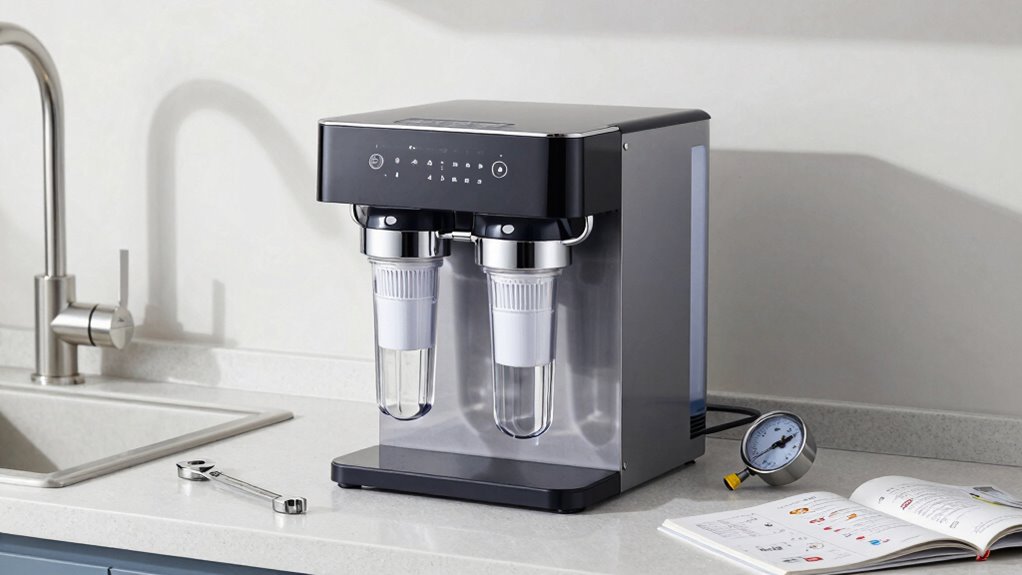
System installation is another essential factor. Some units are designed for DIY installation, featuring straightforward instructions that allow you to set them up without professional help. Others might require professional installation, which adds to your initial investment but can ensure everything is set up correctly for maximum performance. If you’re comfortable with basic plumbing tasks, choosing a system that’s easy to install yourself can save money. Otherwise, budgeting for professional help might be the smarter choice to guarantee your water filtration system functions properly from the start.
Ultimately, selecting a reverse osmosis system without overspending involves balancing filtration efficiency, capacity, maintenance needs, and installation ease. Focus on the features that matter most for your household’s water quality and your budget, and don’t be swayed by overly complex systems that promise a lot but don’t match your actual needs. With careful research and consideration, you can find a reliable RO system that provides clean, safe water without breaking the bank. Additionally, understanding biodiversity and its importance can inspire you to choose eco-friendly and sustainable living practices that support water conservation efforts.

iSpring RCC7AK-BN NSF Certified, 75 GPD, Alkaline 6-Stage Reverse Osmosis System, pH+ Remineralization RO Water Filter System Under Sink Patented Top-Mounted Faucet Design for Easy Installation
- Patented Top-Mounted Faucet Design: Easy above-sink installation
- Mineral Boost Stage: Adds essential minerals and balanced pH
- Transparent Filter Housing: Monitor contaminant buildup easily
As an affiliate, we earn on qualifying purchases.
As an affiliate, we earn on qualifying purchases.
Frequently Asked Questions
How Often Should I Replace the Filters in My Reverse Osmosis System?
You should replace your reverse osmosis filters every 6 to 12 months for guaranteed filter maintenance. Regular replacements ensure your system performs effectively and prevents buildup that can lead to system upgrades later. Keep an eye on your water flow and taste; if you notice changes, it might be time for a filter change sooner. Staying on top of these replacements helps extend your system’s lifespan and maintains water quality.
Are There Specific Brands Known for Reliability and Affordability?
You might think all brands are created equal, but some are surprisingly reliable and budget-friendly. When comparing brands, look for those with solid reputations for durability, like APEC or iSpring—they offer cost-effective options that won’t break the bank. Brand comparisons reveal that investing a little more upfront often saves you money long-term, with dependable performance and fewer filter replacements. So, don’t settle; choose a trusted, affordable brand for clean water and peace of mind.
Can I Install a Reverse Osmosis System Myself?
Yes, you can install a reverse osmosis system yourself with proper installation tips. Start by carefully reading the manufacturer’s instructions, turning off your water supply, and assembling the system step-by-step. Use a maintenance checklist to keep it functioning efficiently, like replacing filters regularly and checking for leaks. With patience and attention to detail, DIY installation saves money and guarantees your system runs smoothly for years.
What Is the Typical Lifespan of a Reverse Osmosis Unit?
A reverse osmosis unit typically lasts 2 to 3 years with proper maintenance tips like regular filter changes and sanitizing. To maximize lifespan without overspending, compare costs between brands and consider models with longer-lasting filters. Routine maintenance helps prevent damage and costly replacements, ensuring your system runs efficiently. By staying on top of maintenance and doing a cost comparison, you’ll get the best value from your investment.
How Much Water Does a Standard Reverse Osmosis System Produce Daily?
A standard reverse osmosis system typically produces about 50 gallons of filtered water daily. You’ll want to evaluate water filtration needs and system maintenance when selecting one. Regularly replacing filters and membranes ensures peak performance and longevity. If you need more water, look for systems with higher daily capacity, but keep in mind that larger systems may cost more upfront. Proper maintenance helps avoid overspending on repairs or replacements later.
budget-friendly under sink RO system
As an affiliate, we earn on qualifying purchases.
As an affiliate, we earn on qualifying purchases.
Conclusion
Remember, you get what you pay for, so don’t compromise on quality just to save a few bucks. Take your time to compare features, reviews, and prices before making a choice. A good reverse osmosis system isn’t just an expense; it’s an investment in your health and peace of mind. By doing your homework, you’ll find a system that fits your needs and budget without overspending. Ultimately, patience pays off—so choose wisely and enjoy clean, safe water.
iSpring RCC7AK-BN NSF Certified, 75 GPD, Alkaline 6-Stage Reverse Osmosis System, pH+ Remineralization RO Water Filter System Under Sink Patented Top-Mounted Faucet Design for Easy Installation
- Patented Top-Mounted Faucet Design: Easy above-sink installation
- Mineral Boost Stage: Adds essential minerals and balanced pH
- Transparent Filter Housing: Monitor contaminant buildup easily
As an affiliate, we earn on qualifying purchases.
As an affiliate, we earn on qualifying purchases.
iSpring RCC7AK-BN NSF Certified, 75 GPD, Alkaline 6-Stage Reverse Osmosis System, pH+ Remineralization RO Water Filter System Under Sink Patented Top-Mounted Faucet Design for Easy Installation
- Patented Top-Mounted Faucet Design: Easy above-sink installation
- Mineral Boost Stage: Adds essential minerals and balanced pH
- Transparent Filter Housing: Monitor contaminant buildup easily
As an affiliate, we earn on qualifying purchases.
As an affiliate, we earn on qualifying purchases.