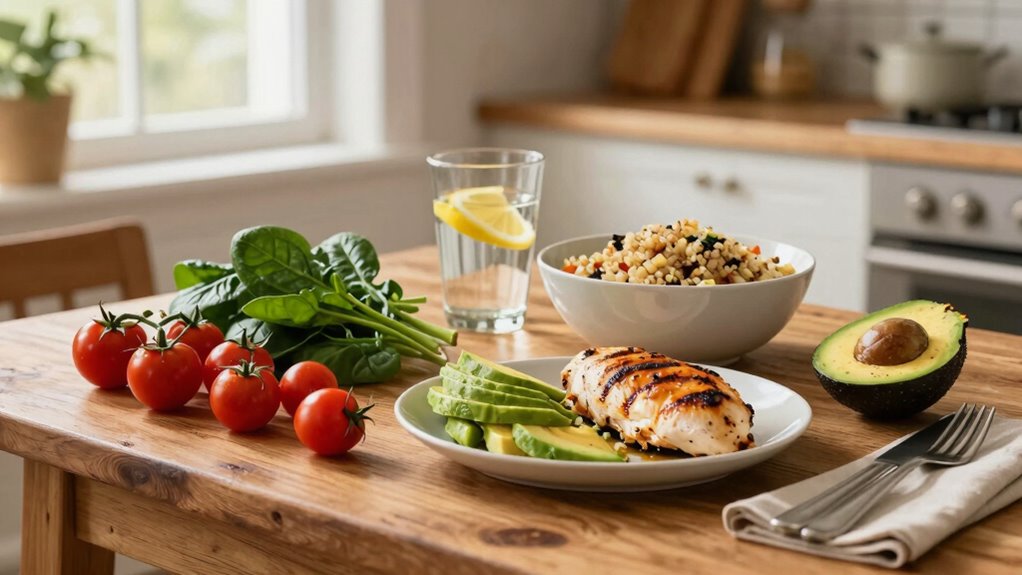

Eating healthy dinners on a budget is easier when you focus on simple, versatile ingredients like beans, eggs, whole grains, and seasonal produce. Plan your meals, buy in bulk, and prepare in advance to save time and money. Incorporate flavorful herbs and spices to make dishes appealing without extra cost. Keep a well-organized kitchen and leftovers handy to reduce waste. Stick with these tips to get started, and you’ll find practical ways to enjoy healthy meals every night.

Get health and wellness essentials delivered free — and shop member deals
- Fast, free delivery on millions of items
- Access to Prime Big Deal Days deals on October 6–7
- Prime Video, Amazon Music and more included
Key Takeaways
- Focus on affordable, nutrient-dense staples like beans, eggs, rice, and seasonal vegetables to maximize nutrition and cost savings.
- Plan meals and create shopping lists to avoid impulse buys and reduce food waste.
- Incorporate versatile ingredients and simple recipes for quick, satisfying, and visually appealing dinners.
- Use batch cooking and meal prep to save time, money, and reduce daily cooking stress.
- Shop in bulk, take advantage of sales, and choose in-season produce to lower costs and enhance flavor.
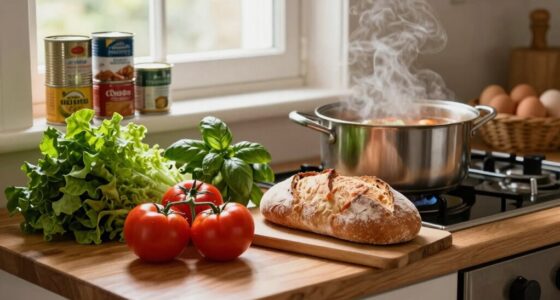
budget-friendly healthy dinner ingredients
As an affiliate, we earn on qualifying purchases.
As an affiliate, we earn on qualifying purchases.
Struggling to Eat Healthy Dinner on a Budget? Here’s How to Make It Easy
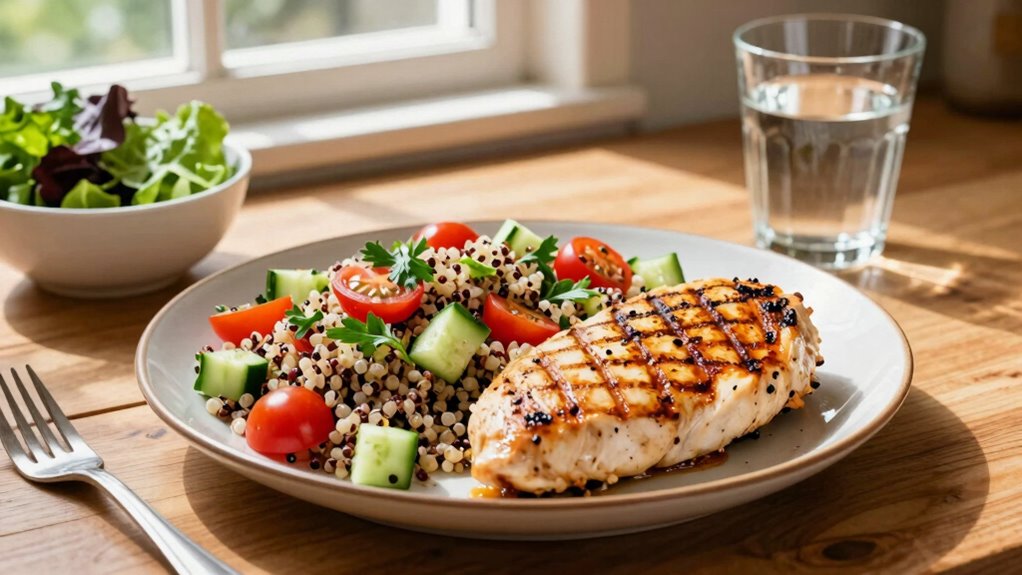
Eating healthy dinners on a tight budget can seem challenging, but with a few smart strategies, it’s entirely doable. Instead of relying on expensive luxury ingredients, focus on quality staples that bring flavor and nutrition without breaking the bank. You can elevate simple dishes by using gourmet techniques, like roasting vegetables to enhance their sweetness or creating homemade sauces instead of store-bought ones. Look for versatile ingredients that can be dressed up with herbs and spices, giving the impression of a luxurious meal. Using affordable cooking methods such as steaming or sautéing can also help maximize flavor without additional expense. Additionally, choosing cost-effective ingredients that are in season can significantly reduce your grocery bill while maintaining variety and freshness. Incorporating sustainable living practices like buying local produce not only supports your community but also reduces environmental impact. Being mindful of meal planning can help you minimize waste and make the most of your ingredients. With a little creativity, you’ll find that healthy, budget-friendly dinners can be both impressive and satisfying.
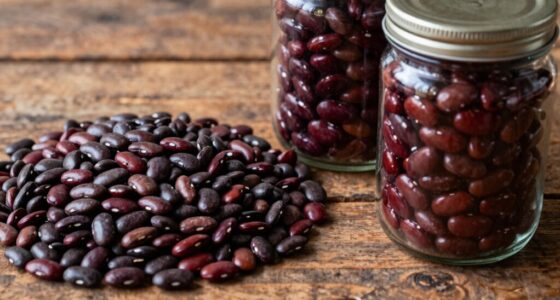
bulk beans and lentils for cooking
As an affiliate, we earn on qualifying purchases.
As an affiliate, we earn on qualifying purchases.
Key Ingredients for Healthy, Affordable Dinners

To make healthy dinners affordable, focus on budget-friendly protein options like beans, eggs, and canned fish. Incorporate versatile whole grains such as rice, oats, or barley to add bulk and nutrients without extra cost. These ingredients help you create nutritious meals that won’t break the bank. Additionally, integrating smart home devices can help you monitor and manage your grocery expenses more effectively home appliances and smart home devices.
Budget-Friendly Protein Sources
When you’re trying to stick to a budget, choosing the right protein sources can make a big difference in your grocery bill. Plant-based options like beans, lentils, and chickpeas are affordable, filling, and versatile. Dairy alternatives such as soy milk, almond yogurt, and plant-based cheese can also save money while providing essential nutrients. These options often cost less than traditional meats and dairy, making them perfect for budget-friendly dinners. Plus, they add variety and flavor to your meals. Incorporating air quality considerations can also enhance your overall dining experience by creating a healthier kitchen environment. Selecting environmentally conscious packaging for these products can further reduce your carbon footprint while supporting sustainable practices.
Versatile Whole Grains
Whole grains are a cornerstone of budget-friendly, healthy dinners because they’re affordable, filling, and versatile. They form the base of many meals, offering a variety of options like rice, oats, barley, and quinoa. These grains provide essential nutrients, including fiber, vitamins, and minerals, which support your overall health. Their versatility allows you to create different dishes—from salads and stir-fries to soups and bowls—without needing extra ingredients. Whole grains also help you stretch your dollar, as they’re inexpensive and have a long shelf life. Incorporating them into your meals boosts nutritional benefits while keeping costs low. By choosing whole grains, you guarantee your dinners are nourishing, satisfying, and budget-conscious, making healthy eating easier and more sustainable.
As an affiliate, we earn on qualifying purchases.
Simple Recipes for Quick and Budget-Friendly Healthy Dinners
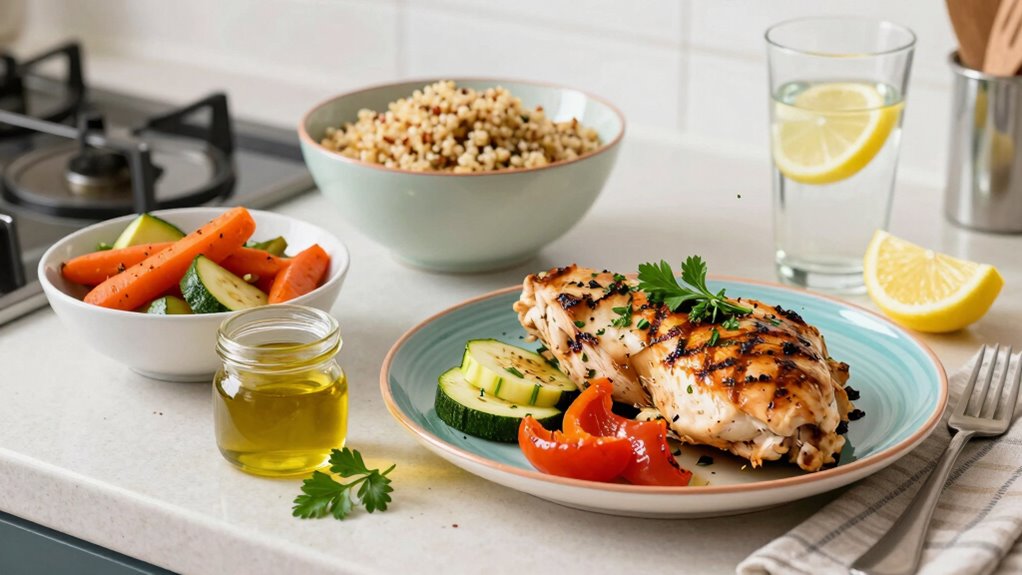
Looking for quick and budget-friendly healthy dinner ideas? You’ll love simple recipes that save time and money while keeping flavor high. Focus on meal presentation by arranging ingredients attractively—colorful vegetables or herbs can make your dish more appealing. Use herbs, spices, and a splash of lemon or vinegar for flavor enhancement without extra cost. Here’s a quick idea:
| Dish | Key Ingredient | Tip |
|---|---|---|
| Veggie Stir-fry | Mixed vegetables | Add soy sauce for flavor |
| Lentil Soup | Lentils | Top with herbs |
| Omelette | Eggs | Fold in greens |
| Quinoa Salad | Quinoa | Drizzle olive oil |
These recipes are fast, affordable, and adaptable for whatever you have on hand.
As an affiliate, we earn on qualifying purchases.
Smart Shopping Tips to Save Money and Reduce Food Waste
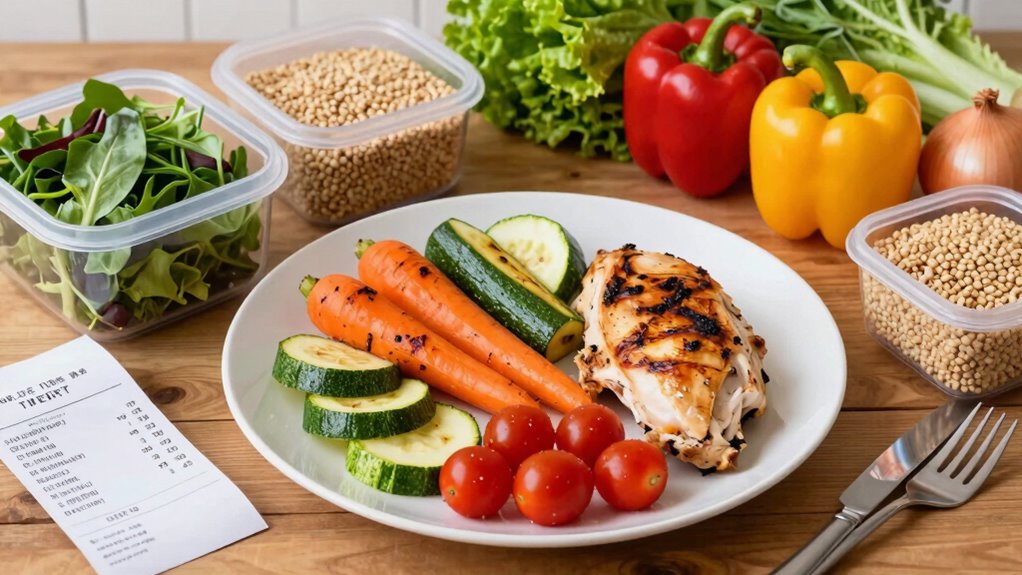
Planning your meals ahead helps you avoid impulse buys and waste. Buying in bulk can save money if you choose wisely, but be sure to store items properly. Get creative with leftovers to stretch your ingredients and reduce waste. Incorporating inspiring quotes into your routine can also motivate you to stick with healthy and budget-friendly choices.
Plan Meals Ahead
To save money and cut down on food waste, it’s essential to plan your meals ahead of time. Start with a simple meal prep plan for the week, which helps you avoid impulse buys and last-minute takeout. Creating a detailed grocery list based on your meal plan ensures you only buy what you need, reducing waste and saving money. Stick to your list when shopping and resist the temptation of extra snacks or convenience foods. Planning ahead also allows you to choose recipes that use similar ingredients, making your shopping more efficient and cost-effective. By dedicating a little time to meal prep and smart shopping, you’ll enjoy healthy dinners that fit your budget while preventing food from going to waste.
Buy in Bulk Wisely
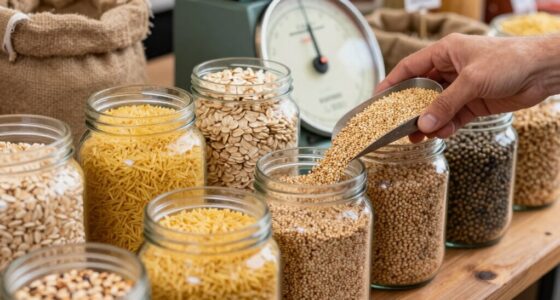
Buying in bulk can be a smart way to save money and reduce food waste, especially if you choose your items carefully. Focus on non-perishable staples like rice, beans, or oats that store well and have a long shelf life. Bulk buying often lowers costs per unit, making it budget-friendly. To avoid spoilage, invest in effective storage solutions such as airtight containers or resealable bags, which keep products fresh and organized. Be mindful of your household size and consumption patterns to prevent buying more than you can use before expiration. Planning your meals around bulk items and storing leftovers properly can help maximize your investment. Incorporating a variety of poolside-friendly snacks into your routine can also make healthy dinners more enjoyable. With smart bulk buying and proper storage solutions, you’ll cut costs and minimize waste while keeping healthy dinners on your table.
Use Leftover Creatively
Leftover food can be a goldmine for creating quick, budget-friendly dinners instead of letting it go to waste. With a bit of leftover transformation, you can turn yesterday’s roast vegetables, cooked grains, or cooked meats into new, delicious meals. Creative reuse is key—think turning roasted chicken into chicken tacos or using cooked rice for a stir-fry. Keep your leftovers visible and organized so you remember to use them. Combining small portions of different leftovers can make a hearty soup or casserole, saving you money and time. By embracing leftover transformation, you reduce food waste and stretch your grocery budget further. It’s a simple, effective way to make your meals more sustainable while keeping dinner interesting and economical.
Meal Planning Strategies for Healthy Eating on a Budget

Effective meal planning is essential for eating healthy on a budget, as it helps you avoid impulse purchases and reduce waste. By planning ahead, you guarantee your meals have nutritional balance and allow for meal customization based on sales and seasonal ingredients. Start by choosing simple recipes that incorporate affordable, nutrient-dense foods. Use a meal plan to outline your dinners for the week, sticking to a shopping list to avoid unnecessary buys. To make it easier, consider this example:
| Day | Protein | Vegetables |
|---|---|---|
| Monday | Lentils | Spinach, carrots |
| Wednesday | Chicken | Broccoli, peppers |
| Friday | Eggs | Tomatoes, zucchini |
This approach keeps your dinners nutritious, flexible, and budget-friendly. Incorporating kitchen organization tips can further streamline your meal prep and shopping routines. Additionally, understanding meal planning strategies can help optimize your grocery list and reduce food waste. Being aware of nutritional balance in your meal choices ensures you meet your dietary needs while staying within your budget. Paying attention to seasonal ingredients can also make your meals more affordable and flavorful.
Batch Cooking and Prep Tips to Make Healthy Dinners Easier
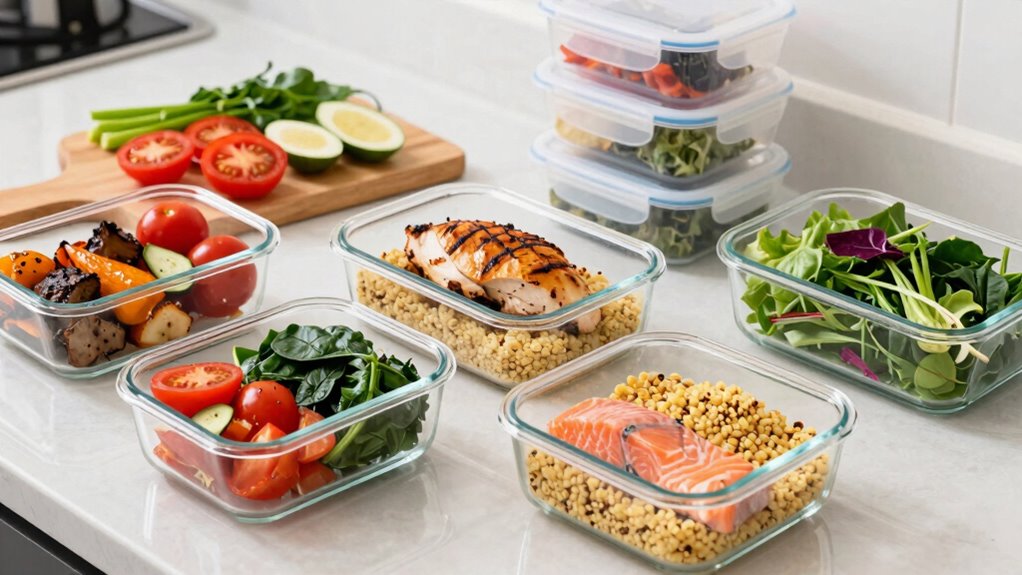
Batch cooking and prep can considerably cut down on evening meal stress, making healthy dinners more manageable on a tight schedule. By dedicating a few hours to meal prep, you can prepare ingredients or entire meals in advance, saving time during busy weekdays. Use effective storage techniques like airtight containers and labeled portions to keep everything fresh and organized. Portioning out meals into individual servings helps you grab and go, reducing last-minute decisions and temptation. Cook versatile ingredients—like grains, roasted vegetables, and proteins—that can be mixed and matched for different dinners. Keeping your prep simple and consistent guarantees you won’t get overwhelmed, making healthy eating on a budget easier and more sustainable over the long run.
Troubleshooting Common Challenges of Budget-Friendly Healthy Eating

Eating healthy on a budget often comes with challenges, but understanding common pitfalls can help you overcome them. One issue is relying on expensive, specific ingredients. To tackle this, consider grocery substitutions—swap out costly items for more affordable, similar options. For example, use frozen vegetables instead of fresh, or substitute beans for meat. Dietary restrictions can also make shopping tricky; however, planning ahead allows you to find budget-friendly alternatives that fit your needs. Be mindful of these points:
Overcome budget challenges by swapping expensive ingredients and planning ahead for versatile, affordable, nutritious meals.
- Prioritize versatile ingredients to accommodate dietary restrictions and reduce waste
- Use grocery substitutions to keep meals affordable without sacrificing nutrition
- Plan meals around sales and seasonal produce to stretch your budget further
Being adaptable and strategic helps you enjoy healthy dinners without overspending.
Frequently Asked Questions
How Can I Incorporate More Vegetables Into Budget-Friendly Dinners?
You can incorporate more vegetables into budget-friendly dinners by meal prepping with seasonal produce, which is often cheaper and fresher. Include a variety of veggies like peppers, zucchini, or spinach in your recipes, and cook them in bulk for the week. Add vegetables to soups, stir-fries, or pasta dishes to boost nutrition without breaking the bank. This approach makes it easy to enjoy healthy, veggie-packed meals regularly.
What Are Cost-Effective Protein Options for Healthy Dinners?
Imagine finding a bag of lentils or a dozen eggs during your budget shopping—these are cost-effective protein options for healthy dinners. You can meal prep with canned beans, chickpeas, or even tofu, making them versatile and affordable. These staples save you money, boost nutrition, and simplify your weekly planning, turning budget shopping into an easy way to keep your dinners both healthy and budget-friendly.
How Do I Handle Picky Eaters While Sticking to a Budget?
To handle picky eaters on a budget, try involving them in meal prep tips like choosing simple, familiar ingredients. Keep meals visually appealing and gradually introduce new flavors. Incorporate budget-friendly snacks to complement meals and satisfy their preferences. You can also prepare small portions of different foods to encourage trying new options without overspending. This approach makes dinner enjoyable while sticking to your budget and keeps everyone satisfied.
Are There Affordable Sources of Whole Grains for Dinner?
Are whole grains like treasure chests for budget-friendly dinners? Absolutely. You can find a variety of affordable options like brown rice, oats, barley, and bulgur at most grocery stores. These grains are versatile, filling, and cost-effective, making them perfect for nutritious dinners. By choosing these budget-friendly grains, you add fiber and flavor to your meals without breaking the bank, keeping everyone satisfied and healthy.
How Can I Make Healthy Dinners Appealing to Children on a Budget?
You can make healthy dinners appealing to children by trying creative flavor combinations that excite their taste buds. Use fun presentation ideas like colorful plates, themed dinner nights, or arranging food into playful shapes. Incorporate their favorite ingredients in nutritious ways, and get them involved in cooking. This approach makes mealtime more engaging, encourages healthy eating habits, and keeps dinners budget-friendly while turning healthy eating into a fun family activity.
Conclusion
Think of your dinner journey as planting a garden—you nurture it with smart choices and patience. With each budget-friendly, healthy meal, you’re cultivating resilience and wellness that bloom over time. Remember, small seeds of effort today grow into a vibrant, nourishing future. Keep tending to your habits, and watch how your life blossoms—one mindful dinner at a time. Your garden of health is just a decision away.
Fall Picks
fall essentials
As an affiliate, we earn on qualifying purchases.