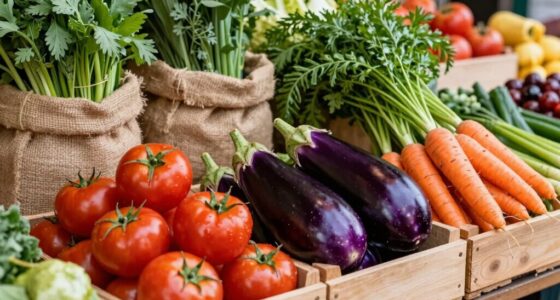
Buying grains in bulk helps you save money and access fresher, higher-quality ingredients, making healthy eating easier. To keep them fresh, use airtight containers and store them in a cool, dry place. Proper rinsing, soaking, and cooking techniques improve flavor and digestion. Regularly check for pests or moisture issues to prevent spoilage. Keep these tips in mind, and you’ll discover how to maximize your grain storage and guarantee long-lasting quality.

Get health and wellness essentials delivered free — and shop member deals
- Fast, free delivery on millions of items
- Access to Prime Big Deal Days deals on October 6–7
- Prime Video, Amazon Music and more included
Key Takeaways
- Purchase grains in bulk to save money, ensure freshness, and access a variety of healthy options.
- Use proper storage containers and keep grains in a cool, dry place to maintain quality.
- Rinse and soak grains before cooking to improve digestion and reduce cooking time.
- Employ airtight containers and moisture absorbers to prevent pests, mold, and spoilage.
- Regularly check stored grains to ensure they remain fresh and free from pests or moisture damage.

Have you ever wondered why buying grains in bulk can be a smart choice? When you purchase grains in larger quantities, you’re not only saving money but also gaining access to fresher, higher-quality ingredients. To make the most of your bulk grains, it’s vital to understand some basic cooking techniques. For example, rinsing grains thoroughly before cooking removes dust and debris, plus helps improve their texture. Soaking grains like rice or barley can reduce cooking time and make them easier to digest. Using the right water-to-grain ratio ensures your dishes turn out perfect, whether you’re preparing fluffy rice, hearty quinoa, or chewy bulgur. Keep an eye on cooking times, as they can vary depending on the grain, and use a timer to prevent overcooking. Incorporating different seasonings or broth during cooking can boost flavor without adding extra calories, making your meals more satisfying and nutritious. Additionally, understanding storage techniques is crucial to keep your grains fresh and prevent spoilage, and choosing proper containers can help maintain their quality over time, ensuring you get the best from your bulk purchases. Proper airtight storage can also prevent pests and moisture from damaging your grains, extending their shelf life. Additionally, learning about moisture control can help you keep grains dry and prevent mold growth during storage, especially when you use desiccants or moisture-absorbing products to maintain ideal conditions.
airtight grain storage containers
As an affiliate, we earn on qualifying purchases.
As an affiliate, we earn on qualifying purchases.
Frequently Asked Questions
How Do I Store Bulk Grains to Keep Them Fresh?
To keep your bulk grains fresh, store them in airtight containers, like glass jars or sturdy plastic bins, to prevent exposure to air and moisture. Keep these containers in a cool, dark, and dry place, such as a pantry or cupboard, to preserve their freshness. Regularly check for any signs of pests or spoilage, and consider adding oxygen absorbers or bay leaves for extra freshness preservation.
Are There Gluten-Free Grain Options Available in Bulk?
Yes, there are gluten-free grain options available in bulk. You can find certified gluten-free grains like rice, millet, quinoa, and buckwheat at most health food stores or bulk sections. Always check labels to verify they’re certified gluten-free, especially if you have celiac disease or gluten sensitivity. Buying these grains in bulk allows you to enjoy a variety of healthy, gluten-free options while minimizing packaging waste and saving money.
How Long Can I Store Bulk Grains Safely?
You can typically store bulk grains safely for 6 months to a year if you use proper storage techniques. Keep grains in airtight containers in a cool, dark, dry place to extend their shelf life. Regularly check for signs of spoilage like mold or pests. Proper storage helps maintain freshness and prevents spoilage, ensuring your grains stay nutritious and safe to eat for as long as possible.
What Are the Most Cost-Effective Grains to Buy in Bulk?
You’ll find that whole grains like oats, brown rice, and barley are the most cost-effective to buy in bulk, especially when you opt for organic options. Their minimal grain processing keeps costs down and preserves nutrients. Buying in bulk decreases packaging waste too. Plus, choosing organic guarantees you’re avoiding pesticides, making these grains a healthier, budget-friendly choice for everyday meals.
How Can I Tell if Bulk Grains Are of Good Quality?
You can tell if bulk grains are of good quality by checking their freshness and quality indicators. Look for grains that smell fresh and earthy, not musty or sour. Inspect for uniform color and avoid any with signs of mold, pests, or moisture. Feel the grains—good quality ones are dry and free-flowing. If possible, ask about their storage date or origin to guarantee you’re getting fresh, high-quality grains.
As an affiliate, we earn on qualifying purchases.
Conclusion
Buying grains in bulk is like planting seeds for a healthier future—you’ll save money, reduce waste, and always have nutritious options at your fingertips. With a little planning, you can turn your pantry into a treasure trove of wholesome goodness, making every meal a step toward better health. So go ahead, fill your jars and embrace the bounty of bulk buying—your taste buds and wallet will thank you for it!
As an affiliate, we earn on qualifying purchases.
As an affiliate, we earn on qualifying purchases.
Fall Picks
fall essentials
As an affiliate, we earn on qualifying purchases.