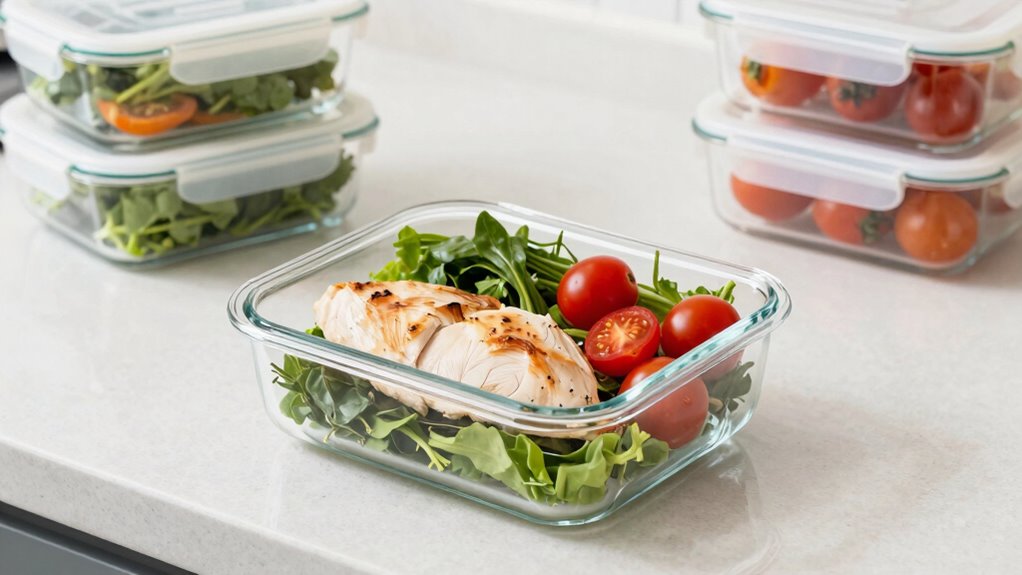

To store meal prep chicken safely, keep it at or below 40°F (4°C) in airtight containers to prevent bacteria growth and cross-contamination. Refrigerate within two hours, or one hour if it’s hot outside. Label containers with dates and eat cooked chicken within 3 to 4 days. For longer storage, freeze to halt bacteria. Proper handling and temperature control are essential for safety and quality—stay with us to learn more about safe storage practices.
Key Takeaways
- Store cooked chicken in airtight containers and label with the date to track freshness.
- Refrigerate chicken within two hours, or within one hour if temperatures exceed 90°F (32°C).
- Keep refrigerator temperature at or below 40°F (4°C) to slow bacterial growth.
- Reheat chicken to an internal temperature of 165°F (74°C) before eating.
- Freeze leftover chicken if not consumed within 3-4 days to prevent bacteria proliferation.
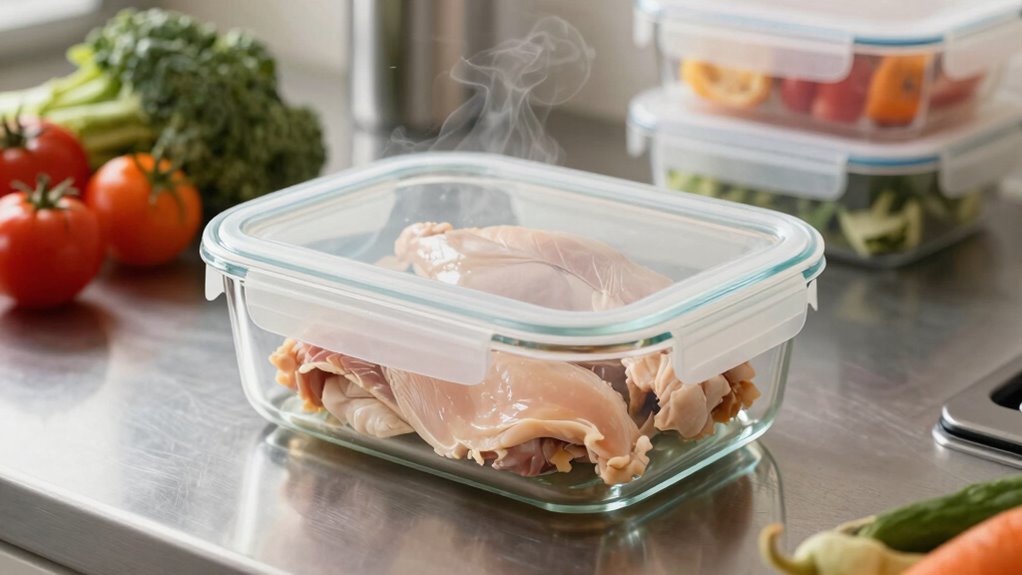
Are you confident you’re storing your meal prep chicken safely? It’s a question worth asking because food safety isn’t just about avoiding a bad smell or a slimy texture. Proper refrigeration plays an essential role in keeping your chicken safe to eat, and understanding this simple but often overlooked fact can save you from potential health issues. When you store chicken improperly, bacteria can grow rapidly, leading to foodborne illnesses that can ruin your week. To prevent this, always prioritize proper refrigeration, which involves keeping your chicken at or below 40°F (4°C). This temperature slows bacterial growth considerably, giving you peace of mind that your meal prep remains safe to consume days after cooking.
Many people underestimate how important proper refrigeration is, especially when storing cooked chicken for multiple days. The key is to use airtight containers that seal tightly, preventing cross-contamination and preventing the chicken from drying out or absorbing other fridge odors. Labeling containers with the date you cooked the chicken helps you keep track of freshness, ensuring you consume it within the safe window—usually 3 to 4 days for cooked poultry. If you know you won’t finish the chicken within this period, freezing it is a smarter move. Freezing halts bacterial growth altogether, making your chicken safe to eat even weeks later. Just remember to thaw it properly in the refrigerator or microwave before reheating. Proper storage techniques are vital for maintaining food quality and safety over time. Additionally, understanding foodborne pathogen growth mechanisms can help you better grasp why these practices are crucial.
Food safety isn’t just about refrigeration; it’s about consistency and vigilance. Always refrigerate your chicken promptly after cooking—preferably within two hours—to prevent bacteria from multiplying. If the room temperature is particularly warm, say above 90°F (32°C), reduce this window to an hour. When reheating, ensure the chicken reaches an internal temperature of 165°F (74°C) to kill any lingering bacteria. These steps might seem small, but they’re indispensable for safe meal prep. It’s tempting to cut corners or ignore guidelines when busy, but neglecting food safety can have serious consequences. Proper refrigeration isn’t complicated; it’s a straightforward practice that guards your health and preserves the quality of your meals.
In the end, safe storage of meal prep chicken boils down to simple discipline: refrigerate promptly, keep it cold, and reheat thoroughly. The right habits ensure you’re not just eating leftovers, but safe, healthy food that supports your lifestyle rather than risking illness. Remember, when it comes to food safety, the simplest practices often make the biggest difference. If you stick to proper refrigeration protocols, you’ll enjoy your prepared meals with confidence, knowing you’re doing everything possible to keep both your food and your health in check. Proper refrigeration and temperature control are key factors in preventing bacterial growth and ensuring food safety.
airtight food storage containers for chicken
As an affiliate, we earn on qualifying purchases.
As an affiliate, we earn on qualifying purchases.
Frequently Asked Questions
How Long Can Cooked Chicken Safely Stay in the Refrigerator?
Cooked chicken stays safe in the refrigerator for up to 3 to 4 days. For food safety, it’s best to store it in airtight containers and keep the temperature below 40°F. Use proper storage tips like labeling your containers and dividing chicken into smaller portions to prevent spoilage. Always reheat thoroughly and check for any signs of spoilage before eating. Prioritizing these tips keeps your meals safe and tasty.
Can I Freeze Cooked Chicken for Meal Prep?
Sure, you can freeze cooked chicken for meal prep—ironic, right? Freezing locks in flavor and keeps your chicken safe longer, but only if you use proper packaging techniques. Wrap it tightly in foil or vacuum-seal it, preventing freezer burn and preserving taste. When you’re ready to eat, thaw it safely in the fridge. Freezing is the best way to maximize flavor preservation and avoid waste.
What’s the Best Container for Storing Meal Prep Chicken?
The best container for storing meal prep chicken is a reusable container with airtight storage. These containers keep your chicken fresh by preventing air exposure, which can cause spoilage. Look for BPA-free options with secure lids that seal tightly. Reusable containers are eco-friendly, cost-effective, and perfect for portioning, ensuring your chicken stays safe, flavorful, and ready to enjoy whenever you need it.
How Do I Prevent Chicken From Drying Out During Storage?
Think of your chicken as a delicate sponge, soaking up flavors and moisture. To prevent it from drying out, use marinating techniques that lock in juices, like a cozy blanket for your meat. Portion control also helps—smaller portions retain moisture better. Store chicken in airtight containers and reheat gently. By doing this, you keep each piece tender, juicy, and flavorful, ready for your next delicious meal.
Is It Safe to Reheat Chicken Multiple Times?
Reheating chicken multiple times isn’t safe because it increases the risk of bacteria growth, which can cause foodborne illnesses. For food safety, store your chicken properly, use airtight containers, and reheat only what you’ll eat to avoid multiple reheats. Follow storage tips like keeping it at or below 40°F, and reheat thoroughly to an internal temperature of 165°F. Always prioritize safety over leftovers.
refrigerator thermometer for food safety
As an affiliate, we earn on qualifying purchases.
As an affiliate, we earn on qualifying purchases.
Conclusion
Remember, safe storage keeps your chicken safe, your meals fresh, and your health protected. Properly storing your meal prep chicken prevents bacteria growth, preserves flavor, and extends shelf life. By following safe storage practices, you guarantee your food stays safe, your meals stay delicious, and your health stays secure. Keep safety simple, keep storage smart, and keep your meals satisfying. Because when it comes to chicken, safety isn’t just a step—it’s a standard, a necessity, and a priority.
meal prep chicken storage containers
As an affiliate, we earn on qualifying purchases.
As an affiliate, we earn on qualifying purchases.
freezer-safe chicken storage bags
As an affiliate, we earn on qualifying purchases.
As an affiliate, we earn on qualifying purchases.