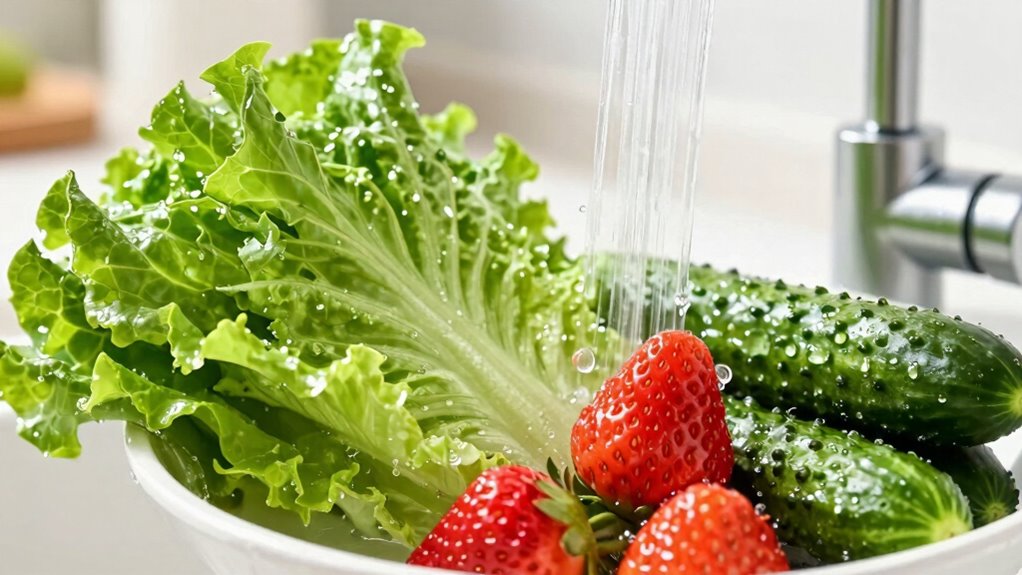

To wash produce easily and effectively, start by rinsing fruits and veggies under cold running water. For produce with thicker skins or dirt, submerge it in water for a few minutes and gently scrub with a brush or cloth. Use a vinegar solution (1 part vinegar to 3 parts water) for added pesticide removal. Separate leafy greens, swirl them to loosen dirt, then rinse and dry thoroughly. Keep practicing these simple steps to keep your produce safe and fresh—there’s more tips to discover below.
Key Takeaways
- Submerge fruits and vegetables in clean water for a few minutes to loosen dirt and residues.
- Use a vegetable brush or cloth to gently scrub skins and crevices.
- Rinse leafy greens thoroughly by separating leaves and swirling in water.
- Consider a vinegar solution (1 part vinegar to 3 parts water) for extra residue removal.
- Dry produce with a clean towel or paper towel to prevent spoilage and maintain freshness.
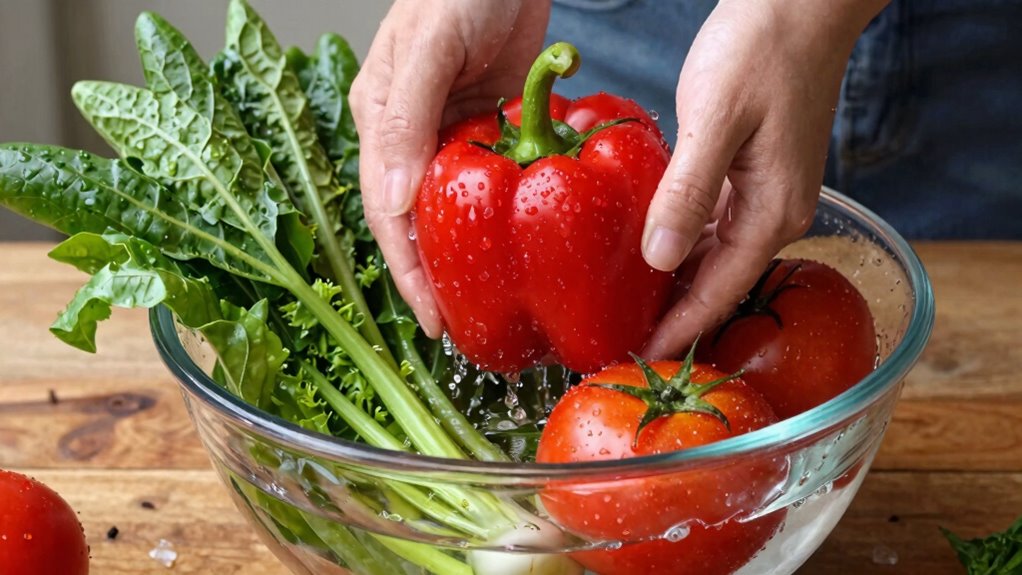
Washing produce is a simple yet essential step to guarantee your fruits and vegetables are safe to eat. It’s not just about rinsing them quickly under water; it’s about doing it thoroughly to remove dirt, bacteria, and pesticides. When you’re preparing your meals, taking the time to properly wash your produce makes a big difference in your health and enjoyment. One effective method is fruit soaking, where you submerge your fruits in clean water for a few minutes. This helps loosen dirt, wax, and residues that might be clinging to the surface. For fruits with thicker skins, like melons or peaches, fruit soaking is especially useful because it allows water to penetrate crevices that brushing alone might miss. After soaking, gently rub the surface with your hands or a soft brush to dislodge any stubborn dirt. This is where vegetable scrubbing comes into play. Using a vegetable brush or a clean cloth, scrub the surface of your produce with gentle pressure. This step is vital for vegetables like carrots, potatoes, or cucumbers, which often have dirt lodged in their skins. Scrubbing helps remove bacteria and pesticides that might not come off with rinsing alone. Make sure you pay attention to nooks and crannies, where grime tends to accumulate. Use fresh water for each wash to prevent recontamination, and avoid soaking produce for too long, as this can cause it to spoil faster. For leafy greens like lettuce or spinach, separate the leaves and rinse them individually to guarantee every part is cleaned thoroughly. Swirling the greens in a bowl of water can help loosen dirt, but it’s best to rinse them under running water afterward. Remember to dry your produce with a clean towel or paper towel to remove excess moisture, which helps prevent spoilage. Washing produce isn’t just about cleanliness; it’s about protecting yourself from potential contaminants. If you’re concerned about pesticide residues, you might consider using a vinegar solution—mixing one part vinegar with three parts water—and soaking your produce for a few minutes before rinsing thoroughly. However, plain water with fruit soaking and vegetable scrubbing remains the most straightforward and effective approach for everyday cleaning. Incorporating proper cleaning techniques can further enhance the safety and cleanliness of your produce. Additionally, using appropriate tools like brushes and towels can make the process more efficient and thorough. Regularly cleaning your produce with proper methods can help reduce the presence of harmful residues, ensuring your fruits and vegetables are as safe as possible. You’ll find that consistent, proper washing keeps your fruits and vegetables fresh, safe, and ready to enjoy. Taking these small steps guarantees you’re not just eating healthy but also minimizing health risks from dirt and harmful residues.
vegetable brush for scrubbing produce
As an affiliate, we earn on qualifying purchases.
As an affiliate, we earn on qualifying purchases.
Frequently Asked Questions
Can I Wash Produce With Soap or Disinfectants?
You shouldn’t wash produce with soap or disinfectants because it can compromise food safety and leave chemical residues. Instead, rinse fruits and vegetables under cold running water to remove dirt and bacteria effectively. For extra cleaning, use a brush on firm produce. Avoid harsh chemicals, as they’re not intended for consumption and can be harmful. Proper washing with water guarantees safety without risking chemical residues.
Is It Necessary to Peel All Fruits and Vegetables?
Peeling isn’t always necessary; scrubbing fruits and vegetables thoroughly can often remove dirt and bacteria effectively. Use a brush or your hands to scrub produce, especially for items with thicker skins. If you prefer, fruit peeling alternatives like using a vegetable peeler or cutting away damaged areas can work. Remember, washing and scrubbing are often enough for safe consumption, saving you time and preserving nutrients better than peeling.
How Long Should I Rinse Produce for Effective Cleaning?
Imagine you’re rinsing strawberries before slicing them for a salad. You should rinse produce for about 20 seconds, using a produce scrubbing and rinse technique. Gently scrub with your hands or a brush, then rinse thoroughly under running water. This guarantees dirt and bacteria are washed away effectively. Rinsing longer than 20 seconds doesn’t add much benefit, so keep it simple and thorough for the best results.
Does Washing Remove All Pesticides and Bacteria?
Washing produce helps reduce pesticides and bacteria but doesn’t eliminate them completely. You can lower pesticide residues through thorough rinsing and scrubbing, which aids in pesticide reduction. For bacterial removal, washing with clean, cold water and a brush is effective. However, some pesticides and bacteria might still remain. To maximize safety, consider peeling or cooking produce, especially if you’re concerned about contamination or residues.
Can I Wash Produce Ahead of Time and Store It?
Yes, you can wash produce ahead of time for convenience. Start with pre-wash preparation by rinsing thoroughly under cold water and gently scrubbing if needed. For storage tips, make sure the produce is completely dry before storing to prevent mold. Store leafy greens in a paper towel-lined container and other produce in airtight bags or containers in the fridge. This way, your produce stays fresh and ready to eat later.
As an affiliate, we earn on qualifying purchases.
Conclusion
Now that you know the simple steps to wash your produce effectively, you’re ready to enjoy fresh, safe fruits and veggies. But wait—there’s one surprising trick that could make all the difference, and it’s easier than you think. Are you curious to discover this secret? Keep these tips in mind, and you’ll uncover the best way to keep your produce perfectly clean every time. The next step might just change your whole routine—are you ready to find out?
As an affiliate, we earn on qualifying purchases.
As an affiliate, we earn on qualifying purchases.