
To thaw food safely, choose methods like refrigeration, cold water, or microwave, depending on your time and food type. Always plan ahead for longer thawing in the fridge, and use airtight bags for water thawing. Never leave food at room temperature, as bacteria grow quickly. Proper thawing helps keep your food safe and fresh. Continue exploring for detailed tips on avoiding common mistakes and ensuring your food stays delicious and safe.

Get health and wellness essentials delivered free with Prime
- Fast, free delivery on millions of items
- Prime Video, Amazon Music and more included
- Member-only deals all year
Key Takeaways
- Use refrigerator, cold water, or microwave methods for safe, efficient thawing; avoid room temperature to prevent bacteria growth.
- Plan ahead for meat, poultry, and seafood by thawing in the fridge or using cold water; cook promptly if using microwave.
- Thaw fruits and vegetables in the fridge or microwave to maintain quality and prevent spoilage.
- Never thaw food at room temperature or with hot water to reduce the risk of bacterial contamination.
- Reheat thoroughly to at least 165°F and store leftovers properly to ensure safety and freshness.
refrigerator food thawing containers
As an affiliate, we earn on qualifying purchases.
As an affiliate, we earn on qualifying purchases.
How to Choose the Best Thawing Method for Your Food
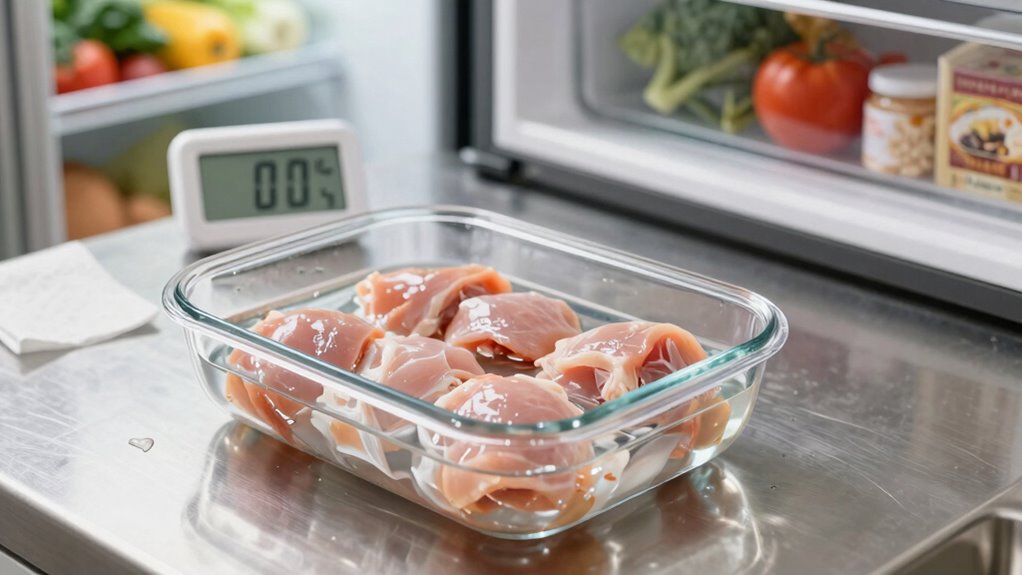
When choosing the best thawing method for your food, it’s important to take into account safety, convenience, and the type of food you’re preparing. Food thawing techniques vary depending on whether you’re thawing meat, vegetables, or prepared dishes. For safety, avoid leaving food out at room temperature, which can promote bacteria growth. The safest options include thawing in the refrigerator, using cold water, or the microwave—each suited for different situations. Consider your schedule and the amount of time you have; refrigeration takes longer but is the safest, while microwave thawing is quick but requires immediate cooking. Remember to follow kitchen safety tips, like keeping raw foods separate to prevent cross-contamination, ensuring your food stays safe to eat. Additionally, understanding the proper Food thawing techniques can help prevent foodborne illnesses and preserve food quality. Being aware of proper food safety practices can further enhance your food handling routine and ensure your meals remain healthy and safe. It’s also beneficial to familiarize yourself with safe food handling tips to maintain optimal food quality during the thawing process. Properly managing food storage conditions is crucial to preventing spoilage and ensuring your food remains safe throughout the process. Incorporating temperature control strategies during thawing can further reduce the risk of bacterial growth and keep your food fresh.
vacuum seal airtight bags for water thawing
As an affiliate, we earn on qualifying purchases.
As an affiliate, we earn on qualifying purchases.
Safely Thaw Meat, Poultry, and Seafood Step by Step
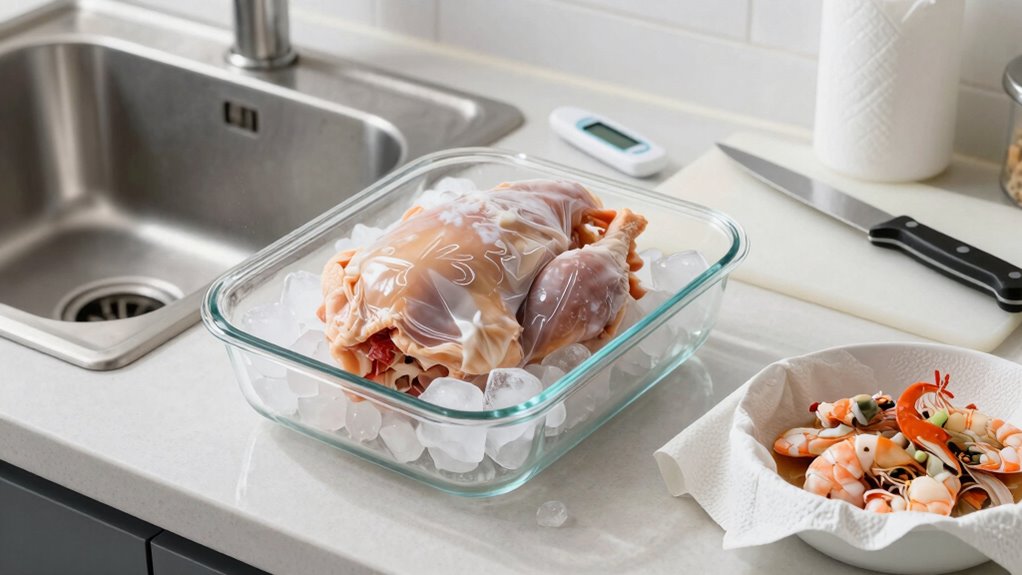
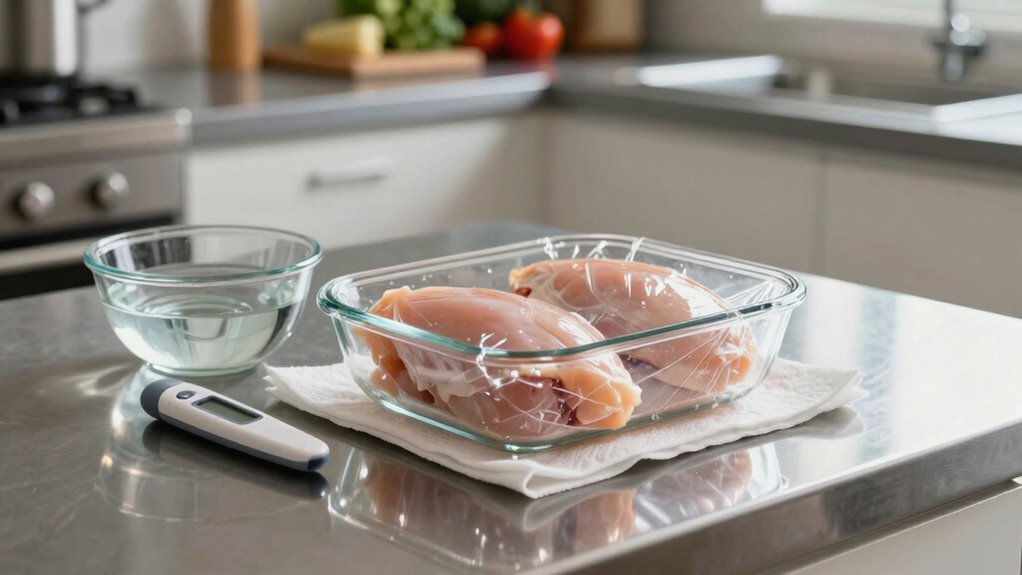
Thawing meat, poultry, and seafood safely is essential to prevent bacterial growth and guarantee your food remains safe to eat. To do this properly, start by planning ahead and using the refrigerator method—set your food on a plate or dish to catch drips. This slow process maintains food preservation and keeps temperatures consistent. If you’re short on time, use the cold water method: submerge the items in airtight bags and change the water every 30 minutes. Avoid thawing at room temperature, as it encourages bacteria. Cooking techniques can also be used to safely cook partially thawed items directly. Always make sure your food reaches the right internal temperature to eliminate bacteria, making your food both safe and delicious. Additionally, understanding food safety guidelines can help you stay informed and make better decisions during the thawing process.
As an affiliate, we earn on qualifying purchases.
How to Thaw Fruits, Veggies, and Prepared Foods Properly
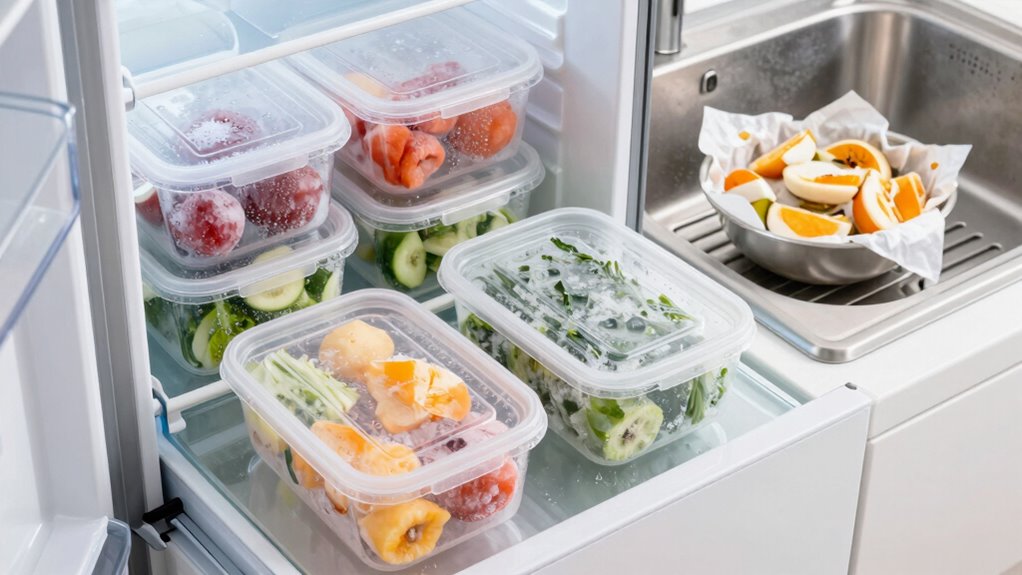
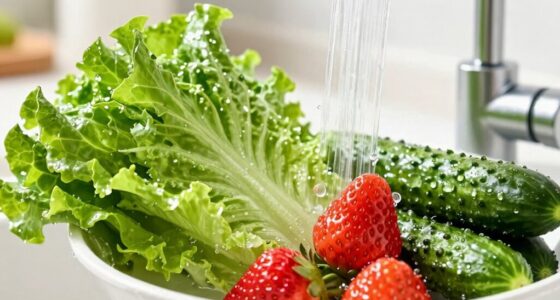
To guarantee fruits, vegetables, and prepared foods stay safe and retain their quality, it’s important to thaw them properly. For fruits like berries, thawing in the fridge helps preserve their delicate texture and flavor, preventing spoilage and maintaining berry preservation. When thawing vegetables, consider a quick blanching process before freezing to lock in nutrients and color, then thaw in the fridge or cold water for even thawing. Prepared foods, such as casseroles or cooked dishes, should be thawed in the fridge or microwave to avoid bacterial growth. Proper thawing preserves the food’s quality and safety, ensuring you enjoy fresh-tasting fruits and vegetables without compromising on flavor or texture. Additionally, understanding the proper storage and handling techniques, similar to the importance of electric vehicle safety tips, can help prevent foodborne illnesses and ensure your food remains in optimal condition. Using the correct thawing methods is also an essential part of food safety practices that can help minimize health risks.
food safety thermometer for internal temperature
As an affiliate, we earn on qualifying purchases.
As an affiliate, we earn on qualifying purchases.
Common Thawing Mistakes to Avoid for Food Safety
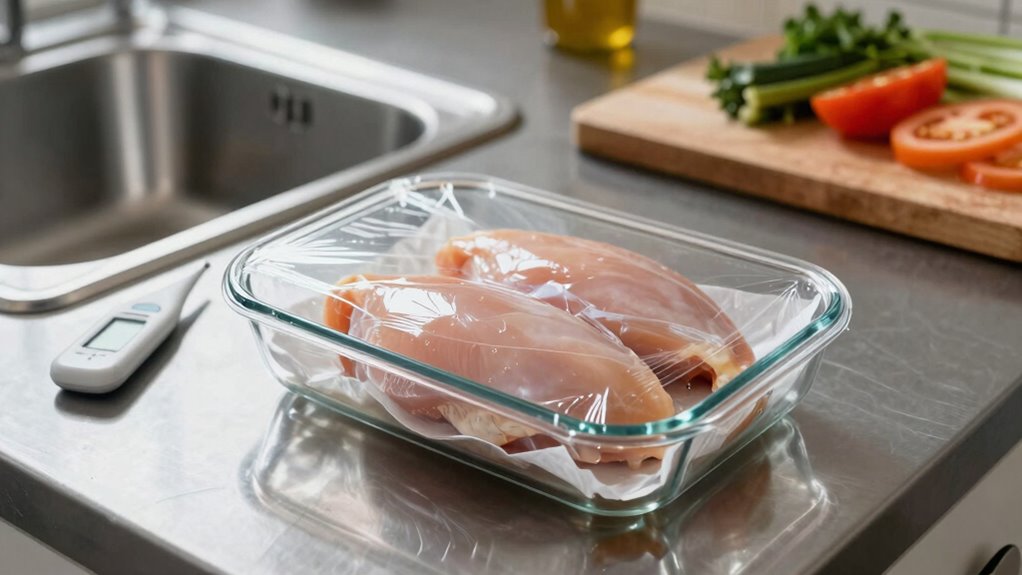
Many common thawing mistakes can compromise food safety and lead to illness. One mistake is thawing food at room temperature, which allows bacteria to multiply rapidly. Instead, use safe methods like thawing in the refrigerator, in cold water, or in the microwave. Avoid rushing the process with hot water, as it can cook the outer layers while the inside remains frozen. Additionally, poor storage mistakes, such as refreezing thawed food without cooking it first, can increase bacterial growth. When it comes to cooking tips, always verify food is thoroughly cooked after thawing to kill any bacteria. Being mindful of these pitfalls helps prevent contamination and keeps your food safe for eating. Proper thawing techniques are essential for maintaining food quality and safety.
Storing and Reheating Thawed Food to Keep It Safe and Fresh

Properly storing and reheating thawed food is crucial to prevent bacterial growth and guarantee safety. After thawing, put food in airtight containers or tightly wrapped wraps to maintain quality through proper food storage. Keep leftovers in the refrigerator at 40°F (4°C) or below, and use them within 1-2 days. When reheating, use the right techniques to ensure even heat distribution—microwave, stovetop, or oven are effective options. Always reheat to at least 165°F (74°C) to kill bacteria. Avoid partial reheating, which can leave bacteria alive. Remember, proper food storage and correct reheating techniques preserve freshness and prevent foodborne illness, making your meals safe and enjoyable even after thawing. Incorporating food safety practices into your routine helps protect both your health and the environment by reducing waste. Maintaining proper food storage temperatures is essential to minimize bacterial growth and ensure safety. Additionally, understanding proper reheating methods helps ensure your food is both safe and flavorful. Regularly monitoring food temperature during reheating can further guarantee that all bacteria are effectively eliminated. Being aware of time limits for leftovers can also help prevent the risk of foodborne illnesses.
Frequently Asked Questions
How Long Can I Keep Thawed Food in the Refrigerator?
You can keep thawed food in the refrigerator for up to 1 to 2 days to maintain proper food storage and guarantee refrigerator safety. After thawing, it’s best to cook or consume the food promptly to prevent bacteria growth. Always store it in airtight containers or wrapped tightly to avoid cross-contamination. Regularly check your fridge temperature and discard any leftovers that seem questionable to keep your food fresh and safe.
Can I Refreeze Food After It Has Been Thawed?
Imagine you thawed seafood safely in the fridge, then realized you won’t eat it all. You can refreeze leftovers if they’ve been kept at proper temperatures and haven’t been left out too long. For refreezing, make sure the food is still cold and hasn’t been contaminated. Remember, refreezing thawed seafood is safe, but repeatedly doing so may affect quality. Always prioritize safety to prevent foodborne illnesses.
Is It Safe to Thaw Food at Room Temperature?
Thawing food at room temperature isn’t safe because bacteria can grow rapidly in the “danger zone” between 40°F and 140°F. When you leave food out at room temperature, you risk bacterial growth, which can cause foodborne illness. Instead, thaw food in the refrigerator, in cold water, or in the microwave. These methods keep the food at safe temperatures and prevent bacteria from multiplying.
What Signs Indicate Food Has Spoiled After Thawing?
You’ll notice food has spoiled after thawing if it develops a foul, spoiled smell or a slimy texture. These signs strongly indicate bacterial growth, making it unsafe to eat. Always trust your senses—if the smell is off or the texture feels sticky, discard the food immediately. Don’t risk food poisoning; when in doubt, throw it out. Proper storage and timely consumption help prevent spoilage and guarantee safety.
Can I Thaw Food in the Microwave and Then Cook Immediately?
Yes, you can thaw food in the microwave and then cook immediately. Microwave thawing is quick and convenient, but it often leaves parts of the food partially cooked, so you should cook it right away to prevent bacteria growth. be certain to use the microwave’s defrost setting and monitor the process closely. Once thawed, cook your food immediately to guarantee safety and freshness.
Conclusion
Now that you’re armed with the secrets to safe thawing, you’re ready to navigate your kitchen with confidence. Think of thawing as a delicate dance—each step carefully choreographed to keep your food fresh and safe. With these tips in your back pocket, you’ll turn everyday grocery trips into a mastery of food safety, transforming your kitchen into a fortress where freshness reigns supreme. Happy cooking—your culinary adventure awaits!
Cold & flu season Picks
humidifiers
As an affiliate, we earn on qualifying purchases.