
To keep your meal prep safe and easy, focus on food safety principles like washing hands and surfaces thoroughly, using proper storage containers, and labeling meals with dates. Keep foods at the right temperature, refrigerating leftovers within two hours and reheating thoroughly. Practice good hygiene by avoiding cross-contamination with separate utensils and surfaces. Knowing these basics will help prevent spoilage and illness. Keep going to discover more tips for stress-free, safe meal prep.
Key Takeaways
- Always wash hands and surfaces thoroughly before handling and after raw ingredient contact.
- Store meals in proper containers, label with dates, and keep at safe temperatures to prevent spoilage.
- Maintain refrigerator temperature below 40°F and reheat leftovers to at least 165°F for safety.
- Use separate utensils and cutting boards for raw meats and produce to prevent cross-contamination.
- Divide meals into individual servings and avoid overcrowding in storage for easier safety management.
As an affiliate, we earn on qualifying purchases.
Food Safety Basics You Need for Meal Prep

Before you start meal prepping, it’s essential to understand the basic food safety principles that keep your meals safe to eat. Achieving nutritional balance is key; include a variety of food groups to support your health. Proper meal portioning helps control intake and prevents overeating, but it also reduces the risk of spoilage. When preparing meals, always wash your hands and surfaces thoroughly to prevent cross-contamination. Use clean containers and utensils, and keep hot foods hot and cold foods cold. Paying attention to portion sizes ensures you store leftovers safely and avoid waste. Additionally, understanding the importance of temperature control is essential for keeping foods safe during storage and reheating. Being aware of food safety regulations can further help you follow best practices and prevent foodborne illnesses. Implementing proper storage techniques is critical for maintaining food safety over time. Maintaining proper food handling practices can significantly reduce the risk of contamination and spoilage. Regularly monitoring food temperatures with a thermometer can help you ensure foods are stored and served at safe levels. By focusing on these fundamentals—nutritional balance, meal portioning, and hygiene—you set a solid foundation for safe, healthy meal prep every time.
As an affiliate, we earn on qualifying purchases.
How to Store Your Prepped Meals Safely and Effectively

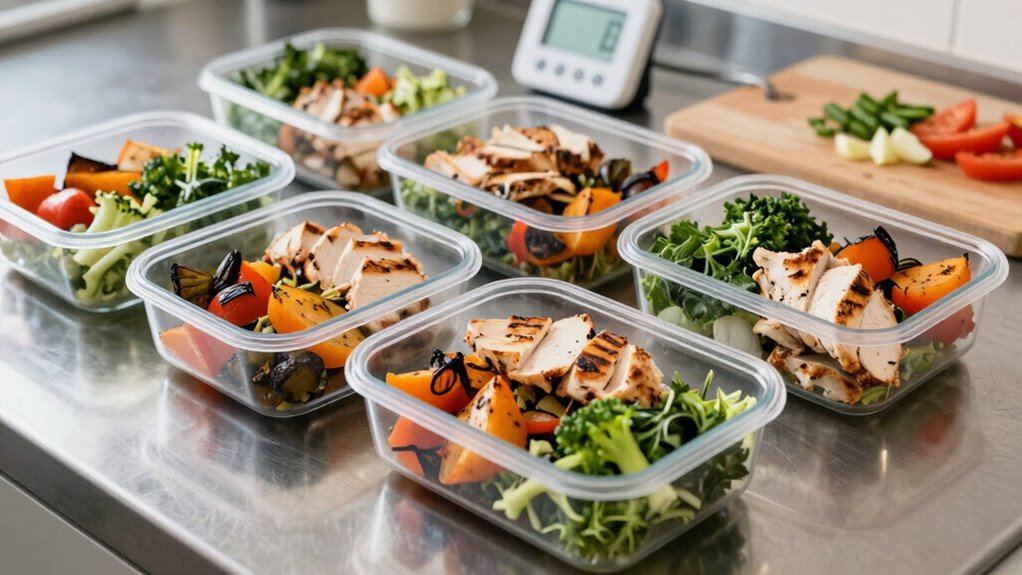
Proper storage is essential to keep your prepped meals safe and fresh. Using the right storage containers helps prevent spoilage and makes portion control easier. Always divide your meals into individual servings to avoid reusing or exposing large quantities repeatedly. Label containers with dates to track freshness and guarantee you consume meals within safe timeframes. Choose airtight containers to prevent leaks and contamination. Store meals at the back of the fridge, where the temperature is most consistent, and avoid overcrowding. Consider stackable containers for efficient use of space. Keep raw ingredients separate from cooked meals to prevent cross-contamination. Regularly check stored food for signs of spoilage and discard anything questionable. Proper storage practices keep your meals safe, delicious, and easy to enjoy. Additionally, understanding food safety guidelines can help you make informed decisions about handling and storage, including proper temperature control to prevent bacterial growth. Maintaining indoor air quality can also contribute to overall food safety by reducing airborne contaminants that might affect your kitchen environment. Ensuring proper hygiene practices while handling food further minimizes the risk of contamination and spoilage. Proper storage techniques are crucial for maintaining food safety and extending shelf life.
reusable food storage containers
As an affiliate, we earn on qualifying purchases.
As an affiliate, we earn on qualifying purchases.
Keeping Your Meals at the Right Temperature

Maintaining the correct temperature for your prepped meals is key to preventing bacteria growth and ensuring food safety. Proper temperature control helps keep perishable foods out of the danger zone, typically between 40°F and 140°F, where bacteria thrive. Use a reliable thermometer to check storage conditions regularly, especially if you’re cooling large batches. Keep hot foods hot in a slow cooker or warming tray, and refrigerate leftovers promptly within two hours of cooking. Freezing meals can also extend shelf life and prevent spoilage. Regularly monitoring storage conditions with accurate thermometers ensures safety and quality. Incorporating food safety guidelines into your routine can further reduce the risk of foodborne illnesses. Consistent temperature management not only keeps your meals safe but also preserves their freshness and flavor. Paying attention to proper cooling techniques can further help in maintaining safe storage temperatures. Additionally, understanding danger zone temperatures can help you better manage and prevent unsafe food conditions. Being aware of foodborne illness prevention strategies can also enhance your overall food safety practices. By paying close attention to these details, you minimize spoilage risk and enjoy your meal preps with confidence.
As an affiliate, we earn on qualifying purchases.
Hygiene Tips to Prevent Cross-Contamination
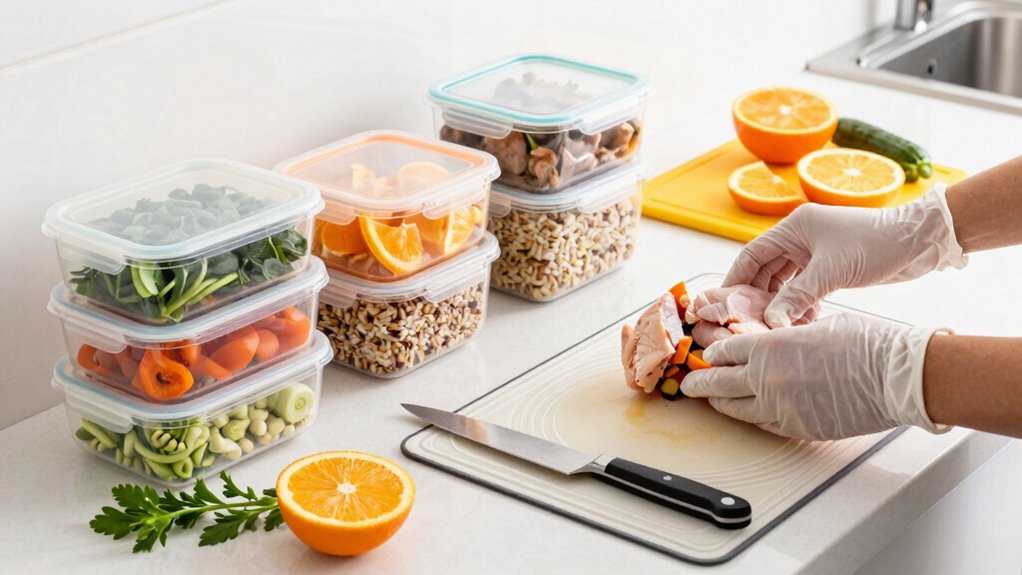
Cross-contamination is a common cause of foodborne illness, and it can happen easily if you’re not careful with hygiene practices. To prevent this, focus on maintaining proper kitchen sanitation and mastering handwashing techniques. Always wash your hands thoroughly with soap and water before handling food, after touching raw meat, or using the bathroom. Use separate cutting boards and utensils for raw meats and produce to avoid cross-contact. Keep surfaces clean and disinfected regularly, especially after preparing raw ingredients. Store raw foods below cooked or ready-to-eat items to prevent drips. Avoid touching your face or other surfaces while handling food, and wash hands frequently throughout meal prep. These small steps considerably reduce the risk of cross-contamination and ensure safer meals. Additionally, practicing hygiene practices in your kitchen supports overall food safety and helps protect both your health and the environment. Proper food storage techniques further complement these efforts by preventing bacterial growth and spoilage. Maintaining proper kitchen sanitation is essential for creating a safe cooking environment and reducing health risks. Regularly checking cleaning supplies and replacing them when necessary also plays a vital role in maintaining a hygienic kitchen environment. Incorporating proper cleaning techniques can further enhance your kitchen’s safety by effectively eliminating germs and bacteria.
Common Meal Prep Food Safety Mistakes and How to Fix Them
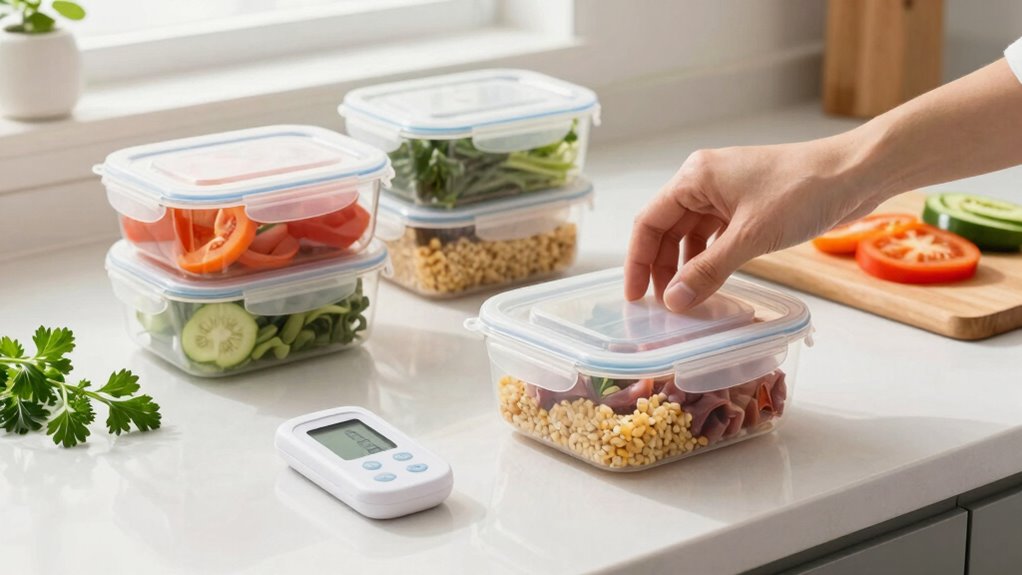
Even if you follow all the hygiene tips, mistakes can still happen during meal prep that compromise food safety. One common mistake is poor meal prep storage, like leaving cooked food out too long or storing it at incorrect temperatures. Always refrigerate or freeze meals promptly, keeping leftovers below 40°F. Another mistake is neglecting safe reheating practices; reheating unevenly or at too low a temperature can allow bacteria to survive. To fix this, guarantee you reheat food to at least 165°F and stir or rotate it for even heating. Also, avoid mixing raw and cooked foods during storage to prevent cross-contamination. Staying vigilant about proper meal prep storage and food temperature control helps prevent foodborne illnesses and keeps your meals safe to enjoy. Proper storage and reheating are essential parts of food safety to ensure your meals remain safe and delicious.
Frequently Asked Questions
How Long Can Prepped Meals Safely Stay in the Fridge?
Prepped meals stay safe in the fridge for about 3 to 4 days. Focus on proper meal storage to maintain food freshness and prevent spoilage. Keep your meals in airtight containers and at or below 40°F (4°C). If you’re unsure, check for any signs of spoilage like bad odor or slimy texture. When in doubt, it’s better to discard leftovers to avoid foodborne illnesses.
Can I Freeze Cooked Meals for Longer Storage?
Yes, you can freeze cooked meals for longer storage. Proper meal prep storage involves cooling your meals quickly before freezing to maintain freshness. Make sure you use airtight containers or freezer bags to prevent freezer burn. Remember, freezing meal safety is essential; label your meals with dates, and aim to consume them within 2-3 months. This way, you keep your prepped foods safe, tasty, and ready when you need them.
What Are Signs of Spoiled Meal Prep Foods?
Imagine a meal sitting in your fridge, and suddenly you notice a sour smell or a slimy texture—that’s a clear sign of spoiled food. Food safety myths aside, spoiled food indicators include foul odors, discoloration, and mold. If your meal prep looks off or tastes strange, discard it. Trust your senses—these are your best tools to avoid foodborne illnesses and keep your meals safe and fresh.
How Do I Safely Reheat Meal Prep Dishes?
To safely reheat your meal prep dishes, start with proper food storage—keep leftovers in airtight containers in the fridge. When reheating, use appropriate techniques like microwave heating with a cover or stove-top reheating in a pan, stirring regularly. Make sure the food reaches an internal temperature of 165°F to kill bacteria. Always reheat only what you’ll consume to prevent bacteria growth, and avoid reheating multiple times.
Are There Specific Cleaning Products Recommended for Kitchen Hygiene?
You should use recommended cleaning products like dish soap and warm water for your cleaning routines. For sanitizing solutions, opt for diluted bleach or commercial sanitizers approved for kitchen use. Make sure to thoroughly clean surfaces first, then apply your sanitizing solution to eliminate bacteria. Regularly sanitizing cutting boards, countertops, and utensils keeps your kitchen safe, preventing cross-contamination and ensuring your meal prep remains hygienic and safe to eat.
Conclusion
Just like a well-tuned orchestra, your meal prep routine relies on harmony—proper storage, temperature, and hygiene. When you follow these safety notes, you’re conducting a symphony of freshness and health, each note ensuring your meals stay vibrant and safe. Remember, your vigilance is the baton that guides this performance, turning simple ingredients into a masterpiece of nourishment. Keep the rhythm steady, and your food will always sing with safety and flavor.