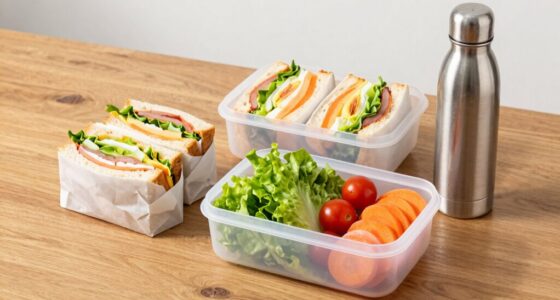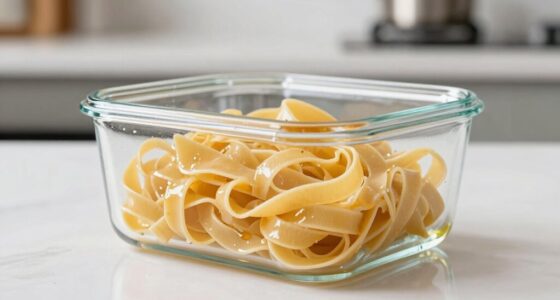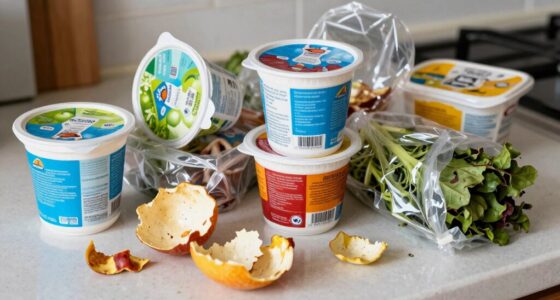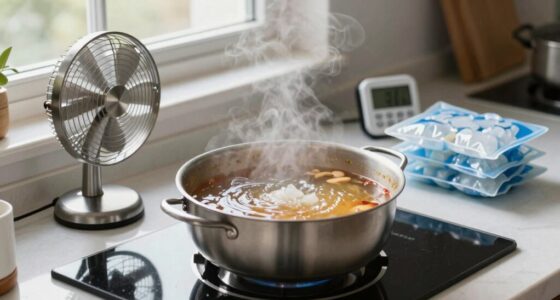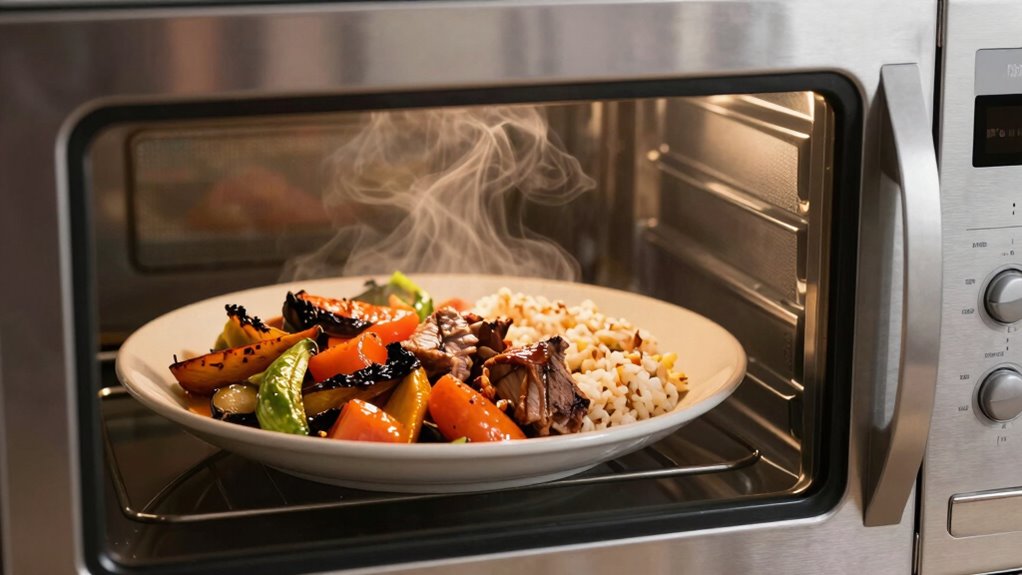
To reheat leftovers safely, store them promptly in airtight containers and cool them quickly below 40°F within two hours. Use a microwave, oven, or stovetop with proper safety features, and reheat foods thoroughly to at least 165°F, stirring or flipping for even heating. Avoid uneven reheating and discard leftovers if they smell or look spoiled. Mastering these steps helps keep your family safe and preserves flavor—discover more tips to make reheating easy and effective.

Get health and wellness essentials delivered free — and shop member deals
- Fast, free delivery on millions of items
- Access to Prime Big Deal Days deals on October 6–7
- Prime Video, Amazon Music and more included
Key Takeaways
- Reheat leftovers to an internal temperature of 165°F to ensure safety and eliminate bacteria.
- Store leftovers promptly in shallow, airtight containers and label with dates to prevent spoilage.
- Use appropriate appliances with safety features, such as microwave or oven, for even and safe reheating.
- Avoid uneven reheating by stirring, flipping, or rotating food during the process.
- Discard leftovers if they develop sour smell, sliminess, or discoloration, and do not reheat multiple times.
As an affiliate, we earn on qualifying purchases.
Why Properly Reheating Leftovers Is Important for Food Safety
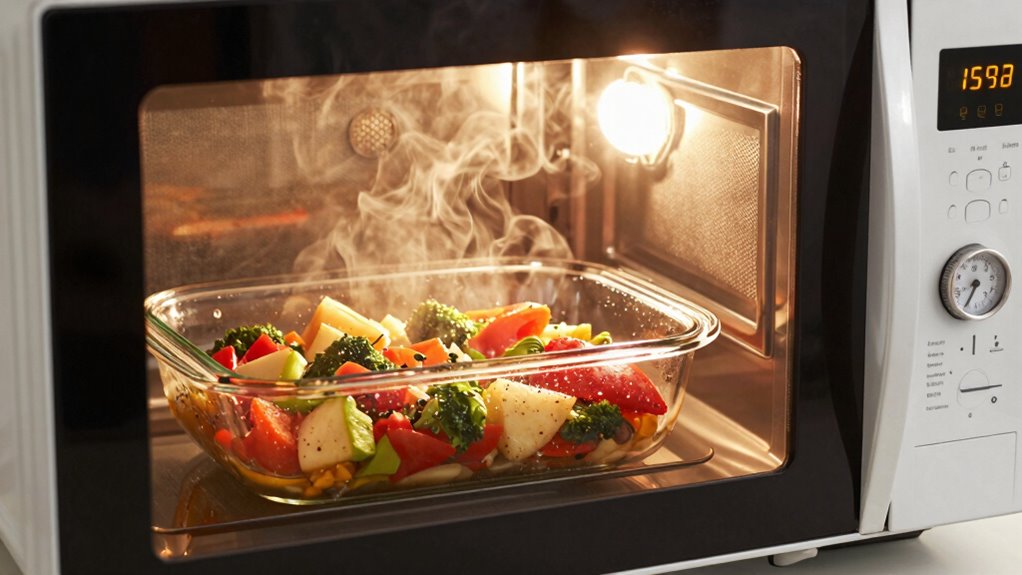
Why is it so crucial to reheat food thoroughly? When you don’t reheat food properly, you risk allowing foodborne pathogens to survive and multiply. These harmful microorganisms can cause food poisoning, leading to symptoms like nausea, vomiting, and diarrhea. Proper reheating destroys most of these pathogens, reducing health risks. Additionally, if leftovers are not heated evenly, cross contamination risks increase because bacteria present in raw or cooked foods might persist in cold spots. Ensuring leftovers reach the right internal temperature is essential for safety. Food safety measures, including proper reheating techniques, are vital to prevent illness. By reheating leftovers properly, you protect yourself and your family from potential illnesses. Proper temperature control is a key factor in preventing the growth of bacteria during the reheating process. Remember, good reheating habits are key to maintaining Food safety and preventing the spread of bacteria through improper handling. Maintaining the right reheating temperature is crucial for killing bacteria effectively and ensuring leftovers are safe to eat. Additionally, understanding the danger zone temperatures can help you avoid leaving food in unsafe temperature ranges during reheating. Being aware of safe reheating practices can further help reduce health risks and ensure food remains safe for consumption.
airtight food storage containers
As an affiliate, we earn on qualifying purchases.
As an affiliate, we earn on qualifying purchases.
How to Store Leftovers Safely to Prevent Foodborne Illness
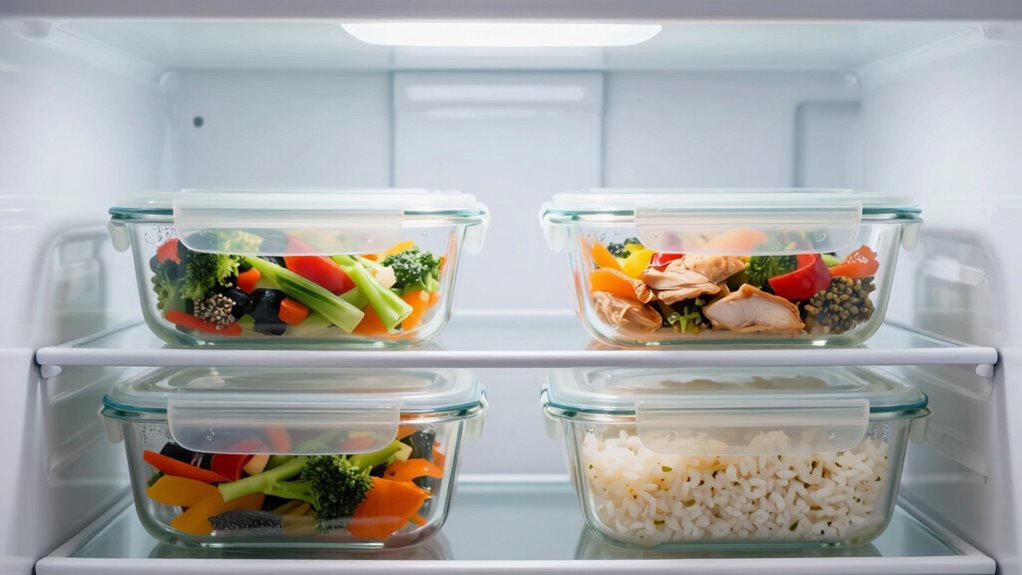
After reheating leftovers safely, storing them properly is key to preventing foodborne illness. Good food preservation starts with quickly cooling leftovers to below 40°F within two hours of cooking. Use shallow containers to promote even cooling, and label leftovers with dates to track freshness. Always prioritize kitchen sanitation by washing hands, utensils, and storage containers thoroughly before handling leftovers. Store leftovers in airtight containers to prevent cross-contamination and moisture loss. Keep your refrigerator at the correct temperature to inhibit bacterial growth. Avoid overcrowding, which can hinder proper cooling and airflow. Maintaining proper storage conditions is essential for food safety and extending the shelf life of your leftovers. Proper storage not only extends the safety and quality of your leftovers but also minimizes the risk of foodborne illness. Ensuring proper refrigeration is vital for maintaining food safety standards. Regularly checking your refrigerator’s temperature helps ensure it remains within the safe range for food preservation, as temperature control is fundamental for preventing bacterial proliferation.
As an affiliate, we earn on qualifying purchases.
Choosing the Best Equipment for Reheating Leftovers Safely
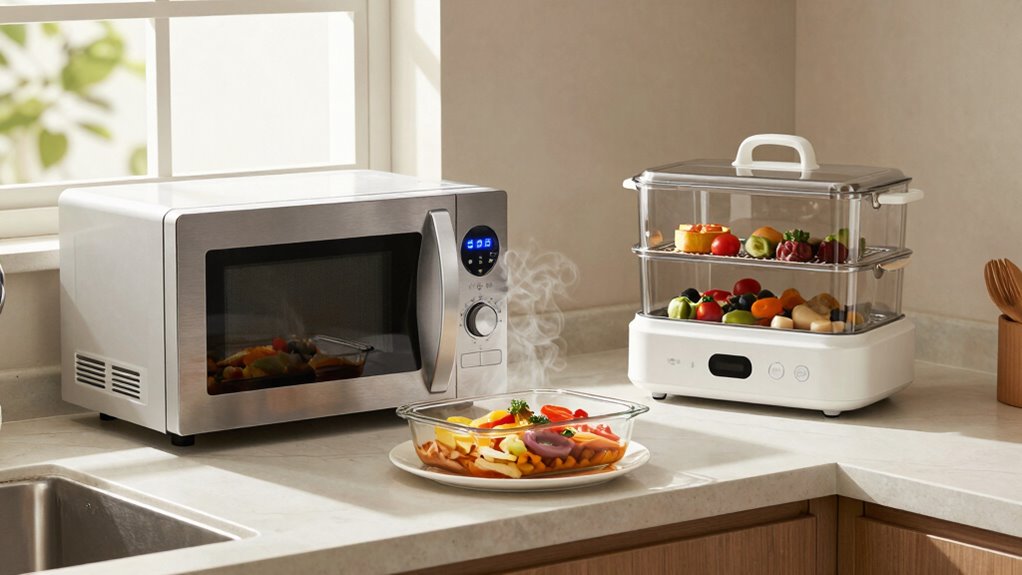
Choosing the right equipment for reheating leftovers is essential for safety and efficiency. Look for devices with safety features like automatic shut-off and even heat distribution to prevent hot spots. By selecting suitable appliances, you guarantee your leftovers are reheated thoroughly and safely. Incorporating appliances with safety features can help prevent accidents during reheating. Additionally, choosing appliances with temperature control ensures that food is heated to the proper internal temperature, reducing the risk of foodborne illnesses. Ensuring your reheating equipment has consistent heat distribution can help avoid uneven heating and maintain food quality. Paying attention to indoor air quality during reheating can also help prevent the buildup of cooking odors and airborne contaminants. Proper ventilation and using appliances with air filtration can further improve your kitchen environment during reheating.
Suitable Reheating Devices
Selecting the right device for reheating leftovers is essential to guarantee food safety and quality. The best reheating equipment depends on what you’re reheating and how quickly you need it done. For example, a microwave heats evenly and quickly, ideal for soups or small portions. An oven is perfect for maintaining texture, like roasted vegetables or casseroles. A stovetop is great for sauces or stir-fries, offering control over heat. Here’s a quick comparison:
| Device | Best For |
|---|---|
| Microwave | Quick reheating, small portions |
| Oven | Even heating, baked dishes |
| Stovetop | Soups, sauces, stir-fries |
| Toaster Oven | Small baked items, snacks |
Choosing suitable reheating devices helps ensure food safety, preserves quality, and saves time during busy days.
Safety Features to Consider
Ensuring safety when reheating leftovers is crucial, and the right equipment should have built-in safety features to help prevent accidents and foodborne illnesses. Look for appliances with automatic shut-off functions that turn off after heating, reducing fire risk and conserving energy. A clear, easy-to-read display can prevent overheating by alerting you when reheating is complete. Safety locks are especially useful if you have children, preventing accidental operation. Additionally, choose appliances with reliable temperature controls to guarantee leftovers reach safe internal temperatures. Regular appliance maintenance is essential; clean vents and check for signs of wear to keep safety features functioning properly. Prioritizing these safety features helps protect your kitchen safety and ensures leftovers are reheated safely every time.
digital kitchen food thermometer
As an affiliate, we earn on qualifying purchases.
As an affiliate, we earn on qualifying purchases.
How to Reheat Different Types of Food Correctly
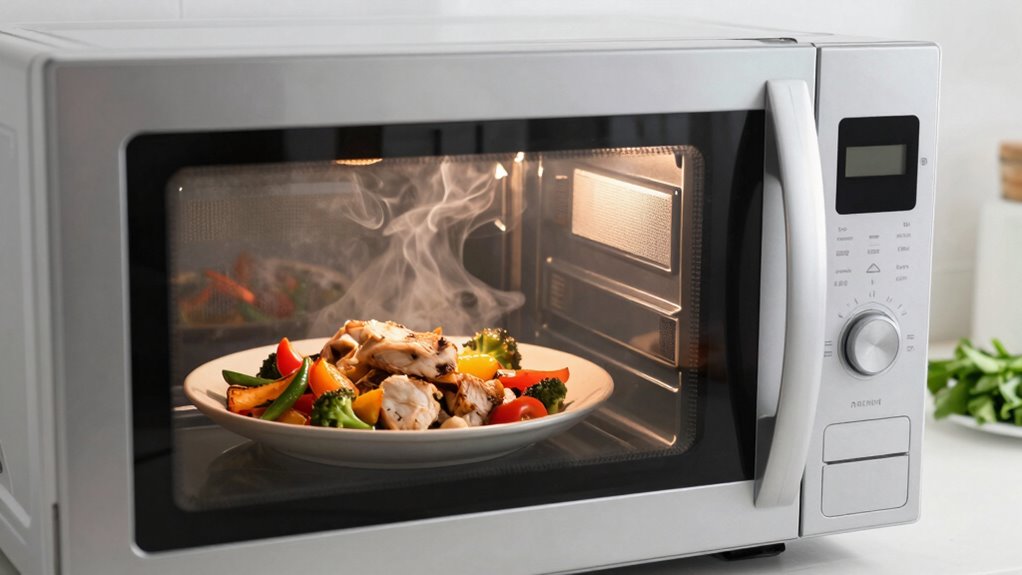
Different foods require specific reheating methods to maintain safety and flavor. For meats and poultry, use a microwave or oven to heat evenly until the internal temperature reaches 165°F, ensuring flavor preservation and safety. Soups and stews reheated on the stove allow for gentle, even warming, which helps retain nutrients and prevents burning. Rice and pasta should be reheated quickly in the microwave, stirring midway to promote even heating and avoid cold spots. Vegetables are best reheated lightly on the stove or in the microwave, keeping an eye on texture to preserve freshness. Be cautious with seafood, reheating just enough to avoid overcooking and losing flavor. Proper reheating techniques help maximize flavor preservation and nutritional retention across different foods. Reheating safety is essential to prevent foodborne illnesses and ensure your leftovers are both delicious and safe to eat.
Tips to Ensure Your Leftovers Are Heated Thoroughly
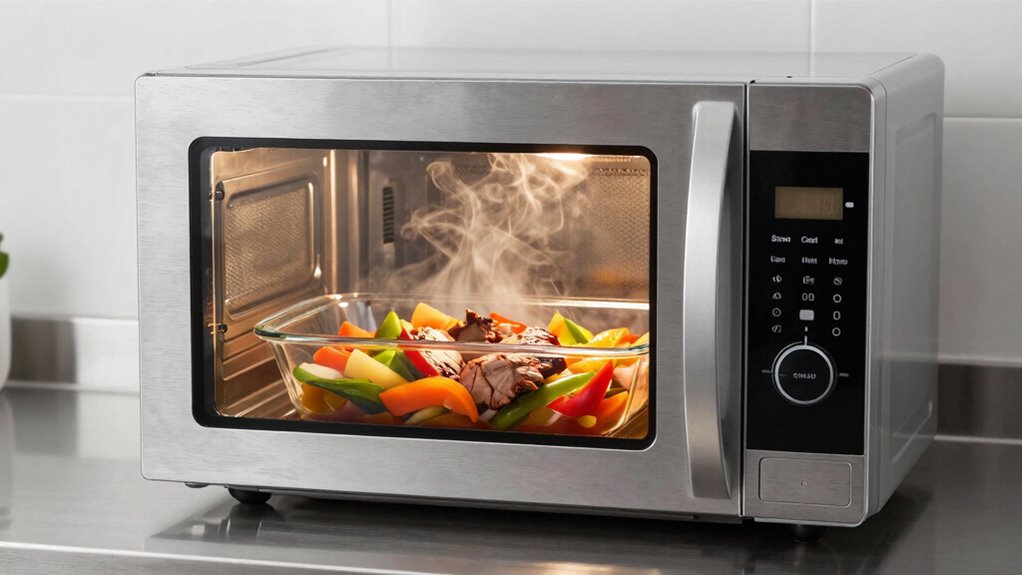
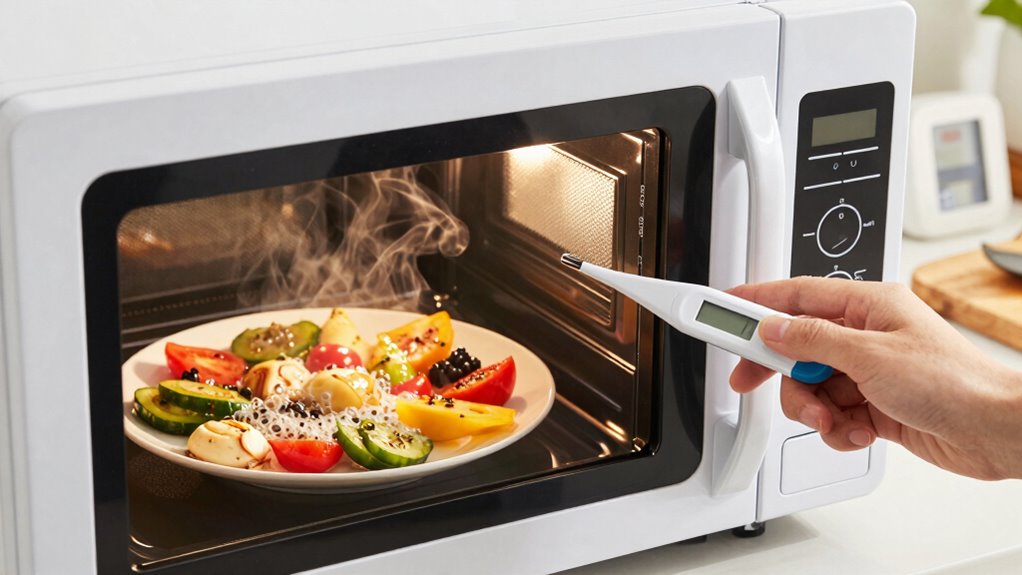
To make sure your leftovers are heated thoroughly, it’s important to use the right techniques and pay attention to temperature. Proper leftover storage helps prevent bacteria growth, ensuring safety during reheating. When reheating, use effective techniques such as stirring food midway to distribute heat evenly, covering dishes to trap steam, and using a food thermometer to check that internal temperatures reach at least 165°F (74°C). Avoid microwaving unevenly by reheating in small, uniform portions. Additionally, reheat leftovers quickly to maintain food safety. Remember, proper reheating techniques not only ensure food safety but also preserve the taste and texture of your leftovers. By following these tips, you’ll enjoy hot, safe leftovers every time.
Common Mistakes to Avoid When Reheating Leftovers
Many people make the mistake of reheating leftovers unevenly, which can leave parts of the food underheated and potentially unsafe to eat. To avoid this, focus on proper portion control, guaranteeing each serving heats evenly. Reheating large portions without stirring or flipping can create cold spots, so consider dividing food into smaller, uniform portions for more consistent heating. Additionally, skipping a creative presentation can lead to inefficient reheating, as you might not see if the food is heated through. Remember, arranging leftovers in a single layer or stirring midway helps distribute heat evenly. Avoid rushing the process, as uneven reheating increases the risk of bacteria growth. By paying attention to portion control and presentation, you guarantee your leftovers are both safe and appealing.
How to Reheat Leftovers Without Losing Flavor or Texture
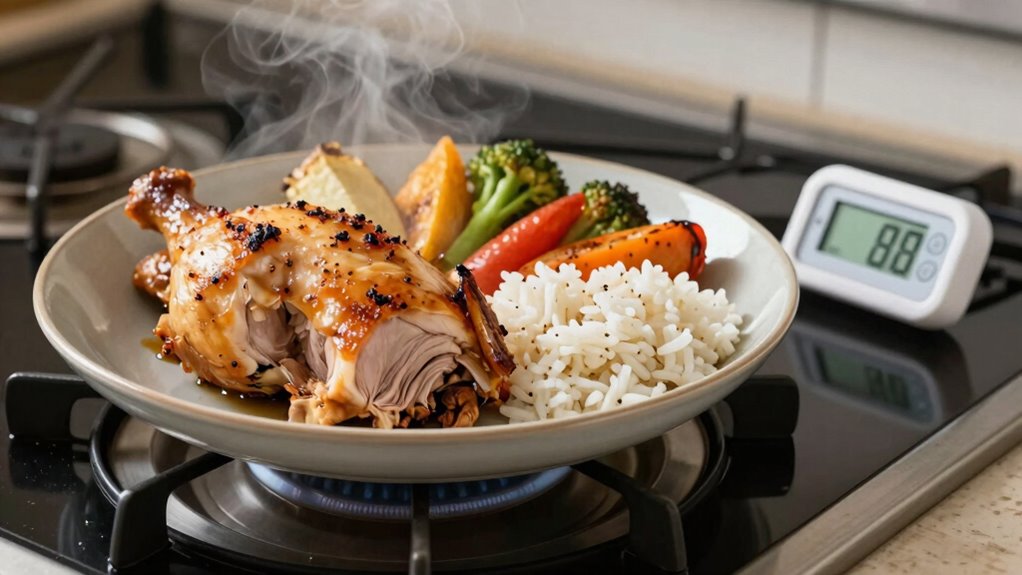
To reheat leftovers without sacrificing flavor or texture, you need to use the right equipment, like a microwave, stovetop, or oven, depending on the dish. Keep the temperature just right—hot enough to reheat thoroughly but not so hot that it dries out or overcooks. Also, add a little moisture or cover the food to help preserve its tenderness and prevent it from drying out.
Use Proper Reheating Equipment
Using the right reheating equipment is essential for preserving the flavor and texture of your leftovers. Choosing appropriate tools guarantees your food stays appealing and safe to eat. For example, a microwave is quick but may unevenly heat, so use a microwave-safe cover to prevent drying out. A stovetop offers gentle heat, ideal for sauces or soups, maintaining proper food presentation. An oven works well for casseroles and baked dishes, promoting even cooking and crispness. A steamer preserves moisture and prevents overcooking. Consider these tips:
- Use microwave with a cover for quick reheats
- Opt for stovetop for delicate sauces
- Choose oven for even, thorough reheating
- Use a steamer for moisture retention
Selecting the right equipment aligns with your preferred cooking techniques and keeps your leftovers tasting fresh and visually appealing.
Maintain Optimal Temperature
Maintaining the right temperature during reheating is essential to preserving both the flavor and texture of your leftovers. You should regularly monitor the temperature using a reliable food thermometer to guarantee it reaches at least 165°F (74°C), which is key for safety protocols. Proper temperature monitoring prevents underheating, which can lead to bacteria survival, or overheating, which can dry out your food. Use your thermometer’s probe to check the center of dishes, especially thick or dense items. Keep reheating until the correct temperature is achieved throughout. Following safety protocols not only protects you from foodborne illnesses but also helps maintain the quality of your leftovers. Consistent temperature control is your best tool for safe, delicious reheating. For optimal results, consider sound skills like maintaining consistent heat levels to ensure even reheating.
Preserve Texture and Moisture
Reheating leftovers at the right temperature is essential for safety, but it’s equally important to preserve their original flavor and texture. To keep your food moist and appealing, consider these tips:
- Use gentle heat methods like stovetop or oven instead of high heat in the microwave to prevent drying out.
- Add a splash of broth or water before reheating to boost moisture and flavor enhancement.
- Cover dishes with a lid or microwave-safe wrap to trap steam and maintain texture.
- Pay attention to presentation tips—serving your leftovers attractively can make a big difference in flavor perception.
- Additionally, understanding temperature control during reheating helps ensure food safety while maintaining quality.
When to Discard Leftovers to Keep Your Family Safe
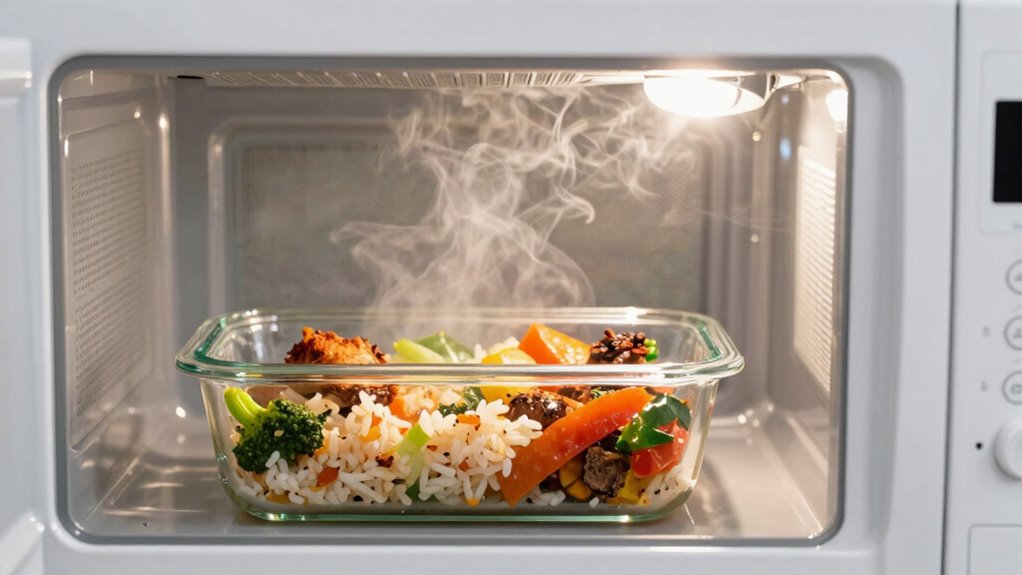
Knowing when to discard leftovers is essential for keeping your family safe from foodborne illnesses. Leftover expiration isn’t just about the date on the container; it’s about observing spoilage indicators. If leftovers develop a sour smell, slimy texture, or discoloration, it’s time to toss them. Even if they’re within the recommended storage period, these signs signal bacterial growth that can cause illness. Remember, cooked food typically lasts 3 to 4 days in the fridge. If you’re unsure about how long leftovers have been stored or notice any questionable changes, it’s safer to discard them. Never taste or smell leftovers to check for safety. When in doubt, play it safe—discard and prevent potential health risks for your family. Food safety practices are crucial in maintaining overall well-being.
Troubleshooting Reheating Problems: Quick Tips for Safe Leftovers
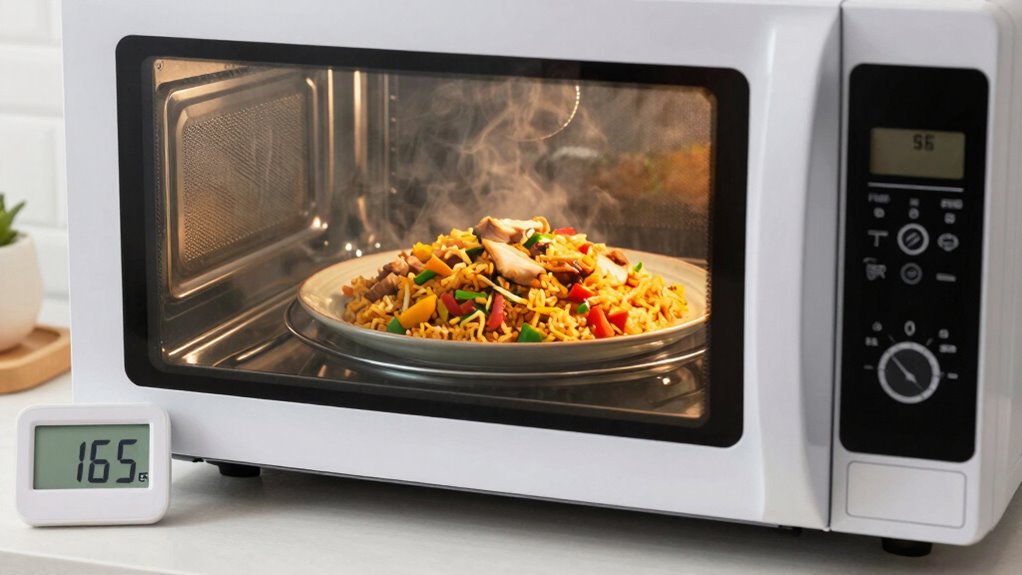
Sometimes reheating leftovers can turn into a tricky task if they don’t heat evenly or reach the right temperature. To troubleshoot reheating problems and guarantee food safety, try these quick tips. First, use the right reheating techniques—microwave, stovetop, or oven—based on the dish. Stir or rotate food halfway through to promote even heating. Always check that leftovers reach at least 165°F (74°C) to kill bacteria. Be aware of food safety myths; for example, reheating multiple times isn’t safe or recommended. Keep leftovers covered during reheating to retain moisture and heat distribution. Use a food thermometer to verify the temperature. If you notice cold spots, reheat longer or in smaller portions. Additionally, understanding food safety guidelines can help you avoid common reheating mistakes. These steps help you avoid food safety hazards and enjoy leftovers safely.
Frequently Asked Questions
Can I Reheat Leftovers Multiple Times Safely?
Yes, you can reheat leftovers multiple times, but you need to follow food safety rules and storage tips. Each time you reheat, make sure the food reaches an internal temperature of 165°F to kill bacteria. Store leftovers promptly in airtight containers and avoid reheating more than once to prevent foodborne illnesses. Always check for signs of spoilage before reheating, and when in doubt, it’s safer to discard leftovers.
Is It Safe to Reheat Leftovers in Plastic Containers?
Reheating leftovers in plastic containers is like walking on thin ice—you need to be cautious. Not all plastics are created equal; some release harmful chemicals when heated. Check the label for BPA-free and microwave-safe symbols. For plastic safety, always use designated reheating containers. When in doubt, transfer leftovers to glass or ceramic dishes to keep your food safe and your health intact.
How Can I Tell if Leftovers Are Still Good to Eat After Reheating?
You can tell if leftovers are still good after reheating by checking for any off smells, unusual textures, or visible mold. Follow food safety guidelines by ensuring leftovers are stored properly in airtight containers and consumed within 2-3 days. When reheating, make sure they reach an internal temperature of 165°F. If in doubt, it’s safer to discard leftovers to avoid foodborne illnesses. Proper storage tips help maintain freshness and safety.
What Are the Best Methods for Reheating Large Quantities of Leftovers?
You might think microwave reheating is best for large quantities, but oven reheating often offers more even heat, vital for safety and taste. To reheat leftovers efficiently, use the microwave for quick warming, stirring occasionally. For larger batches, preheat your oven to 350°F, cover the dish, and heat until steaming hot, stirring halfway through. This guarantees even reheating and minimizes cold spots, keeping your leftovers safe and delicious.
How Long Can Leftovers Be Stored Before Reheating?
You should store leftovers in the fridge within two hours of cooking to guarantee safety. Keep your food at a proper temperature, ideally below 40°F (4°C), to prevent bacteria growth. Generally, leftovers are safe to reheat within 3 to 4 days if stored properly, but always check for signs of spoilage before reheating. Practicing good food storage and temperature control helps keep your leftovers safe to enjoy later.
Conclusion
Reheating leftovers safely isn’t just about convenience—it’s about protecting your family’s health. By following proper storage and reheating techniques, you can enjoy your meals without worry. Some say bacteria can’t survive high temperatures, but in reality, uneven heating can hide dangerous germs. Trust the science: thorough reheating kills bacteria, making your leftovers safe to eat. Stick to these tips, and you’ll savor your leftovers confidently and safely every time.
Fall Picks
fall essentials
As an affiliate, we earn on qualifying purchases.