To store vegetables smartly, keep most at 32-40°F with high humidity (85-95%), avoiding dry or freezing conditions. Use perforated bags, crisper drawers, or dark, cool spots for different types like leafy greens, root vegetables, and tomatoes. Organize carefully to prevent bruising and spoilage, and check regularly for signs of decay. Proper humidity, ventilation, and handling extend freshness and reduce waste—continue exploring if you want to master all the best storage tips.
Key Takeaways
- Store vegetables at 32-40°F with high humidity to maintain freshness and prevent dehydration.
- Use perforated bags or crisper drawers to regulate moisture and airflow for different vegetable types.
- Keep leafy greens in perforated containers and root vegetables in dark, cool, humid environments.
- Avoid washing vegetables before storage; dry thoroughly to prevent excess moisture and spoilage.
- Regularly inspect stored produce for signs of spoilage to extend freshness and minimize waste.
As an affiliate, we earn on qualifying purchases.
Vegetable Storage Basics: Temperature, Humidity, and More
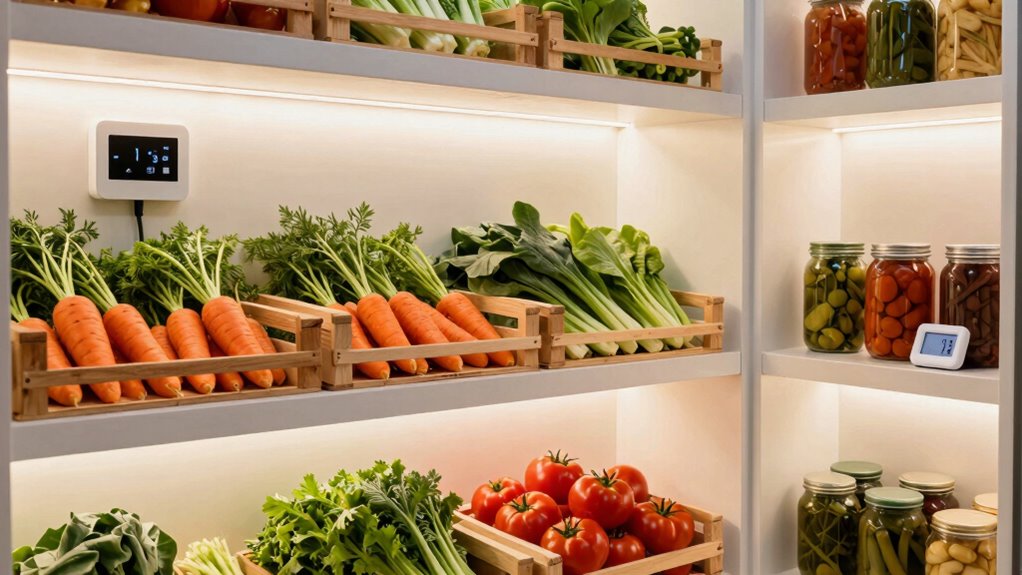
To keep vegetables fresh longer, understanding the basics of storage conditions is essential. Proper temperature and humidity levels help maximize nutrient preservation, guaranteeing your vegetables stay nutritious and flavorful. Keep your produce in a cool, humid environment—most vegetables thrive at temperatures between 32-40°F with high humidity. Avoid storing vegetables in the fridge door, where temperatures fluctuate. Regular storage rotation is also key; use older vegetables first to prevent spoilage and waste. This practice maintains freshness and guarantees you consume vegetables at their peak nutrient content. Proper organization in your storage space prevents bruising and spoilage, ultimately helping you enjoy fresher, more nutritious vegetables for longer periods. Additionally, paying attention to storage environment can significantly extend the shelf life of your produce. Ensuring proper ventilation in your storage area can also prevent excess moisture buildup, which can lead to spoilage. Good air circulation is crucial for maintaining the right humidity and preventing mold growth. Proper airflow management can further enhance the effectiveness of your storage conditions, especially in areas prone to excess moisture.
perforated vegetable storage bags
As an affiliate, we earn on qualifying purchases.
As an affiliate, we earn on qualifying purchases.
What Is the Best Temperature to Store Vegetables?
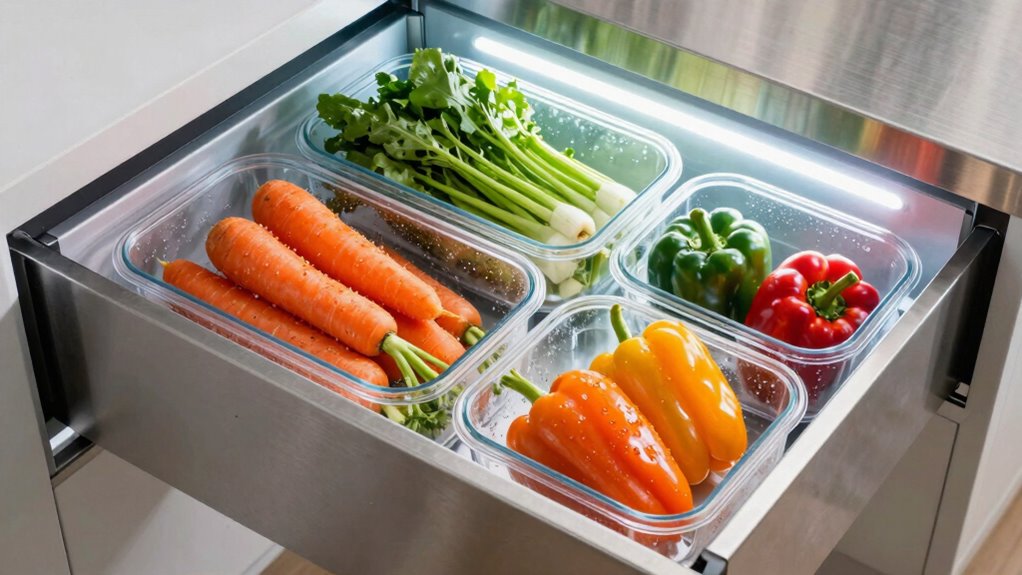
Maintaining the right temperature is essential for keeping vegetables fresh and nutritious. The ideal storage temperature varies by vegetable but generally falls between 32°F and 40°F (0°C-4°C). Too cold, and you risk freezing and damaging the produce; too warm, and it spoils quickly. Proper temperature helps maximize vegetable nutrient retention and extends shelf life. Using suitable storage containers, like perforated plastic bags or vented containers, can help regulate humidity and temperature effectively. Properly monitoring indoor air quality can also influence how well your storage environment maintains optimal conditions. Additionally, understanding marine equipment can help in designing better storage solutions for outdoor or marine environments. It’s also beneficial to keep an eye on temperature fluctuations, as sudden changes can negatively impact freshness. Paying attention to storage guidelines can ensure your vegetables stay fresh longer and reduce waste. Recognizing the importance of biodiversity can inspire more sustainable choices in your storage practices and overall food habits. Here’s a quick guide:
| Vegetable Type | Ideal Temperature | Storage Container Options |
|---|---|---|
| Leafy greens | 32°F-40°F | Perforated bags, crisper drawers |
| Root vegetables | 32°F-40°F | Mesh or paper bags |
| Broccoli | 32°F-36°F | Plastic containers with ventilation |
| Carrots | 32°F-40°F | Airtight plastic containers |
| Tomatoes | 55°F-70°F | Room temperature in a breathable container |
ventilated plastic containers for vegetables
As an affiliate, we earn on qualifying purchases.
As an affiliate, we earn on qualifying purchases.
How Humidity Affects Vegetable Freshness
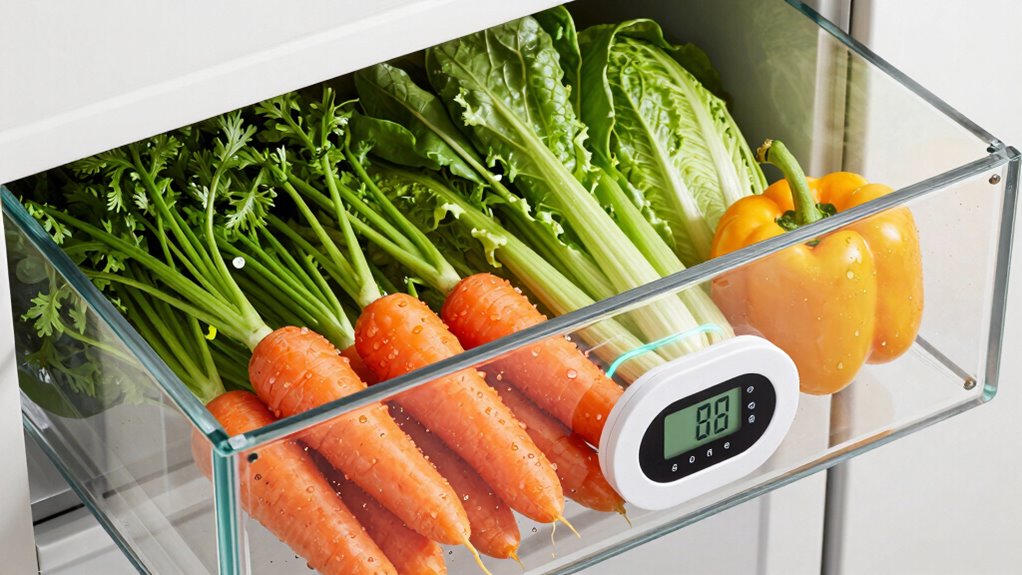
Maintaining the right humidity levels is key to keeping vegetables fresh; too much moisture can cause spoilage, while too little can lead to wilting. You should aim for ideal humidity to slow down dehydration and decay. Be mindful of excess moisture, as it can promote mold and bacterial growth. Monitoring humidity can help prevent vegetable spoilage, and understanding caffeine science can even inspire better storage techniques. Proper humidity control is essential for indoor air quality, which directly impacts the freshness and longevity of your vegetables.
Optimal Humidity Levels
Humidity levels play an essential role in keeping vegetables fresh for longer periods. Maintaining the right hydration levels prevents vegetables from wilting or shriveling. Most vegetables thrive in environments with humidity between 85% and 95%. To achieve this, use appropriate storage containers—ventilated crisper drawers or breathable bags—that help regulate moisture. If humidity is too low, vegetables lose moisture quickly, causing dehydration. Conversely, excessive humidity can lead to excess moisture buildup, promoting spoilage. Monitoring humidity with a simple hygrometer helps you adjust storage conditions accordingly. Proper storage containers play a key role in maintaining these ideal humidity conditions effectively. Additionally, understanding regional climate influences can help optimize storage practices based on your location. Being aware of how regional climate impacts humidity can help you better tailor your storage environment for maximum freshness and humidity control techniques. Regularly checking and adjusting storage conditions based on climate variations ensures vegetables stay fresh longer and reduces waste. Implementing humidity management strategies can further enhance your ability to preserve produce in various environments.
Excess Moisture Risks
Have you ever noticed how vegetables spoil faster when exposed to excess moisture? High humidity can cause moisture buildup, leading to quicker decay and spoilage. To prevent this, focus on moisture control by storing vegetables in breathable containers or perforated bags. Excess moisture creates a perfect environment for mold growth, which can quickly ruin your produce. By managing humidity levels and ensuring proper airflow, you can reduce mold prevention risks and extend freshness. Avoid washing vegetables before storage, as excess water adds to humidity inside storage areas. Instead, dry them thoroughly after washing. Keeping moisture levels balanced is key to maintaining vegetable quality, minimizing spoilage, and ensuring your produce stays fresh longer. Proper storage conditions are essential for a sustainable approach to reducing food waste and supporting environmental health. Additionally, monitoring humidity levels with a simple hygrometer can help you maintain the ideal environment for fresh vegetables. Regularly checking storage environments can help detect excess moisture early and prevent spoilage. Implementing proper ventilation methods can further improve airflow and reduce moisture buildup inside storage spaces. Ensuring good air circulation is crucial for preventing mold and spoilage in vegetable storage areas.
humidity control vegetable storage
As an affiliate, we earn on qualifying purchases.
As an affiliate, we earn on qualifying purchases.
Storage Techniques for Different Types of Vegetables
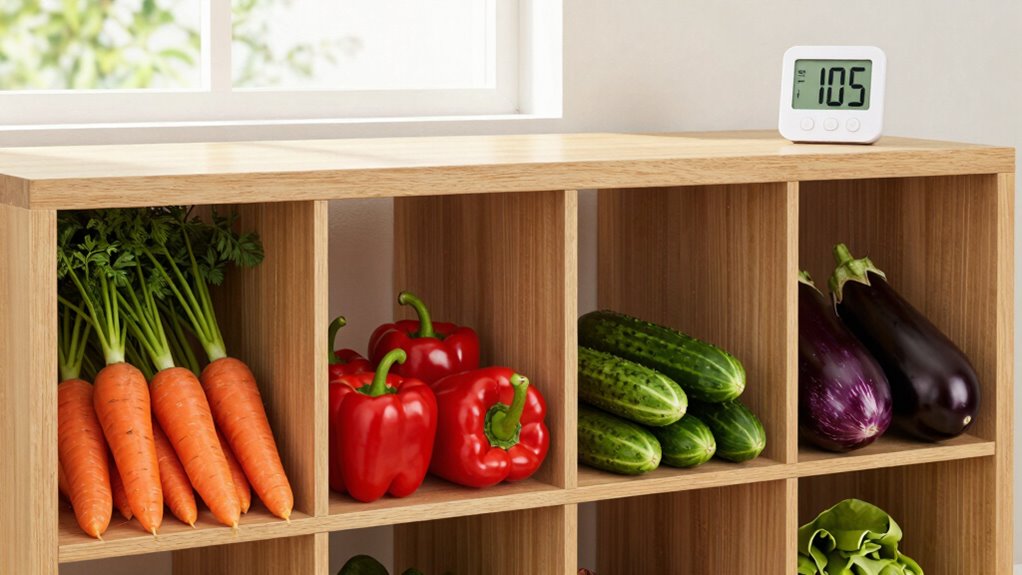
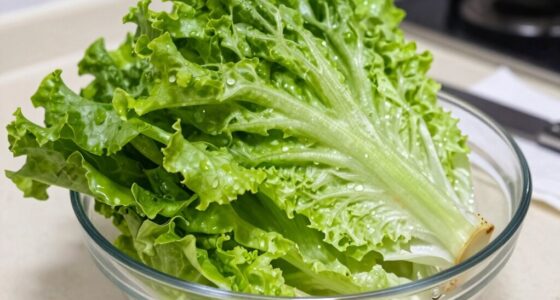
Different vegetables require specific storage techniques to stay fresh longer and prevent spoilage. For example, leafy greens like spinach and lettuce thrive in moist, cool environments, so store them in perforated containers in the fridge’s crisper drawer. Root vegetables such as carrots and beets prefer dark, cool, and slightly humid conditions, making a paper bag or mesh container ideal. Tomatoes and peppers, which are often part of plant-based diets, should be stored at room temperature to preserve flavor, but can go in the fridge if ripe. Organic farming emphasizes minimal handling, so wash vegetables only before use. Understanding these nuances helps you extend freshness and reduces waste, supporting healthier eating habits and sustainable practices. Incorporating proper air quality tips can also help maintain the freshness of stored vegetables by reducing moisture buildup and mold. Additionally, managing humidity levels within your storage area can further prevent spoilage and keep vegetables crisp longer.
Organizing Your Refrigerator for Longer Vegetable Life
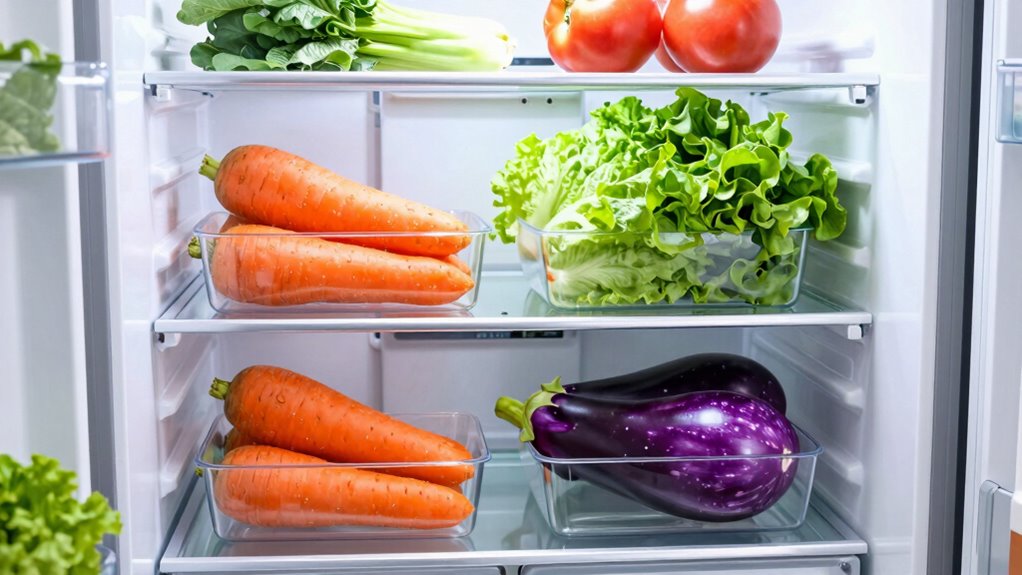
To keep your vegetables fresh for as long as possible, organizing your refrigerator effectively is essential. Proper placement preserves flavor, enhances freshness, and maintains nutritional value. Store leafy greens in the crisper drawer to prevent wilting, while root vegetables do best in a slightly warmer section. Keep ethylene-producing vegetables like tomatoes separate from those sensitive to it, such as cucumbers, to avoid spoilage. Use the table below as a quick guide:
| Vegetable Type | Storage Location | Tips |
|---|---|---|
| Leafy greens | Crisper drawer | Keep moist, sealed in a bag |
| Root vegetables | Slightly warmer compartment | Keep dry, cool |
| Ethylene producers | Away from sensitive veggies | Separate to prevent spoilage |
This organization boosts flavor and preserves nutrients longer.
How to Store Vegetables Without Refrigeration
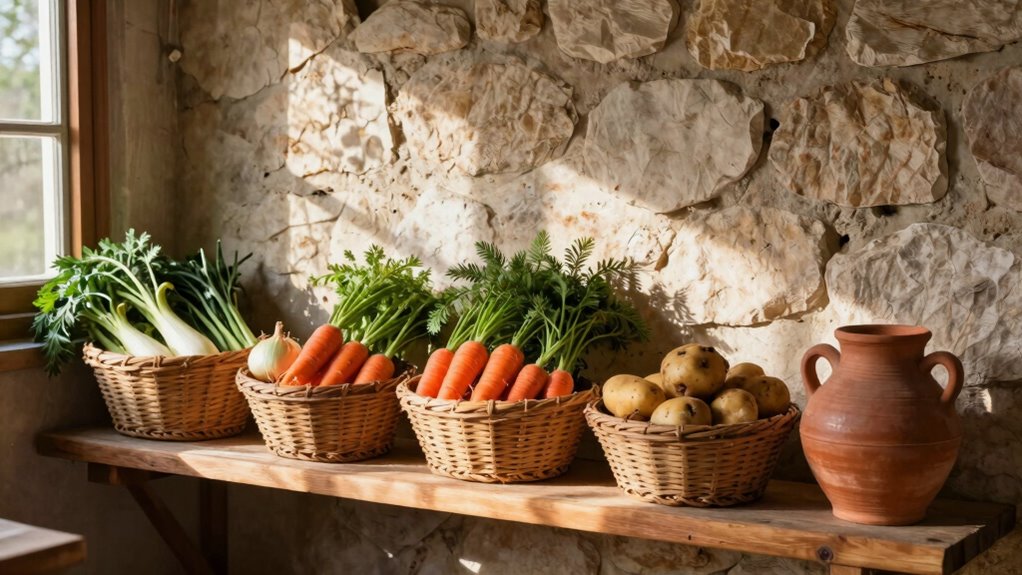
While refrigeration extends vegetable freshness, many types can be stored effectively without it by using the right techniques. For vegetable varieties like root vegetables, onions, and squash, a cool, dark, and well-ventilated space works best. Use storage equipment such as mesh bags, wooden crates, or baskets to guarantee proper air circulation. Keep these vegetables away from direct sunlight and moisture, which can cause spoilage. Avoid storing delicate greens or herbs at room temperature, as they wilt quickly; instead, consider using a cool, shaded spot or wrapping them in a damp cloth. Regularly check stored vegetables for signs of spoilage and remove any that are deteriorating. With proper storage equipment and environment, you can extend freshness without refrigeration effectively.
Signs Your Vegetables Are Going Bad and How to Prevent Waste

You need to watch for signs like wilting, discoloration, or a slimy texture to tell if your vegetables are going bad. Proper storage techniques, such as keeping them in the right environment, can help extend their freshness. Recognizing spoilage early lets you prevent waste and enjoy your vegetables longer.
Recognizing Spoilage Signs
How can you tell if your vegetables are starting to spoil? Look for changes in texture, color, or smell. Wilted, slimy, or discolored vegetables are clear signs they’re past their prime. Mushy or soft spots indicate spoilage, compromising flavor enhancement and nutritional preservation. An off or sour odor also signals decay. Spotting these signs early helps you prevent waste and enjoy maximum flavor and nutrients. Keep in mind, some vegetables may lose their crispness first, but if they develop mold or an unpleasant smell, it’s time to discard them. Regularly inspecting your produce ensures you consume fresh, nutritious vegetables while avoiding the health risks of spoiled food. Recognizing these signs keeps your kitchen safe and your meals delicious.
Proper Storage Techniques
Proper storage is essential for keeping vegetables fresh and preventing waste, especially since improper conditions can accelerate spoilage. To preserve vegetable nutrients, store each type in the right environment—cool, dark, and dry for most, or in breathable containers to avoid moisture buildup. Check for signs your vegetables are going bad, like wilting, discoloration, or a sour smell. Using eco-friendly storage solutions, such as reusable produce bags or glass containers, helps reduce waste and supports sustainability. Keep leafy greens in perforated containers to maintain crispness, and root vegetables in a cool, dark cellar or fridge. Regularly monitoring your stored vegetables guarantees you catch spoilage early, minimizing waste and maximizing nutrient retention. Proper storage techniques are key to keeping vegetables fresh longer and reducing food waste.
Using Storage Containers and Wraps to Keep Vegetables Fresh
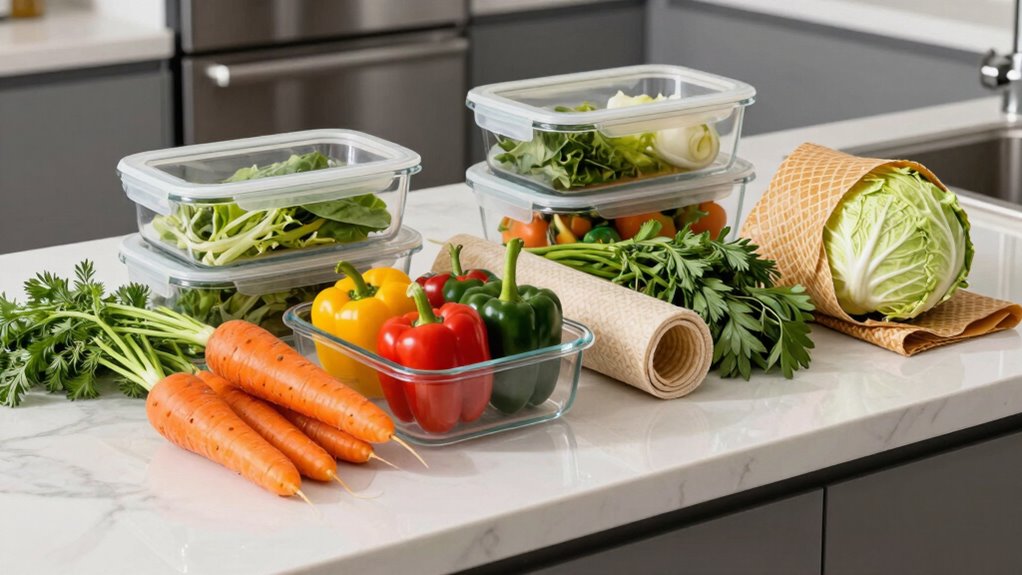
Using storage containers and wraps is essential for maintaining the freshness of vegetables. They help prevent moisture loss and protect produce from spoilage. Clear, airtight containers are great for storing leafy greens, carrots, and other cut vegetables, making it easy to see what’s inside. Wrap vegetables in beeswax wraps or plastic wrap to shield them from air and humidity. When prepping vegetables, keep vegetable peelings if you plan to compost; storing peelings separately in a compost bin reduces waste and keeps your kitchen tidy. Properly sealed containers and wraps slow down deterioration and help preserve flavor and texture. This simple step keeps your vegetables fresh longer and supports an eco-friendly kitchen by reducing food waste and encouraging composting.
Common Mistakes to Avoid When Storing Vegetables
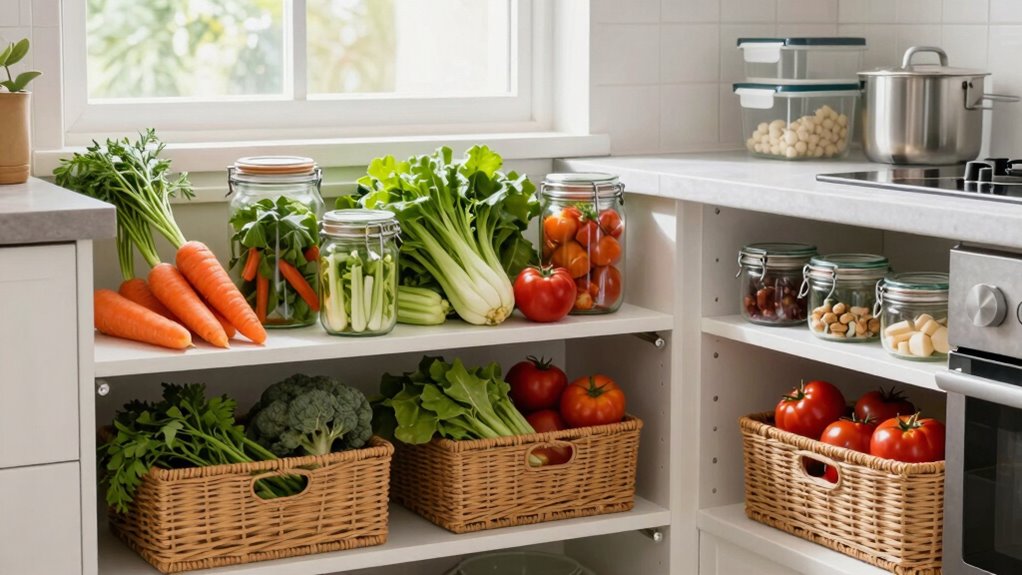
One common mistake is storing vegetables in conditions that promote spoilage, such as placing them in the wrong part of the fridge or exposing them to excess moisture. This can speed up decay and reduce freshness. To avoid this, pay attention to where you store different vegetables and how you handle moisture. Proper storage helps maintain flavor and texture, saving you time on cooking tips later. Gardening advice recommends keeping leafy greens in a crisper drawer and root vegetables in a cool, dark spot.
| Mistake | Solution |
|---|---|
| Storing in warm conditions | Keep vegetables in a cool, dark place |
| Exposing to excess moisture | Use breathable wraps or containers |
| Not organizing by type | Store vegetables separately for freshness |
Frequently Asked Questions
How Long Can Different Vegetables Typically Stay Fresh?
You can usually expect vegetables to stay fresh for varying durations based on vegetable ripening and storage temperature. Leafy greens last about 3-7 days, while root vegetables like carrots can stay fresh for 2-4 weeks if stored properly. Keep your vegetables in the fridge at the right temperature—around 32-40°F—to slow ripening and extend freshness. Adjust storage methods for different vegetables to maximize their shelf life.
Can You Store Vegetables Together Without Affecting Freshness?
Imagine you’re in a sci-fi movie, but it’s your kitchen! Yes, you can store vegetables together, but it depends on their ripening process. Some vegetables release ethylene gas, which speeds ripening, so keep those separate to avoid spoilage. Use proper storage containers to maintain freshness and prevent cross-contamination. Group vegetables with similar ripening needs, and you’ll keep everything crisp longer without affecting their quality.
What Are Natural Alternatives to Plastic Wraps for Vegetable Storage?
You can use natural alternatives like reusable wraps and cloth bags to store vegetables. Reusable wraps, made from beeswax or silicone, keep produce fresh and are eco-friendly. Cloth bags are breathable, helping vegetables stay crisp longer while reducing plastic waste. These options are sustainable, affordable, and safe for your food. Switching to reusable wraps and cloth bags not only preserves freshness but also supports eco-conscious living.
Does Sunlight Exposure Impact Vegetable Storage and Longevity?
Sunlight effects can drastically shorten your vegetables’ freshness. Exposure to direct sunlight increases storage temperature, causing faster spoilage and wilting. To preserve their longevity, keep vegetables in cool, shaded areas away from sunlight. Bright, warm environments might seem inviting, but they secretly accelerate decay. Protect your produce by controlling storage conditions, and you’ll enjoy fresh veggies longer—surprising how much sunlight influences their lifespan.
How Do I Prevent Vegetables From Absorbing Odors in Storage?
To prevent vegetables from absorbing odors in storage, you should use airtight storage containers to lock in freshness and block external smells. Wrap strong-smelling vegetables like onions and garlic in paper towels before storing, or keep them separate from other produce. Regularly clean your storage area and containers, and avoid storing vegetables near fragrant items. These steps help reduce odor absorption and keep your produce tasting fresh longer.
Conclusion
By mastering proper storage techniques, you can extend your vegetables’ freshness and reduce waste. Remember, about 30% of the food produced globally is wasted, often due to improper storage. Keeping your vegetables at the right temperature and humidity, organizing your fridge, and using the right containers can make a big difference. With these tips, you’ll enjoy fresher produce longer and contribute to reducing food waste—making your kitchen more sustainable and your meals more delicious.