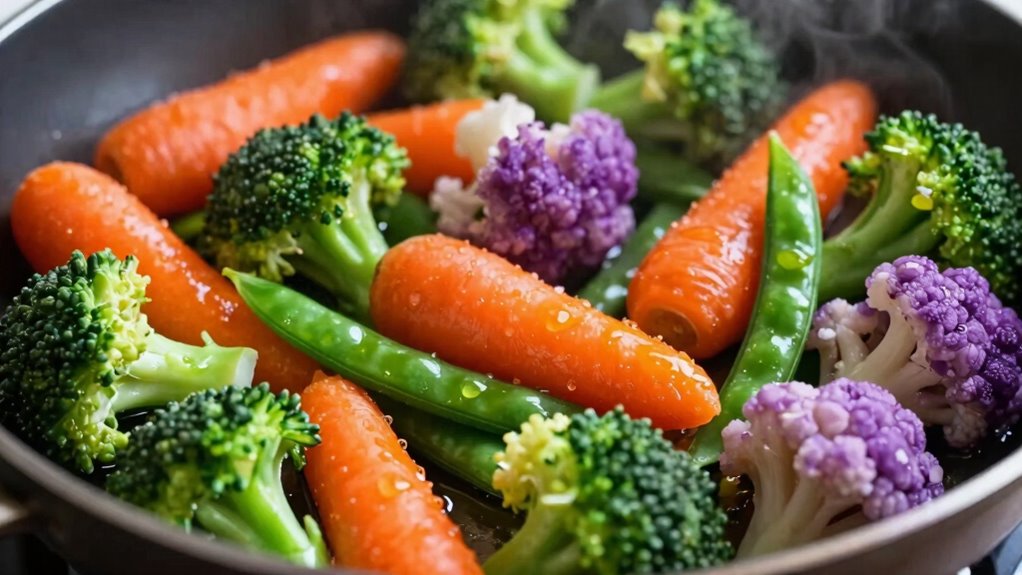

To cook frozen vegetables well, focus on using high heat methods like sautéing or steaming for quick, nutrient-preserving results. Season during cooking with herbs or garlic, and avoid overcooking to keep their flavor and crunch. Cut back on added salt or sugar for a healthier dish. Monitoring cooking time and temperature is key to prevent nutrient loss and maintain vibrant color. Keep exploring to discover more tips for perfect frozen veggie dishes.
Key Takeaways
- Thaw or cook directly on high heat to prevent sogginess and preserve texture.
- Sauté or stir-fry quickly with minimal oil to maintain flavor, color, and nutrients.
- Season during cooking with herbs or spices to enhance natural flavors.
- Avoid overcooking; cook until vegetables are tender but still slightly crisp.
- Serve immediately to maximize flavor, texture, and nutritional benefits.

Cooking frozen vegetables can be quick and easy if you know the right techniques. The key is to balance flavor enhancement with nutritional preservation, ensuring you get the most out of your vegetables without sacrificing their health benefits. When you start with frozen produce, you’re already saving time, but how you cook them makes all the difference in taste and nutrients. The goal is to cook them just enough to bring out their natural flavors while keeping their vitamins and minerals intact.
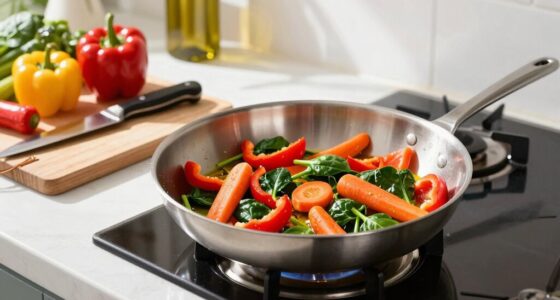
One of the most effective ways to preserve flavor and nutrition is to avoid overcooking. Frozen vegetables tend to release water quickly, so it’s tempting to boil or steam them for too long. Instead, opt for methods like sautéing or stir-frying. These techniques allow you to cook the vegetables quickly at high heat, which helps lock in their vibrant flavors and nutrients. When you sauté, use a small amount of oil or butter to coat the vegetables. This not only enhances their flavor but also creates a barrier that helps retain moisture and nutrients. Plus, the added fat helps your body absorb fat-soluble vitamins like A, D, E, and K more effectively.
Sauté or stir-fry frozen vegetables quickly at high heat with a little oil to preserve flavor and nutrients.
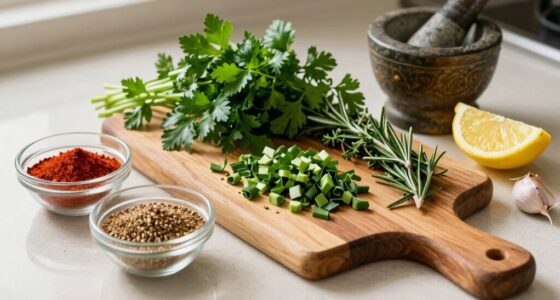
Another tip is to season your vegetables during the cooking process rather than after. Adding herbs, garlic, or spices while they cook amplifies their flavor without needing excessive salt or sugar. This approach keeps your dish healthy and tasty, letting the natural sweetness and earthiness of the vegetables shine through. Remember to cook them until they are tender but still slightly crisp; this texture is often the best indicator that you’ve preserved their nutritional value and flavor. Additionally, understanding proper cooking techniques can help you optimize nutrient retention and flavor. Using the right cooking methods can make a significant difference in maintaining the vegetables’ nutritional profile. Incorporating proper heat levels is also essential to avoid nutrient loss and maintain optimal texture. Being mindful of cooking times can further prevent overcooking and preserve the vibrant color and crunch of the vegetables. Furthermore, paying attention to cooking temperatures ensures that you utilize the appropriate heat for each method, which is crucial for nutrient preservation.
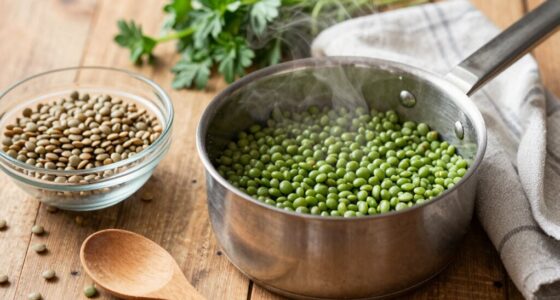
Steaming is also a great method if you prefer a gentler approach. It heats the vegetables evenly without submerging them in water, which helps prevent nutrient loss. Just make sure not to oversteam—check them frequently to keep that perfect balance of tenderness and crunch. Once cooked, serve immediately to enjoy the full flavor and maximum nutritional benefits.
high heat sauté pan for vegetables
As an affiliate, we earn on qualifying purchases.
As an affiliate, we earn on qualifying purchases.
Frequently Asked Questions
Can I Cook Frozen Vegetables Without Defrosting Them First?
Yes, you can cook frozen vegetables without defrosting them first. Skipping the thawing process helps preserve their texture and nutrients. When you add frozen veggies directly to a pan or boiling water, they cook quickly, maintaining crunch and flavor. Just keep in mind that they may release more water, so adjust cooking time accordingly. This method is efficient and guarantees your vegetables stay fresh and tasty.
What Is the Best Seasoning for Frozen Vegetables?
Think of frozen vegetables as a blank canvas, waiting for a burst of flavor. The best seasoning depends on your flavor combinations and spice variations—try garlic and lemon for brightness, or cumin and chili for a smoky kick. A splash of soy sauce or a sprinkle of herbs like thyme or basil can elevate the taste. Keep it simple or go bold—your seasoning choice makes all the difference in deliciousness.
How Do I Prevent Frozen Vegetables From Becoming Mushy?
To prevent frozen vegetables from becoming mushy, focus on preserving their texture and enhancing flavor. Cook them quickly over high heat, such as in a stir-fry or sauté, to keep their crunch. Avoid overcooking by tasting frequently and removing them once they’re tender but still firm. Using minimal water also helps, as it prevents them from becoming soggy. Proper timing and high heat are key to perfect, flavorful vegetables.
Is It Better to Cook Frozen Vegetables on the Stove or in the Oven?
Think of your stove and oven as two different symphonies—each plays a unique tune. For vibrant flavor enhancements and delicate control, cooking frozen vegetables on the stove is your best bet; it allows quick, attentive cooking that preserves texture. The oven is better for roasting, giving a caramelized finish. Ultimately, choose your technique based on the flavor profile you crave and the texture you desire.
How Long Do Frozen Vegetables Last in the Freezer?
Frozen vegetables typically last in the freezer for about 8 to 12 months if stored properly. To maximize their vegetable lifespan, keep them in an airtight container or resealable bag, and make sure your freezer maintains a consistent temperature of 0°F (-18°C). Over time, quality may decline, so try to use them within this period for the best flavor and texture. Proper freezer storage helps preserve their freshness and nutrients.
stainless steel steamer basket for frozen vegetables
As an affiliate, we earn on qualifying purchases.
As an affiliate, we earn on qualifying purchases.
Conclusion
So, next time you’re rushing and reach for frozen veggies, remember—they’re already cooked… sort of. The real trick is in how you finish them off. Ironically, the easiest step—heating—can also be the most overlooked. With a little attention, you’ll turn those icy cubes into a delicious side. Who knew that the secret to great frozen vegetables was simply giving them the love and care they deserve? Sometimes, the simplest methods make the biggest difference.
garlic and herb seasoning for vegetables
As an affiliate, we earn on qualifying purchases.
As an affiliate, we earn on qualifying purchases.
As an affiliate, we earn on qualifying purchases.