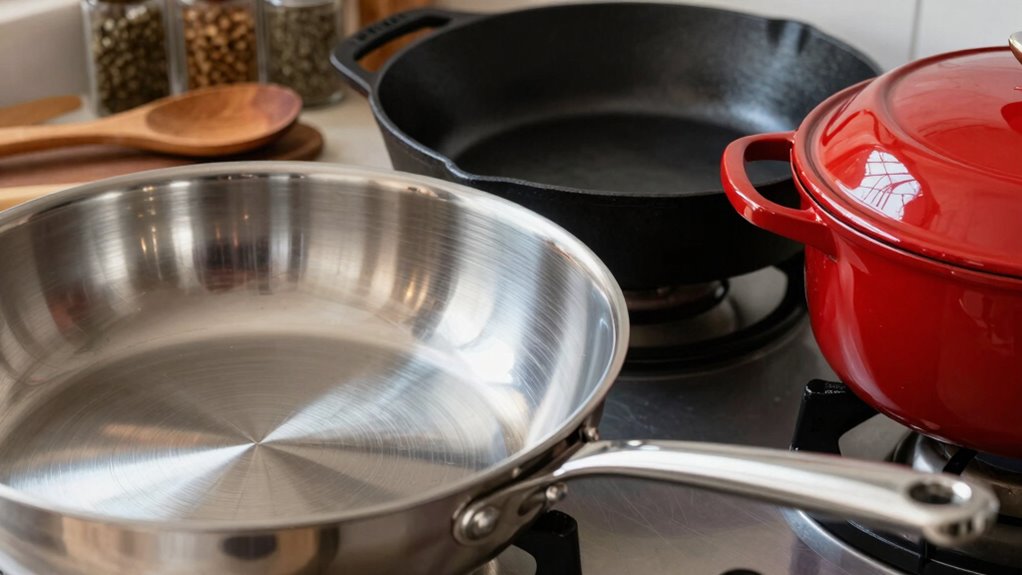

Your cookware’s material affects how food heats, cooks, and cleans up. Aluminum heats quickly and is lightweight, but can warp. Copper offers precise temperature control but needs regular polishing. Stainless steel is durable and great for high-heat cooking. Non-stick surfaces make cleaning easier, but some coatings need careful handling. Eco-friendly options like cast iron and ceramic are sustainable choices. Keep learning to discover how choosing the right material can improve your cooking experience.

Get health and wellness essentials delivered free with Prime
- Fast, free delivery on millions of items
- Prime Video, Amazon Music and more included
- Member-only deals all year
Key Takeaways
- Different materials impact heat distribution, retention, and food flavor, influencing how your cookware performs.
- Aluminum is lightweight and affordable but can warp; copper offers precise control but is costly and reactive.
- Non-stick coatings make cooking easier but require proper care; eco-friendly options like cast iron and ceramic are durable.
- Choosing cookware based on your cooking style (e.g., high-heat, easy cleanup) ensures better results and longevity.
- Proper maintenance and understanding material properties help extend cookware lifespan and maintain safety.
As an affiliate, we earn on qualifying purchases.
What Are the Main Types of Cookware Materials?
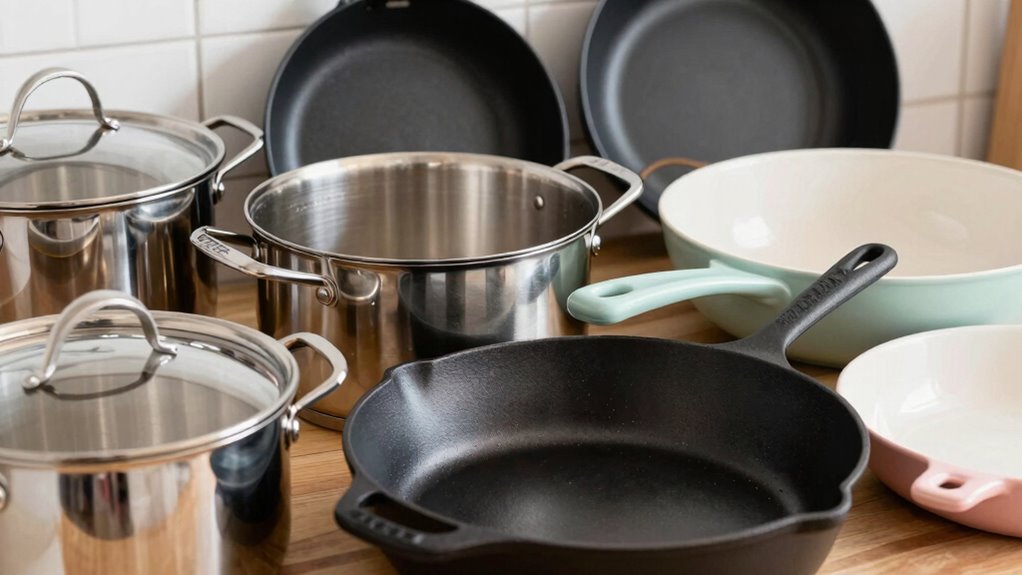
There are several main types of cookware materials, each offering different benefits and considerations depending on how you cook. Aluminum is popular because it heats quickly and distributes heat evenly, making it great for precise cooking. Its advantages include affordability and lightweight design, which reduces fatigue during use. However, aluminum’s drawbacks involve its tendency to warp under high heat and its susceptibility to scratching. Copper is another common material, known for superior thermal conductivity that allows precise temperature control. But, copper drawbacks include high costs and the need for regular polishing to prevent tarnishing. It’s also reactive with certain foods unless lined with non-reactive materials. Additionally, understanding the thermal properties of cookware materials helps you choose the right cookware for your cooking style. Considering the reactivity of different metals can help prevent unwanted flavors or chemical reactions during cooking. Furthermore, many cookware options are now made with eco-friendly materials to support sustainable living practices. Using sustainable materials in cookware production can also reduce environmental impact and promote healthier living. Incorporating eco-conscious choices can help you make more sustainable decisions in your kitchen.
As an affiliate, we earn on qualifying purchases.
How Do Different Materials Affect Your Cooking?
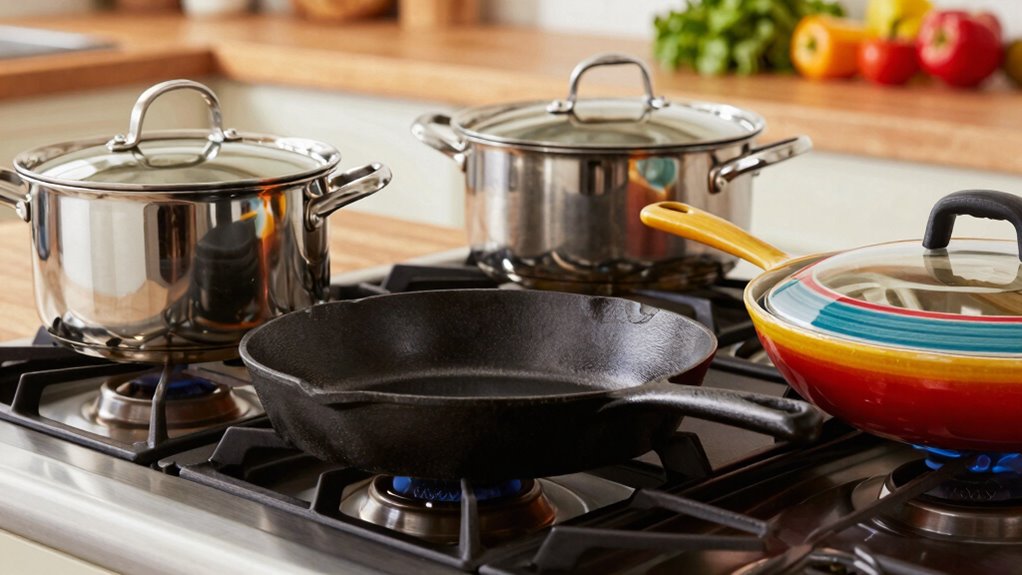
Different cookware materials directly influence how your food cooks by affecting heat distribution, retention, and reacting with ingredients. For example, some materials excel at evenly spreading heat, while others retain warmth longer. Non-stick coatings, for instance, make cooking and cleaning easier but can affect how food browns or sticks. Additionally, the thermal properties of each material determine how quickly and evenly heat is transferred during cooking.
As an affiliate, we earn on qualifying purchases.
Which Cookware Materials Are Best for Your Style?
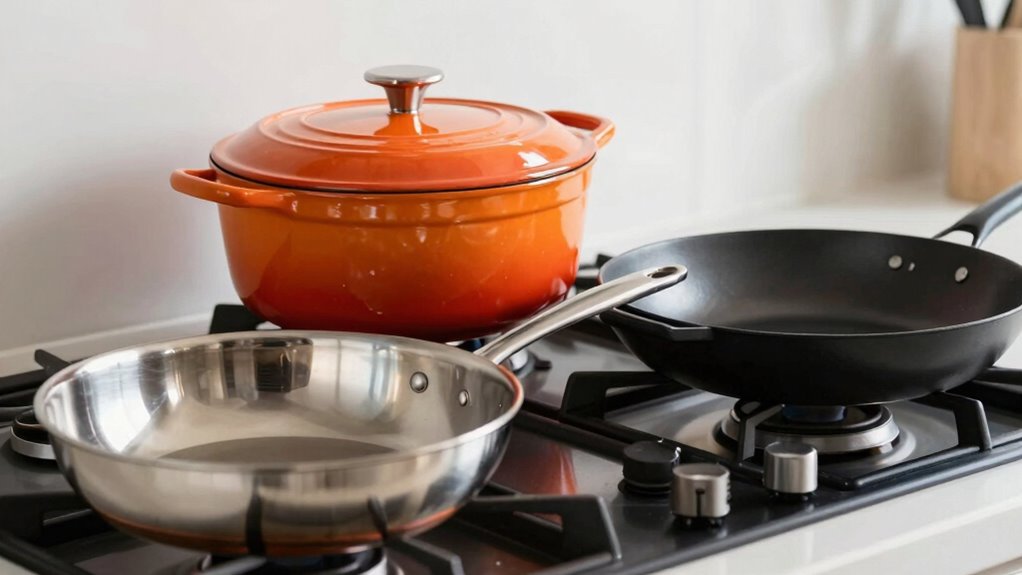
Choosing the right cookware material depends on your cooking style and preferences. If you prioritize quick cleanup and easy food release, non-stick cookware is a great choice—just make sure you choose non-stick safety options that avoid harmful chemicals. For eco-friendly options, consider materials like cast iron or ceramic, which are durable and environmentally sustainable. If you love high-heat searing or browning, stainless steel or carbon steel might suit you best, offering excellent heat retention. Aluminum offers lightweight convenience and good heat conduction, perfect for everyday use. Additionally, selecting cookware made from sustainable materials can help reduce your environmental impact. Being aware of environmentally friendly cookware options can further guide your choices toward sustainability. Using cookware made from inorganic salts or other natural components can also enhance both safety and eco-friendliness. Your cooking habits and values will guide you to the best material, whether it’s safer non-stick surfaces or more sustainable, eco-friendly options. Choosing wisely enhances your cooking experience and aligns with your lifestyle.
As an affiliate, we earn on qualifying purchases.
How to Care for Your Cookware

Wondering how to keep your cookware in top shape? Proper care guarantees your cookware performs well and lasts longer. For non-stick coatings, avoid metal utensils that can scratch or damage the surface, reducing effectiveness. Keep heat conduction in mind: use medium or low heat to prevent warping or damaging the material. Here are three tips to maintain your cookware:
- Hand wash with gentle scrubbers—avoid abrasive cleaners that can scratch non-stick surfaces.
- Season cast iron or carbon steel pans regularly to maintain their seasoning and prevent rust.
- Store cookware carefully to prevent scratching or denting, especially for delicate coatings.
- Be aware of material properties to select the appropriate care methods for different cookware types. Understanding the durability of materials can help you choose the best cookware for your needs. Additionally, knowing how different materials respond to heat and cleaning helps in preventing damage and extending their lifespan. Recognizing the importance of proper maintenance can significantly impact the longevity of your cookware.
Following these steps helps preserve heat conduction properties and keeps non-stick coatings intact, ensuring your cookware performs at its best for years.
Common Myths About Cookware Materials
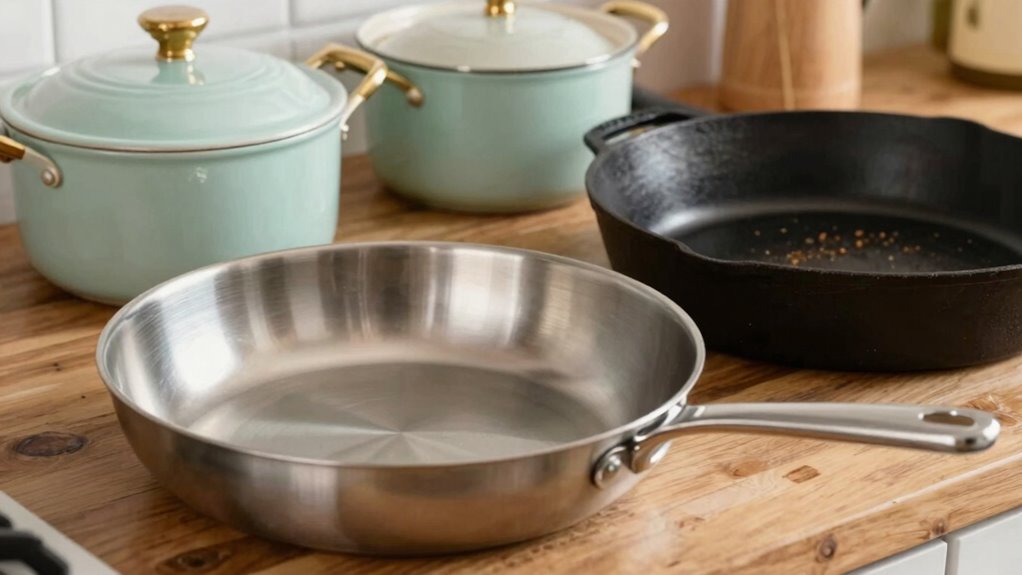
Many common beliefs about cookware materials persist despite evidence showing they’re misconceptions. For instance, many think non-stick cookware is unsafe, but modern non-stick coatings are designed with safety in mind and are regularly tested. You might also believe ceramic cookware isn’t durable, yet quality ceramics can withstand daily use if properly cared for. Some assume ceramic coatings chip easily, but ceramic durability depends on the manufacturing process and usage. Another myth is that all non-stick surfaces are prone to scratching and should be avoided; however, many are now scratch-resistant. These misconceptions can lead you to overlook beneficial cookware options. Understanding the facts helps you make informed choices that prioritize safety and longevity, rather than falling for myths that simply aren’t true.
Frequently Asked Questions
Are Non-Stick Coatings Safe for Health?
Non-stick coatings are generally safe if used properly, but non-stick concerns include potential health risks if the coating scratches or degrades over time. To guarantee cookware durability and safety, avoid using metal utensils and high heat, which can damage the coating. When maintained well, non-stick pans provide easy cooking, but replace them when scratches appear to prevent any non-stick concerns and maintain safe, effective cookware.
How Environmentally Friendly Are Different Cookware Materials?
You’ll find that some cookware materials are more environmentally friendly than others. For example, cast iron and stainless steel often involve eco-friendly manufacturing processes, and they’re highly recyclable at the end of their lifespan. Non-stick coatings and aluminum may have less eco impact during production, but disposal can be problematic due to non-recyclability or potential chemical leaching. Always consider the full lifecycle from manufacturing to disposal when choosing eco-conscious cookware.
Can Certain Materials Leach Chemicals Into Food?
Certain cookware materials, like non-stick coatings or aluminum, can act like sneaky spies, releasing chemicals into your food through chemical leaching. This can threaten your food safety, turning your cooking adventure into a risky game. To keep your meals safe and wholesome, choose materials like stainless steel or cast iron, which stand firm and don’t compromise your health, acting as your trustworthy guardians in the kitchen.
Which Cookware Is Best for Induction Stovetops?
For induction stovetops, you should choose cookware with induction compatibility and good heat conductivity. Stainless steel and cast iron are excellent options because they work well with magnetic fields and heat evenly. Look for pans labeled “induction-compatible” to guarantee compatibility. Copper and aluminum, while great conductors, need a magnetic layer to work on induction. Picking the right cookware enhances cooking efficiency and prevents hot spots.
How Long Does Cookware Typically Last Before Needing Replacement?
On average, cookware lasts about 5 to 10 years, depending on its durability and how often you use it. Cast iron can endure for decades with proper care, while non-stick pans often need replacing every 3 to 5 years due to coating wear. Your replacement timeline varies based on quality and maintenance, but investing in durable materials guarantees longer-lasting cookware, saving you money and hassle over time.
Conclusion
Understanding cookware materials helps you make smarter choices in your kitchen. For instance, if you love quick, even heating, opting for cast iron might be your best bet. Imagine a home chef who switched from non-stick to stainless steel—her dishes became more flavorful and durable. By knowing the pros and cons, you can select cookware that matches your cooking style and care routine, ensuring your investment lasts and enhances every meal you prepare.
Cold & flu season Picks
humidifiers
As an affiliate, we earn on qualifying purchases.