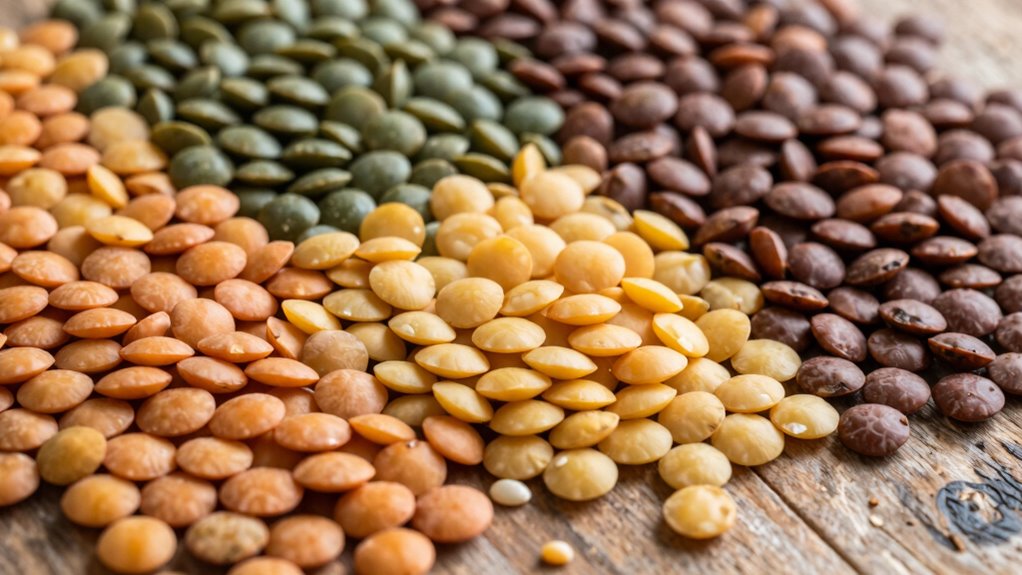

When exploring lentil types, you’ll find that red and yellow lentils cook quickly and are perfect for purees and soups, while green and brown lentils hold their shape, making them great for salads and side dishes. Black lentils, or beluga, have a firm texture suited for stuffing or salads, offering a rich flavor. Each variety brings unique benefits, and discovering these differences will help you choose the right lentil for your meals—there’s more to uncover as you continue your journey.

Get health and wellness essentials delivered free — and shop member deals
- Fast, free delivery on millions of items
- Access to Prime Big Deal Days deals on October 6–7
- Prime Video, Amazon Music and more included
Key Takeaways
- Different lentil types (red, yellow, green, brown, black) have unique flavors, textures, and cooking times suitable for various dishes.
- Red and yellow lentils cook quickly and are ideal for purees and soups, while green and brown hold their shape for salads and side dishes.
- Black lentils, or beluga, are firm and flavorful, perfect for salads or stuffing.
- Proper rinsing and cooking methods ensure lentils retain texture and flavor.
- Store dried lentils in a cool, dry place for long-lasting quality and versatility in recipes.
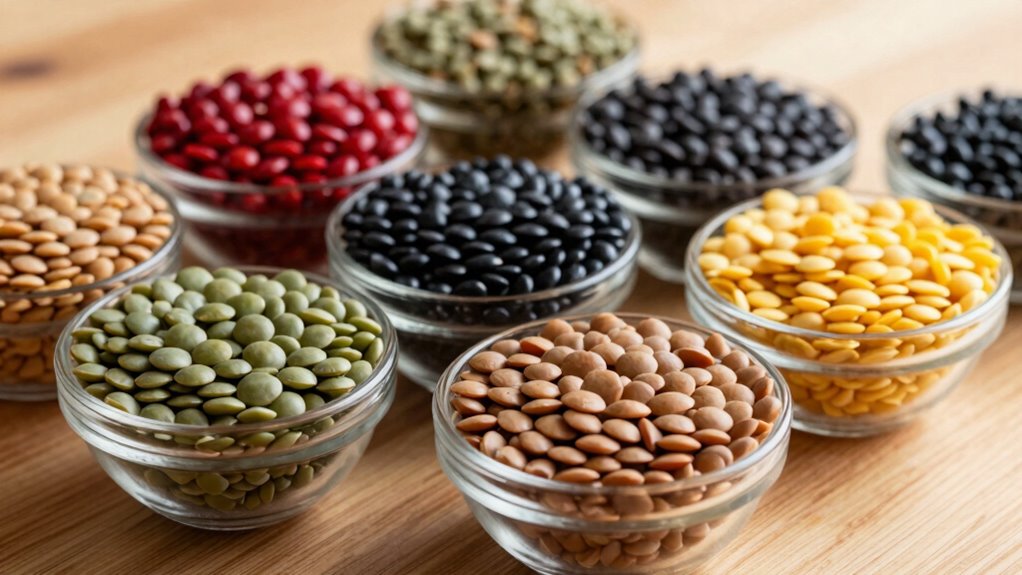
Have you ever wondered how many different types of lentils are out there? The variety is impressive, and each type offers unique flavors, textures, and cooking qualities that can elevate your meals. Understanding these differences can help you choose the right lentil for your recipes, whether you’re making a hearty stew or a simple salad. Plus, knowing about their nutritional benefits can motivate you to incorporate more of these nutrient-packed legumes into your diet.
Lentils are incredibly nutritious, packed with protein, fiber, vitamins, and minerals. They’re a great choice if you’re looking to boost your intake of plant-based protein or want a filling, low-fat food. Different types of lentils have slightly different nutritional profiles, but all provide essential nutrients that support digestive health, heart health, and sustained energy. For example, red and yellow lentils tend to cook faster and break down more easily, making them ideal for purees and soups, while green and brown lentils hold their shape better, perfect for salads and side dishes.
When it comes to cooking tips, each lentil type has specific needs. Red and yellow lentils require less water and cook quickly—usually in about 15 to 20 minutes—making them ideal for quick meals. Green and brown lentils take longer, about 30 to 40 minutes, and benefit from a thorough rinse beforehand to remove any debris or dust. Black lentils, also called beluga lentils, have a firm texture and a rich flavor; they hold their shape well during cooking, so they’re excellent for salads or stuffing. No matter the type, it’s best to rinse lentils thoroughly before cooking to reduce any surface dirt or impurities. Proper rinsing techniques can further ensure the best quality in your finished dish.
In terms of culinary use, the key is to match the lentil type to your recipe. If you want a smooth, creamy consistency, opt for red or yellow lentils. For a more textured dish, green or brown lentils work better. Seasoning is also important—adding aromatics like garlic, onions, or herbs enhances their natural flavor. Remember not to overcook lentils, especially the softer varieties, or they can turn mushy. A pinch of salt during cooking can help tenderize them, but adding salt too early might make their skins tough. Proper storage practices prevent spoilage and keep dried lentils in a cool, dry place, and they’ll last for months, making them a pantry staple you can always turn to. Understanding lentil varieties can help you make informed choices in your cooking and nutrition planning. Additionally, exploring different cooking methods can further diversify how you enjoy lentils in your meals.
As an affiliate, we earn on qualifying purchases.
Frequently Asked Questions
Which Lentil Type Cooks the Fastest?
You’ll find red lentils cook the fastest, often in about 15-20 minutes, making them perfect for quick dishes. When using different cooking methods like boiling or simmering, red lentils soften quickly and absorb flavors well, creating smooth, hearty textures. They also offer mild flavor variations, making them versatile for various recipes. Opt for red lentils when speed and simplicity are your priorities, and explore their flavor potential in your favorite meals.
Are There Allergy Concerns With Specific Lentil Types?
Like a delicate dance, some lentil types can trigger allergy symptoms in those with lentil sensitivity. You should be cautious, as allergy symptoms vary from mild to severe. While lentils are generally safe, certain varieties like red or green lentils might cause reactions in sensitive individuals. If you notice allergy symptoms, it’s best to consult with a healthcare professional. Being aware helps you enjoy lentils safely, avoiding potential health issues.
How Do Lentil Types Differ Nutritionally?
Lentil types differ nutritionally mainly in their nutritional variations and protein content. For instance, red lentils cook faster and have a softer texture, with slightly lower protein levels. Green and brown lentils offer more fiber and a firmer bite, along with higher protein content. Black lentils tend to have the highest nutritional density overall. So, depending on your dietary needs, you can choose the lentil type that best suits your nutritional goals.
Can Lentils Be Stored Long-Term Without Spoilage?
Yes, you can store lentils long-term without spoilage if you follow proper storage tips. Keep dried lentils in an airtight container in a cool, dark, and dry place to maximize their shelf life, which can be up to a year or more. Avoid moisture and sunlight, as they can cause spoilage or mold. For added safety, periodically check for any signs of pests or deterioration.
Which Lentil Type Is Best for Salads?
Think of your salad as a vibrant garden, and choosing the right lentil is like selecting colorful blooms. For salads, green or French lentils are your best bet—they hold their shape and add a slightly peppery flavor. These lentil flavor profiles blend well with fresh veggies and vinaigrettes. Use lentil cooking tips like rinsing thoroughly and avoiding overcooking to keep them firm and perfect for salads.
As an affiliate, we earn on qualifying purchases.
Conclusion
Now that you know the different lentil types, you’re ready to start cooking confidently. Don’t worry if you’re unsure which to pick—think of them like paint colors: each brings its own unique flavor and texture to your dish. Picture a vibrant red lentil soup or hearty brown lentil stew; these images show how versatile they are. With this guide, you’ll easily choose the right lentil for any recipe, turning simple ingredients into delicious meals.
red and yellow lentils for soups
As an affiliate, we earn on qualifying purchases.
As an affiliate, we earn on qualifying purchases.
green and brown lentils for salads
As an affiliate, we earn on qualifying purchases.
As an affiliate, we earn on qualifying purchases.
Fall Picks
fall essentials
As an affiliate, we earn on qualifying purchases.