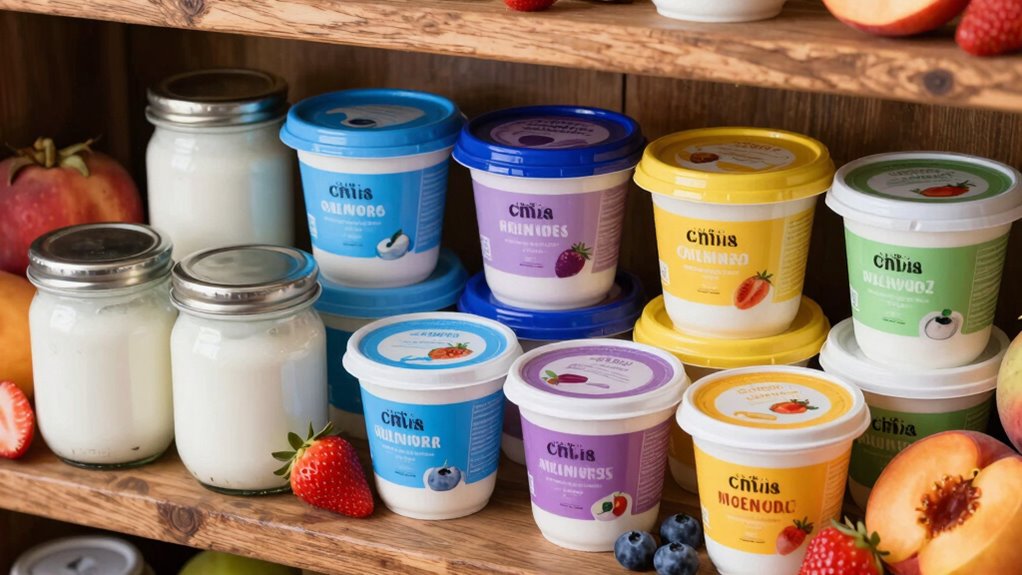

Before your next grocery run, know that there are many yogurt types to choose from, like traditional, Greek, and cultured dairy alternatives like kefir and skyr. Each offers different textures, flavors, and health benefits. For example, Greek yogurt is thicker and higher in protein, while kefir is tangy and probiotic-rich. Picking the right yogurt depends on your taste, nutrition goals, and cooking needs. Keep exploring to discover how to select the best options for you.

Get health and wellness essentials delivered free — and shop member deals
- Fast, free delivery on millions of items
- Access to Prime Big Deal Days deals on October 6–7
- Prime Video, Amazon Music and more included
Key Takeaways
- Understand different yogurt types: regular, Greek, Icelandic, kefir, and plant-based options, each with unique textures and probiotic content.
- Check labels for “live and active cultures” to ensure probiotic benefits.
- Consider texture and flavor preferences: creamy, tangy, thick, or liquid, to match your culinary needs.
- Choose based on nutrition goals: high-protein Greek or Icelandic yogurt or lower-fat, lower-sugar varieties.
- Read ingredient lists to verify minimal artificial additives and the presence of beneficial probiotics.
As an affiliate, we earn on qualifying purchases.
What Are the Main Types of Yogurt?

Are you curious about the different types of yogurt available? The main types vary based on yogurt fermentation methods and probiotic strains used. Regular yogurt is made through natural fermentation, where beneficial bacteria convert milk sugars into lactic acid, giving it that tangy flavor. Some varieties include live probiotic strains, which promote gut health, while others are heated afterward, killing these beneficial bacteria. You’ll also find drinking yogurts, which are more liquid and easier to consume on the go, and set yogurts, where fermentation occurs directly in the container. The choice depends on your taste and health goals. Understanding yogurt fermentation methods and probiotic strains helps you select the best type for your diet and digestion, especially considering probiotic benefits. Additionally, recognizing the differences in yogurt processing can help you make more informed choices based on nutritional content and health impacts. Different fermentation techniques can also influence the flavor, texture, and nutritional profile of the yogurt you choose. Knowing about microbial cultures involved in fermentation can further guide your selection based on health benefits and production methods.
As an affiliate, we earn on qualifying purchases.
What Is Greek Yogurt?

Greek yogurt stands out as a thicker, creamier variation of traditional yogurt, achieved through a specific straining process that removes whey and liquid. This process concentrates the yogurt, enhancing its texture and flavor. During yogurt fermentation, beneficial bacteria develop, providing probiotic benefits that support your gut health. Greek yogurt often contains more protein than regular yogurt, making it a satisfying snack or ingredient for meals. Its dense consistency makes it perfect for smoothies, dips, or topping dishes. The straining process is what primarily differentiates Greek yogurt from other types. This process not only affects texture but also influences the nutritional profile, making Greek yogurt a popular choice among health-conscious consumers. Additionally, the production method can vary depending on the brand, which may impact the final product’s quality. The fermentation process also plays a key role in developing the unique flavor profile of Greek yogurt. Here’s a quick comparison:
| Feature | Greek Yogurt | Regular Yogurt | Cultured Dairy Alternatives |
|---|---|---|---|
| Straining process | Extensive, removes whey | Minimal, retains liquid | Varies, often fermented |
| Protein content | Higher | Lower | Usually lower |
| Probiotic benefits | Rich, supports digestion | Present, but less concentrated | Varies, often cultured |
As an affiliate, we earn on qualifying purchases.
What Are Cultured Dairy Alternatives Like Kefir and Skyr?

Kefir and skyr are popular cultured dairy alternatives that offer unique textures and probiotic benefits. Kefir is a fermented beverage made by fermenting milk with kefir grains, resulting in a tangy, slightly fizzy drink packed with probiotics. It’s thinner than yogurt, making it ideal for smoothies or drinking straight. Skyr, on the other hand, is an Icelandic cultured dairy product similar to Greek yogurt but thicker and creamier. It’s high in protein and has a mild, slightly tangy flavor. Both kefir and skyr serve as excellent sources of probiotics, supporting digestion and gut health. They’re versatile options for those seeking dairy-based fermented beverages with probiotic benefits, offering a different texture and flavor profile from traditional yogurt. Additionally, fermentation process plays a key role in developing their distinctive flavors and health benefits.
As an affiliate, we earn on qualifying purchases.
Which Yogurt Is Best for Your Nutrition Goals?

Choosing the right yogurt depends on your specific nutrition goals, whether you’re aiming to boost protein intake, manage calories, or improve gut health. For protein, look for Greek or Icelandic yogurt, which are concentrated through yogurt fermentation. If managing calories, opt for low-fat or non-fat options, keeping in mind that some may have added sugars that reduce the probiotic benefits. To enhance gut health, select yogurts with live probiotic cultures, which support digestion and immune function. Additionally, understanding the tools used in dairy processing can help you identify high-quality yogurt options. Being aware of probiotic cultures can also aid in selecting yogurts that truly benefit your digestive system. It’s also helpful to consider yogurt fermentation processes, as they influence probiotic content and overall health benefits. Recognizing the different strains of probiotics present can further help tailor your choice to your specific gut health needs. Here’s a quick comparison:
| Goal | Best Yogurt Type | Key Feature |
|---|---|---|
| Protein boost | Greek, Icelandic | Higher protein content |
| Calorie control | Low-fat, non-fat | Lower fat and calories |
| Gut health | Yogurt with live probiotics | Supports digestion |
| Overall balance | Unsweetened, plain | Fewer added sugars |
How Do Flavor and Texture Vary Across Yogurt Types?

You’ll notice that yogurt flavors range from mild to intensely tangy, impacting how much sweetness or tartness you taste. Texture varies from smooth and creamy to thick or even drinkable, depending on the type. These differences shape your overall experience and how you might pair or enjoy each variety. Additionally, understanding the kitchen appliances used in yogurt production can help you appreciate the subtle variations in flavor and texture. Modern appliances like yogurt makers enable precise control over fermentation conditions, resulting in more consistent and tailored yogurt textures. Recognizing the fermentation process involved can also deepen your appreciation for the craft behind each type of yogurt.
Flavor Intensity Differences
Have you ever noticed how some yogurts pack a bold, tangy punch while others offer a milder, creamier taste? Flavor intensity varies across types, influenced by fermentation time, ingredients, and processing. If you prefer a sharp, tangy profile, Greek or traditional yogurt might appeal to your taste preferences. On the other hand, flavored or dessert-style yogurts tend to be milder and sweeter. Here’s a quick comparison:
| Yogurt Type | Flavor Profile | Intensity Level |
|---|---|---|
| Greek | Tart, creamy | High |
| Traditional | Tangy, smooth | Moderate |
| Flavored | Sweet, mild | Low |
| Skyr | Mild, slightly tangy | Moderate |
| Dessert-style | Very sweet, less tangy | Low |
Understanding these differences helps you select the right yogurt for your taste preferences. Additionally, the fermentation process plays a key role in developing these flavor profiles.
Texture Variations Explained
While flavor intensity varies among yogurt types, their textures also differ considerably, shaping the overall eating experience. The fermentation process influences whether yogurt is smooth, creamy, or tangy, with traditional dairy options typically offering a velvety consistency. Some varieties, like Greek yogurt, undergo straining to remove whey, resulting in a thicker, denser texture. Dairy-free options, made from coconut, almond, or soy, often have a lighter or more gelatinous feel, depending on ingredients and processing. You might encounter:
- Creamy, spoonable textures in traditional and Greek yogurts
- Smoother, often more liquid textures in dairy-free versions
- Chunky or fruit-studded varieties offering a varied mouthfeel
Understanding these differences helps you choose the right yogurt for your preferred texture and dietary needs. Additionally, fermentation plays a key role in developing both flavor and texture in different yogurt types. The fermentation process can also influence the probiotic content, which is an important consideration for gut health. Moreover, texture variations are often linked to the specific strains of bacteria used during fermentation, impacting both taste and health benefits. For example, the fermentation process can lead to the development of probiotic cultures, which are beneficial for digestive health.
Sweetness and Tartness Levels
Different types of yogurt display a wide range of sweetness and tartness levels, shaped by the fermentation process and ingredients used. For some, high sweetness levels suit those with a sweet tooth, while others prefer a tangy flavor that aligns with tartness preferences. Yogurt options like flavored or fruit-added varieties tend to be sweeter, often with added sugars, whereas plain Greek yogurt offers a sharper tartness. Understanding these differences helps you pick yogurt matching your flavor preferences and desired tartness. Additionally, the fermentation process influences the tartness and texture, making it an important factor when choosing the right yogurt.
What Yogurt Is Best for Cooking, Baking, or Snacking?

When choosing yogurt for cooking, baking, or snacking, you want options that suit each purpose. Some yogurts work better in recipes, while others are best enjoyed on their own. Understanding which types are ideal for each use helps you get the best flavor and texture. Incorporating artistic expressions through creative flavor combinations can also elevate your culinary experience.
Best Yogurt For Baking
If you’re wondering which yogurt works best for baking, the key is to select one that maintains its texture and flavor during the cooking process. Look for Greek yogurt or strained yogurt, as their thicker consistency can add moisture and richness to baked goods. These yogurts undergo yogurt fermentation that enhances their creaminess, making them ideal for baking. Also, pay attention to yogurt packaging design—opt for containers that preserve freshness and prevent spoilage. When selecting yogurt, consider these factors:
- High protein content for better structure in baked goods
- Unsweetened varieties to control sweetness
- Live active cultures for added flavor and fermentation benefits
Including proper storage methods can help ensure the yogurt stays fresh and retains its beneficial qualities during baking. Choosing the right yogurt guarantees your baked treats stay moist and flavorful, without compromising texture or quality.
Ideal Yogurt For Cooking
Choosing the right yogurt for cooking extends beyond baking, as it influences the final flavor and texture of your dishes. For ideal results, opt for plain, full-fat yogurt with live yogurt fermentation cultures, which help maintain creaminess and tang. Look for yogurt made through traditional dairy farm practices, ensuring minimal additives and high-quality ingredients. Greek yogurt is a popular choice because its thicker consistency adds richness without thinning out during cooking. Avoid flavored or sweetened varieties, as their added sugars can alter your dish’s balance. When cooking or baking, using yogurt with active cultures helps enhance moisture and tenderness while adding a subtle tang. Selecting yogurt from farms with transparent practices guarantees better quality, benefitting both your recipes and your health.
Tasting Yogurt For Snacks
Tasting yogurt for snacks involves selecting varieties that deliver the right balance of flavor, texture, and creaminess to satisfy your cravings. When choosing yogurt for snacking, consider the yogurt flavor profiles—whether you prefer tangy, sweet, or mild options. For a quick snack, full-fat Greek yogurt offers creaminess and richness, perfect for pairing with fruits or honey. If you want a lighter option, low-fat or non-fat varieties work well. Snack pairing tips include adding nuts, granola, or fresh fruit to enhance flavor and texture. You might also try flavored yogurts, which add sweetness and complexity without extra effort. Ultimately, choosing the right yogurt depends on your taste preferences and the snack experience you desire.
How to Read Labels and Recognize Yogurt Terms

Reading yogurt labels can seem tricky at first, but understanding the key terms makes it much easier to choose the right product for your needs. Look for “live and active cultures” to identify probiotics with benefits like improved digestion and gut health. If you’re seeking dairy free options, check for labels that specify plant-based ingredients like almond, coconut, or soy. Pay attention to added sugars—some yogurts contain high amounts, while others are naturally sweetened or unsweetened. The terms “Greek” or “strained” indicate thicker textures, often with higher protein content. Always read the ingredient list to verify the presence of probiotics and confirm that the yogurt aligns with your dietary preferences. Recognizing these terms helps you select a yogurt that supports your health goals.
Tips for Picking the Freshest and Most Delicious Yogurt

To pick the freshest and most delicious yogurt, start by checking the date on the packaging—it’s the best way to guarantee quality and flavor. Fresh yogurt results from proper yogurt fermentation, ensuring ideal probiotic benefits. Look for containers with minimal liquid on top, which indicates good quality. Smell the yogurt; a clean, tangy aroma signifies freshness, while off-putting odors suggest spoilage. Consider the ingredients—prefer those with simple, natural components without added sugars or artificial flavors. Additionally, pay attention to labels indicating live cultures, which enhance probiotic benefits.
Check the date, smell, and ingredients for fresh, probiotic-rich yogurt with minimal additives.
- Check the “best by” date for freshness
- Avoid containers with excessive liquid or discoloration
- Choose yogurt with visible live cultures and minimal additives
Frequently Asked Questions
Are Probiotic Benefits Present in All Yogurt Types?
Not all yogurt types contain probiotic benefits. It depends on the specific probiotic strains present and the fermentation process used. Look for labels that specify “live and active cultures,” which indicate probiotic content. Some yogurts undergo pasteurization after fermentation, killing beneficial bacteria. So, to enjoy probiotic benefits, choose yogurt that clearly states it contains live cultures and is minimally processed, ensuring you get the health benefits you seek.
How Long Does Homemade Yogurt Typically Last?
Homemade yogurt typically lasts about 1 to 2 weeks when stored properly. To maximize shelf life, keep it in an airtight container in the fridge at or below 40°F. Follow storage tips like avoiding cross-contamination and using clean utensils each time you serve. Check for signs of spoilage like mold or sour smell before consuming. Proper storage can help you enjoy your homemade yogurt safely for up to two weeks.
Can Lactose-Intolerant Individuals Safely Consume All Yogurt?
If you’re lactose intolerant, you can usually enjoy many yogurt options, but not all. Dairy-free alternatives like coconut, almond, or soy-based yogurts are safe choices. Look for plant-based probiotics on the label to guarantee you’re still getting beneficial bacteria. Always check for added sugars or artificial ingredients. These options let you indulge in yogurt’s health benefits without discomfort, making your snack both safe and nutritious.
What’s the Difference Between Organic and Non-Organic Yogurt?
Organic yogurt comes from dairy farming that follows strict organic certification standards, avoiding synthetic pesticides and fertilizers. Non-organic yogurt may come from farms that don’t meet these standards. You choose organic for potentially better animal welfare and fewer chemicals. Organic certification guarantees the product adheres to specific rules, giving you more confidence in its quality. So, look for labels if you want to prioritize organic dairy farming practices.
Are There Any Allergen Concerns With Flavored Yogurts?
You should be aware that flavored yogurts might contain allergen concerns, especially with artificial sweeteners and added preservatives. These ingredients can sometimes trigger sensitivities or mild reactions in certain individuals. Always check labels carefully, especially if you have known allergies or sensitivities. Opting for natural or plain yogurt and adding your own fresh fruits can help you avoid potential allergens and enjoy a healthier snack.
Conclusion
Next time you browse the yogurt aisle, remember that your choice can unexpectedly influence your day—whether it’s the tangy kick of Greek yogurt or the probiotic boost from kefir. With so many options, your pick might just mirror a quiet moment of self-care or spark a new culinary adventure. Sometimes, it’s the small, seemingly coincidental decisions—like choosing the right yogurt—that subtly shape your health and happiness in ways you never expected.
Fall Picks
fall essentials
As an affiliate, we earn on qualifying purchases.