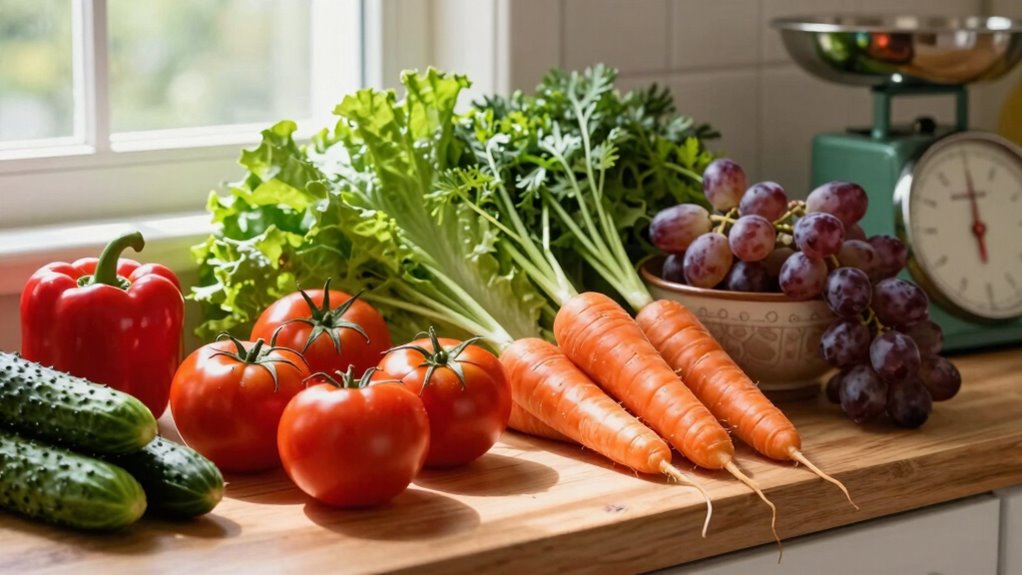

Each week, buy enough produce to cover your household’s meals without overdoing it, which could lead to waste. Focus on seasonal items and plan meals like salads, stir-fries, or roasts to estimate quantities. Purchase leafy greens for 3-4 days and stock up on fruits like apples and bananas for daily snacks. Proper storage and preservation help extend freshness, so you enjoy more from your purchases. Keep these tips in mind to optimize your produce supply and reduce waste.

Get health and wellness essentials delivered free — and shop member deals
- Fast, free delivery on millions of items
- Access to Prime Big Deal Days deals on October 6–7
- Prime Video, Amazon Music and more included
Key Takeaways
- Estimate produce needs based on your planned weekly meals and daily servings, adjusting for household size and consumption rate.
- Prioritize seasonal fruits and vegetables to maximize freshness and cost-efficiency for weekly shopping.
- Buy leafy greens and delicate produce in quantities that will last 3-4 days to prevent spoilage.
- Use proper storage techniques to extend produce shelf life and reduce waste throughout the week.
- Consider freezing or preserving surplus produce for later use, minimizing weekly shopping volume.

Have you ever wondered how to make the most of your weekly produce shopping? It’s a common question, especially when you want to balance freshness, variety, and cost. The key lies in understanding how much produce you actually need week to week, and that depends on your meal planning and grocery budgeting. If you plan your meals carefully, you’ll avoid buying too much or too little, which helps reduce waste and saves money. Knowing what makes sense for your household means considering your eating habits, the types of produce you prefer, and how quickly you use it up.
Start by thinking about your typical weekly meals. Do you prepare salads every day, or are you more of a stir-fry or roasting person? If salads are your mainstay, you’ll want to buy leafy greens, tomatoes, and other quick-wilting produce in smaller quantities—say, enough for 3-4 days. On the other hand, if you cook larger meals that incorporate produce over several days, you might buy in bulk. Also, consider snacks and side dishes. If fruit is a daily snack for you, then allocate space and budget for more apples, bananas, or berries. Planning your meals first helps you visualize how much produce you need, preventing overbuying and reducing waste.
Grocery budgeting plays a big role here, too. Fresh produce can get expensive fast, especially if you buy in bulk or opt for organic varieties. To keep costs in check, focus on seasonal fruits and vegetables—they’re usually cheaper and taste better. Buying in season ensures you get the most out of your grocery budget without sacrificing quality. Additionally, shopping sales and using coupons for produce can stretch your dollars further. When you’re mindful about how much produce you buy each week, you avoid impulse purchases and unnecessary leftovers that spoil before you get around to using them. Understanding produce shelf life is essential for effective meal planning and reducing waste. Being aware of how long different produce lasts can help you better plan your shopping and storage strategies. Moreover, understanding produce storage techniques can help prolong freshness and prevent spoilage, making your shopping more efficient.
It’s also worth considering storage. If you buy too much, some items might spoil before you can use them, leading to waste and wasted money. Proper storage techniques—like keeping greens in airtight containers or storing root vegetables in a cool, dark place—extend freshness and help you get the most out of your produce. Adjust your quantities based on your household size and how quickly you go through fruits and vegetables. Smaller households or individuals might find a weekly purchase of enough produce for 4-6 days ideal, while larger families may need to buy more or shop more frequently. Being aware of produce shelf life can help you plan better and avoid spoilage. Additionally, considering preservation methods like freezing or canning can further extend the usability of seasonal produce. Learning about preservation techniques can be a valuable tool for managing surplus and enjoying seasonal bounty year-round.
reusable produce storage containers
As an affiliate, we earn on qualifying purchases.
As an affiliate, we earn on qualifying purchases.
Frequently Asked Questions
How Do I Adjust Produce Quantities for a Family of Different Sizes?
To adjust produce quantities for your family, start with meal prep plans that consider each member’s appetite. Use portion control to prevent waste—smaller portions for kids and larger ones for adults. Keep track of what gets used or leftover, then tweak weekly quantities accordingly. This way, you avoid overbuying or underestimating, ensuring everyone’s needs are met while minimizing waste and saving money.
What Are the Best Tips for Storing Produce to Extend Freshness?
To extend freshness, focus on proper vegetable storage and managing fruit ripening. Keep leafy greens in airtight containers or perforated bags in the fridge to prevent wilting, and store root vegetables in a cool, dark place. For fruits, separate ripe from unripe to control ripening speed, and use breathable bags for berries. Regularly check for spoilage, and adjust storage methods based on each produce type to maximize freshness.
How Can I Plan for Produce That Isn’t in Season?
When planning for out-of-season produce, think of it as preparing for a flavor drought—so you stock up wisely. Frozen fruits and canned vegetables become your best allies, offering convenience and long shelf life. Incorporate them into your meals just like fresh produce. By doing this, you guarantee your diet stays vibrant and nutritious, no matter what’s in season outside your window. It’s like having a garden that never sleeps!
Should I Buy Organic or Conventional Produce Weekly?
You should prioritize organic produce for items with higher pesticide residues, especially when planning your seasonal produce. Organic versus conventional choices depend on your budget and health concerns. For in-season produce, buying organic makes sense, but for out-of-season items, conventional options are often more affordable and still nutritious. Balancing both based on seasonal planning helps you enjoy fresh, safe, and cost-effective produce week to week.
How Do I Incorporate Variety Without Wasting Excess Produce?
To keep things fresh, don’t put all your eggs in one basket. Mix up your produce during meal prep, focusing on versatile items like peppers, carrots, and greens. Use portion control to avoid waste, storing leftovers properly for later. Incorporate new vegetables regularly to prevent boredom and make the most of what you buy. This way, you stay healthy, reduce waste, and keep your meals exciting.
produce preservation and freshness kits
As an affiliate, we earn on qualifying purchases.
As an affiliate, we earn on qualifying purchases.
Conclusion
To make your produce shopping truly practical, aim for about 7-10 servings weekly—roughly 3-4 cups per day. Did you know that just increasing your fruit and veggie intake by one serving daily can reduce your risk of chronic disease? Planning your purchases around this helps prevent waste and keeps your diet balanced. So, consider how much produce you actually consume each week, and tailor your shopping to match your lifestyle—your body (and wallet) will thank you!
vegetable and fruit vacuum sealer
As an affiliate, we earn on qualifying purchases.
As an affiliate, we earn on qualifying purchases.
seasonal fruit and vegetable baskets
As an affiliate, we earn on qualifying purchases.
As an affiliate, we earn on qualifying purchases.
Fall Picks
fall essentials
As an affiliate, we earn on qualifying purchases.