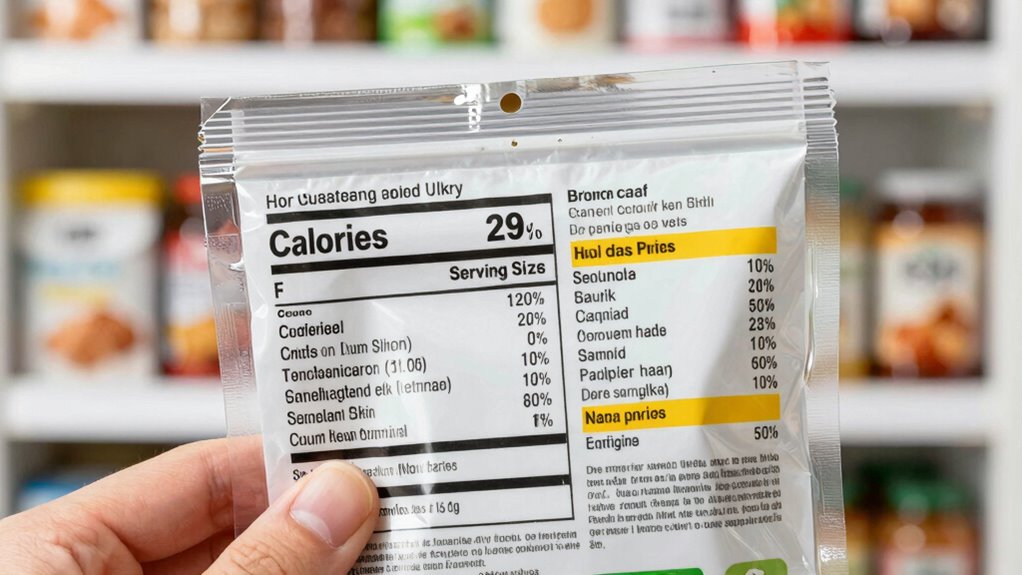

To understand nutrition labels, start by checking the ingredient list at the bottom to identify recognizable whole foods and avoid added chemicals. Pay attention to serving sizes, and double if you eat more than listed. Focus on key nutrients like calories, fats, sodium, and sugars, and use the % Daily Value to see how each item fits your diet. Keep these tips in mind to make smarter choices—there’s more to learn to help you eat healthier.

Get health and wellness essentials delivered free — and shop member deals
- Fast, free delivery on millions of items
- Access to Prime Big Deal Days deals on October 6–7
- Prime Video, Amazon Music and more included
Key Takeaways
- Check the ingredient list for recognizable, whole foods and avoid long, chemical-heavy ingredient lists.
- Pay attention to serving sizes to accurately assess nutrient intake and avoid miscalculations.
- Focus on key nutrients like calories, fats, sodium, and sugars, and compare their % Daily Value (%DV).
- Use %DV to determine if a nutrient is low (5% or less) or high (20% or more) in the food.
- Prioritize foods with fewer ingredients and lower %DV for unhealthy components to make healthier choices.

Have you ever looked at a nutrition label and felt overwhelmed by all the numbers and terms? You’re not alone. Nutrition labels can seem confusing at first, especially with the clutter of percentages, grams, and technical jargon. But once you grasp the basics, they become invaluable tools for making healthier choices. The first step is to pay attention to the ingredient list, which is usually listed at the bottom of the label. This list tells you exactly what’s in your food, from the main ingredients to any additives or preservatives. The fewer ingredients, especially recognizable whole foods, the better. If the ingredient list is filled with unfamiliar chemical names or long lists of additives, it might be a sign to look for a cleaner option. Reading ingredients helps you avoid hidden sugars, unhealthy fats, or artificial ingredients that can sneak into processed foods. Understanding how to read nutrition labels is also crucial, as they are designed to help you make informed decisions about your diet. Familiarity with common nutritional components can further improve your ability to interpret labels effectively. Additionally, being aware of recommended daily limits can help you stay within healthy ranges for various nutrients. Recognizing these limits can prevent overconsumption of nutrients like sodium or added sugars, which are common concerns in processed foods.
Check the ingredient list for recognizable whole foods and avoid unfamiliar additives for healthier choices.
Next, the serving size is critical because all the nutritional information on the label is based on this specific amount. Many people overlook this detail, but it can dramatically change the perspective on how healthy a food really is. For example, if a serving size is just half a cup, but you typically eat a full cup, you need to double the numbers to understand the true nutritional content of what you’re consuming. Always check what the manufacturer considers a single serving, and compare it to how much you usually eat. This small step guarantees you’re not underestimating your calorie, sugar, or fat intake. Being mindful of serving sizes helps you better control your overall intake and avoid surprises when you reach for seconds.
As you read the label, focus on the calories and the key nutrients: total fat, saturated fat, trans fat, cholesterol, sodium, total carbohydrates, dietary fiber, sugars, and protein. These give you a snapshot of how the food fits into your overall diet. For instance, high sodium levels can be problematic if you’re watching your blood pressure, while a good amount of dietary fiber supports digestion. Pay attention to the percent daily value (%DV) next to each nutrient—it shows how much a serving contributes to your daily recommended intake. A %DV of 5% or less means a nutrient is low in that food, while 20% or more indicates a high amount. Being familiar with these labels empowers you to choose foods that align with your health goals and dietary needs. Incorporating nutritional literacy into your routine makes it easier to identify healthier options and avoid misleading marketing tactics.
As an affiliate, we earn on qualifying purchases.
Frequently Asked Questions
How Often Should I Check Nutrition Labels When Shopping?
You should check nutrition labels every time you shop to guarantee reading label accuracy and ingredient transparency. Regularly reviewing labels helps you make informed choices, especially when comparing products or selecting healthier options. Even if you’re familiar with a brand, manufacturers can change ingredients or nutritional content. Staying vigilant ensures you understand what you’re consuming, supports your health goals, and confirms that labels accurately reflect the product’s contents.
Are Organic or Natural Labels More Reliable Than Nutrition Labels?
You might think organic or natural labels are more trustworthy, but beware—these claims can be misleading. Organic claims are regulated, but natural certifications aren’t always strict, leaving room for ambiguity. Always scrutinize labels carefully. Relying solely on organic or natural terms won’t guarantee health benefits. Instead, focus on the nutrition facts and ingredients list, and remember, transparency and certification are your best guides for making truly informed choices.
How Do Serving Sizes Impact the Nutritional Information?
Serving sizes directly impact your understanding of nutritional information, so portion control is key. When labels specify a smaller serving, the calories and nutrients seem lower, but if you eat more, your intake increases accordingly. Always check label accuracy by comparing the stated serving size to your actual portion. This way, you maintain a realistic picture of your diet, helping you make healthier choices and avoid underestimating calorie or nutrient intake.
Can Nutrition Labels Help Identify Hidden Sugars?
Yes, nutrition labels can help you spot hidden sugars. Look beyond the “Sugars” line—check the ingredients for hidden additives like syrups and concentrated fruit juice. Be aware of sugar alternatives listed, such as sorbitol or aspartame, which can also contribute to sweetness without obvious sugar content. Reading labels carefully helps you distinguish between natural sugars and added sugars, empowering you to make healthier choices and avoid unexpected sugar intake.
What Do the Daily Value Percentages Really Mean?
You might notice the daily value percentages and wonder what they really mean. These figures show how much a nutrient in one serving contributes to your daily diet, based on a 2,000-calorie intake. The percentage significance helps you quickly gauge whether a food is high or low in a nutrient. It’s like a secret code, guiding you to healthier choices without needing to do complicated math.
As an affiliate, we earn on qualifying purchases.
Conclusion
Once you start reading nutrition labels, it’s like deciphering a secret code that empowers your health choices. I remember thinking I was eating “healthy” snacks until I noticed the added sugars and unhealthy fats lurking in the fine print. Now, I’m like a detective, piecing together the story behind each ingredient. With these tips, you’ll turn labels into your allies, making smarter choices that add up to a healthier, happier you—one label at a time.
As an affiliate, we earn on qualifying purchases.
healthy ingredient shopping list
As an affiliate, we earn on qualifying purchases.
As an affiliate, we earn on qualifying purchases.
Fall Picks
fall essentials
As an affiliate, we earn on qualifying purchases.