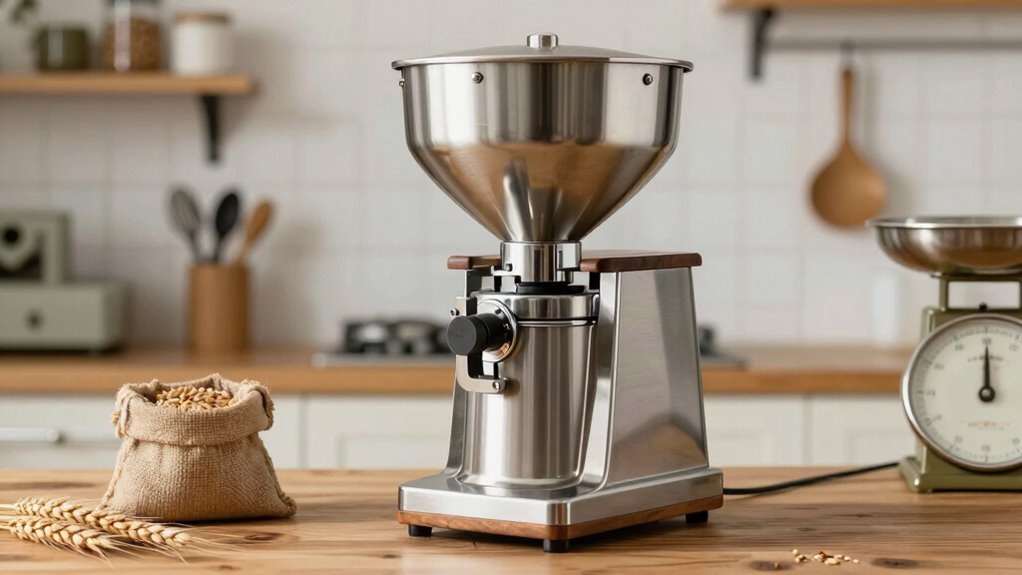

To choose a grain mill without overspending, focus on a model that balances affordability with quality. Look for one with solid motor and grinding components suited for your typical grains, and consider noise levels if you’ll be in a shared space. Avoid unnecessary features by researching reviews to find durable, mid-range options that offer good value. If you keep these tips in mind, you’ll be better equipped to pick a mill that meets your needs without breaking the bank.

Get health and wellness essentials delivered free with Prime
- Fast, free delivery on millions of items
- Prime Video, Amazon Music and more included
- Member-only deals all year
Key Takeaways
- Determine your grain types and volume needs to select a mill with appropriate capacity and compatibility.
- Balance features like noise reduction and grinding quality against your budget to avoid unnecessary expenses.
- Opt for durable materials such as metal burrs for long-term use and tougher grains.
- Prioritize mid-range models with good reviews for optimal value and performance.
- Consider portability and storage requirements to prevent future costs or inconvenience.
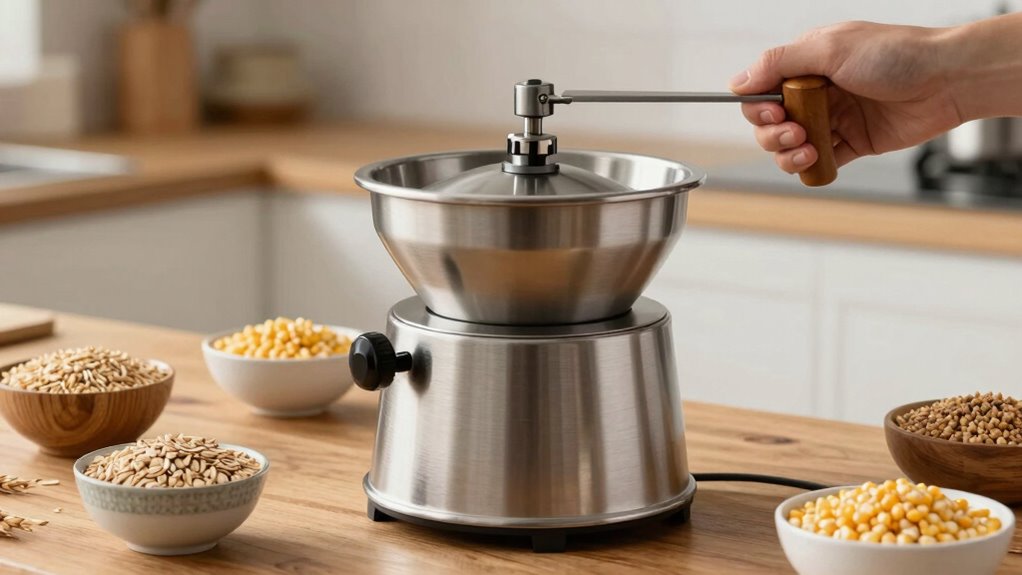
Choosing the right grain mill can considerably impact the quality and efficiency of your home baking or cooking projects. When you’re shopping for a mill, one of the first factors to weigh is how you’ll handle grain storage. Some models are compact and designed for small batches, making it easier to keep your grains fresh and organized in your pantry. Others might require more space and storage solutions, especially if you plan to mill larger quantities regularly. Think about your available space and whether you prefer a portable unit or something more permanent. Proper grain storage isn’t just about convenience; it also helps maintain the freshness and nutritional value of your grains, ensuring your flour is as wholesome as possible.
Choosing the right grain mill influences your baking quality and efficiency.
Another essential factor is noise levels. Grain mills can be surprisingly loud, especially when grinding tougher grains or larger amounts. If you live in a shared space or have sensitive household members, you’ll want to choose a model that minimizes noise. Some mills are equipped with quieter motors or sound-dampening features, which can make a significant difference during early mornings or late-night baking sessions. Noise levels shouldn’t be an afterthought—quiet operation allows you to mill grains without disturbing others, making it easier to incorporate fresh flour into your routine without complaints or disruptions. Additionally, some models include soundproofing features that further reduce noise, making them ideal for quiet environments.
Additionally, consider the motors and grinding mechanisms of the mill, as these components greatly influence the efficiency and durability of the device. Cost is always a consideration, but it’s important to avoid overspending on features you don’t need. High-end mills may offer advanced settings, faster grinding, or longer durability, but if you’re just starting out or only occasionally baking, a basic model could suffice. Focus on finding a balance between affordability and quality, so you get a durable, efficient mill without draining your budget. Remember, quality doesn’t always mean the most expensive option; sometimes, well-reviewed mid-range models offer the best value. When choosing a mill, also consider the maintenance requirements to ensure it remains effective over time and doesn’t incur additional costs or hassle. Moreover, researching customer reviews can provide valuable insights into the long-term performance and reliability of different models.
Additionally, consider the type of grains you plan to mill. Some mills are versatile and handle a variety of grains, including wheat, corn, and rye, while others are more specialized. Check the durability of the grinding mechanism—metal burrs tend to last longer and handle tougher grains better than plastic ones. Think about your typical grain choices and pick a mill that can handle them efficiently.
affordable grain mill for home baking
As an affiliate, we earn on qualifying purchases.
As an affiliate, we earn on qualifying purchases.
Frequently Asked Questions
What Is the Average Lifespan of a Grain Mill?
The average lifespan of a grain mill varies based on its durability and usage, typically ranging from 10 to 20 years. Higher-quality, durable models tend to last longer, especially with proper maintenance. If you choose a well-made mill, it can serve you for decades. Keep in mind that regular cleaning and occasional repairs extend the lifespan, ensuring your investment remains valuable and functional for years to come.
Are Manual Grain Mills Suitable for Large Quantities?
Manual grain mills are like sturdy workhorses, perfect for small to medium batches but may struggle with large quantities. They offer manual efficiency, requiring more effort but providing control. For large-scale durability, electric mills shine with their ability to handle hefty loads effortlessly. If you’re grinding large amounts regularly, consider an electric model for speed and endurance, while manual mills suit occasional, smaller tasks with charm and reliability.
How Noisy Are Different Types of Grain Mills?
Different grain mills vary in noise levels. Electric models tend to produce more noise, with some causing loud vibrations, while manual mills offer quiet operation since they lack motors. For a noise comparison, manual mills are your best choice if you want to avoid disturbance. If you prefer electric, look for quieter models with noise-reducing features, ensuring you get effective grinding without excessive noise.
Do Grain Mills Require Special Maintenance or Cleaning?
Grain mills do require regular cleaning and maintenance. You should clean the mill after every few uses, especially if grinding different grains, to prevent cross-contamination. Maintenance tips include checking for worn parts, lubricating moving components as needed, and following the manufacturer’s instructions for cleaning. Keep the mill dry and store it properly to guarantee longevity. Proper upkeep helps maintain performance and extends your mill’s lifespan.
Can a Grain Mill Grind Other Types of Grains or Seeds?
You can absolutely use a grain mill to grind other grains and seeds, expanding your culinary options. Think of it as hitting two birds with one stone. Many mills handle alternative grain options and seeds well, but it’s crucial to follow proper seed grinding techniques to avoid clogging or damaging the mill. Always check your mill’s specifications to make sure it can handle different types of grains and seeds for versatile use.
As an affiliate, we earn on qualifying purchases.
Conclusion
Choosing the right grain mill doesn’t have to break the bank. By considering your specific needs and budget, you can find a reliable option that lasts. Did you know that the global grain mill market is expected to reach $1.5 billion by 2027? That’s a proof to how essential fresh, homemade flour has become. So, invest wisely, and enjoy the health benefits and flavors of freshly milled grains without overspending.
As an affiliate, we earn on qualifying purchases.
mid-range grain mill with durable burrs
As an affiliate, we earn on qualifying purchases.
As an affiliate, we earn on qualifying purchases.
Halloween Picks
halloween
As an affiliate, we earn on qualifying purchases.