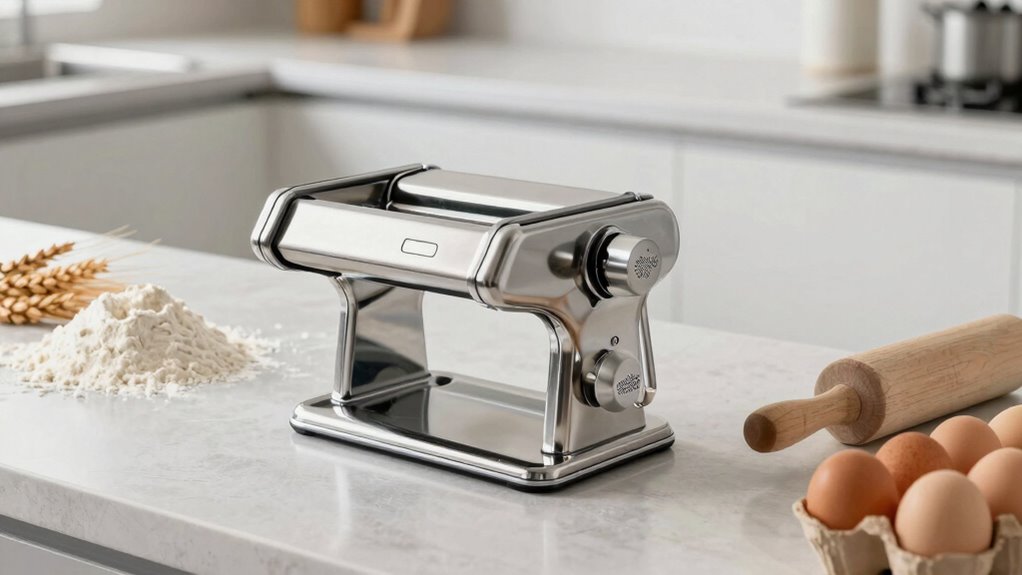

To choose a pasta maker without overspending, focus on your needs—opt for a hand crank if you prefer a traditional, control-focused experience or an electric model for speed and convenience. Prioritize durability by selecting machines with stainless steel parts or sturdy plastic, which last longer and resist wear. Avoid cheap, all-plastic options to save money in the long run. Stay tuned to discover how material quality and features can help you make the best choice.
Open a free Amazon Business account
Business pricing, bulk buying and tax-exempt orders.
As an affiliate, we earn on qualifying purchases.
Key Takeaways
- Determine your pasta-making needs: prefer manual for occasional use, electric for frequent or large batches.
- Set a budget and compare features to find a balance between affordability and essential functions.
- Prioritize models with durable materials like stainless steel for longevity and better value.
- Avoid overly complex or feature-heavy machines if you only need basic pasta, saving money.
- Read reviews to identify reliable, cost-effective options with good performance and durability.

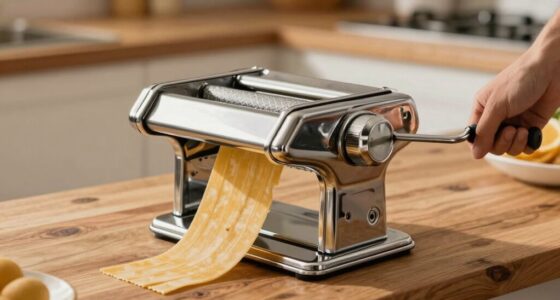
Choosing the right pasta maker machine can transform your home cooking experience, but with so many options available, it’s easy to feel overwhelmed. One of the first decisions you’ll need to make is whether to go with a hand crank or an electric model. If you prefer a more traditional approach, a hand crank machine offers simplicity and a tactile feel that many pasta enthusiasts love. Hand crank models tend to be more affordable, lightweight, and don’t require electrical power, making them ideal for small kitchens or those who enjoy the process of manual pasta making. On the other hand, electric pasta makers provide convenience and speed, allowing you to produce large quantities of pasta with minimal effort. They often come with adjustable settings for thickness and type, making them suitable for those who want quick results or plan to make pasta frequently.
Choose between traditional hand crank or convenient electric pasta makers based on your needs and kitchen space.
Material durability is another crucial factor in choosing your pasta maker. You want a machine built from sturdy, high-quality materials that can withstand regular use. Look for models with stainless steel components or a combination of metal and heavy-duty plastic. These materials resist rust, cracking, and warping over time, ensuring your investment lasts. Cheaper models made entirely of plastic or lightweight materials may seem tempting due to their lower price, but they tend to wear out faster and might not provide the consistent results you seek. The durability of the material directly impacts how well your pasta maker performs over the years, so it’s worth prioritizing quality. Additionally, material durability can influence the ease of cleaning and maintenance, which are important for long-term use. Considering how material quality affects both performance and longevity can help you make a more informed choice. Choosing a machine with durable construction can also reduce the need for repairs or replacements, saving you money over time. Moreover, the corrosion resistance of materials is vital to ensure your pasta maker remains in good condition despite frequent use and exposure to moisture. Selecting a model with appropriate material choices can significantly extend the lifespan of your investment.
As an affiliate, we earn on qualifying purchases.
Frequently Asked Questions
Are Manual or Electric Pasta Makers Better for Beginners?
For beginners, manual pasta makers are a great choice since they’re simple, affordable, and don’t require electricity, fitting well with your kitchen aesthetics. They’re easier to store with compact storage solutions and give you more control over dough thickness. Electric models, while more convenient, can be bulkier and more costly. If you prefer a hands-on experience and minimal clutter, a manual pasta maker is the better option.
How Long Does It Take to Make Pasta With Different Machines?
With a manual machine, expect to spend about 15-20 minutes shaping and rolling your dough, feeling the textures as you work. Electric machines speed things up, often taking just 5-10 minutes to produce fresh, smooth pasta. Your dough’s consistency influences this process—too sticky or dry, and it slows down. Durable machines maintain efficiency over time, ensuring quick, consistent results every time you roll out homemade pasta.
Can I Make Gluten-Free Pasta With Any Machine?
Yes, you can make gluten-free pasta with any machine, but you’ll need to use gluten-free dough, which often includes alternative flours like rice, almond, or chickpea flour. Not all machines handle these flours equally well, so look for a pasta maker with adjustable rollers and a sturdy build. Experimenting with different flours and dough consistencies will help you find the best results for your gluten-free pasta.
What Maintenance Is Required for a Pasta Maker?
You need to regularly clean your pasta maker to maintain good dough consistency and prevent residue buildup. After each use, disassemble the parts and follow the cleaning procedures recommended by the manufacturer, usually washing with warm water and mild soap. Avoid abrasive cleaners. Keep the machine dry and store it in a dry place. Periodically check for any loose parts or damage to guarantee smooth operation and prolong its lifespan.
Are There Size Restrictions for Pasta Sheets?
You wonder if there are size restrictions for pasta sheets? The answer lies in your pasta sheet thickness and dough consistency. Most machines accommodate standard widths, but if your dough isn’t just right, sheets might not roll out evenly or fit well. Keep your dough smooth and consistent, and you’ll find that your pasta sheets will comfortably reach the machine’s maximum size, giving you perfect, uniform pasta every time.
electric pasta maker with adjustable thickness
As an affiliate, we earn on qualifying purchases.
As an affiliate, we earn on qualifying purchases.
Conclusion
Choosing the right pasta maker doesn’t have to break the bank. Focus on your needs, features, and budget, and you’ll find a machine that makes cooking fun and easy. Did you know that the global pasta market is expected to reach $23 billion by 2027? That’s a proof to how much people love homemade pasta. So, pick wisely, and enjoy creating delicious meals without overspending!
As an affiliate, we earn on qualifying purchases.
As an affiliate, we earn on qualifying purchases.
NFL season / tailgating Picks
team gear
As an affiliate, we earn on qualifying purchases.