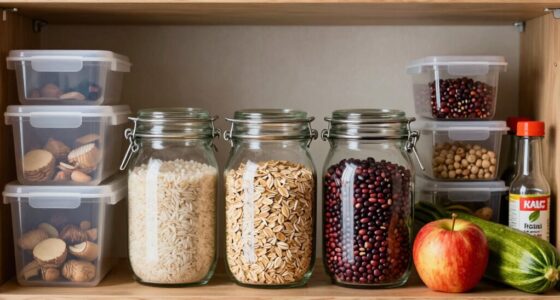
To shop for seasonal produce without stress, start by checking local markets, farmers’ guides, or online resources to see what’s in season. Focus on vibrant, fresh-looking fruits and vegetables, and ask vendors for storage tips. Plan your meals around what’s fresh and affordable, and make a shopping list to stay organized. Store produce properly to keep it fresh longer. Keep these tips in mind, and you’ll discover more ways to enjoy fresh, sustainable eating.

Get health and wellness essentials delivered free with Prime
- Fast, free delivery on millions of items
- Prime Video, Amazon Music and more included
- Member-only deals all year
Key Takeaways
- Research local seasonal guides or visit farmers’ markets to identify what’s in season.
- Plan meals around fresh, seasonal ingredients to simplify shopping and reduce last-minute trips.
- Focus on vibrant, firm produce with fresh smells for quality.
- Store produce properly: leafy greens in breathable containers, root vegetables in cool, dark places.
- Prepping and storing seasonal produce helps reduce waste and makes healthy eating more convenient.

Have you ever wondered why shopping for seasonal produce is better for your health, wallet, and the environment? When you choose fruits and vegetables in season, you’re getting peak freshness, which means more nutrients and better flavor. Plus, seasonal produce tends to be more affordable because it’s abundant and doesn’t require costly transportation or storage. Shopping this way also reduces your carbon footprint, as it supports local farmers and minimizes the environmental impact of long-distance food shipping.
To make the process simple and stress-free, start by familiarizing yourself with what’s in season in your area. You can check local farmers’ markets, community-supported agriculture (CSA) programs, or seasonal produce guides online. Once you know what’s fresh, plan your meals around these ingredients. Meal prep becomes easier because you’ll have a clear idea of what to buy and how to use it. Preparing your weekly meals with seasonal produce not only boosts nutrition but also helps you avoid last-minute grocery store trips, saving you time and money.
When shopping, focus on quality over quantity. Look for vibrant colors, firm textures, and fresh smells. Don’t be afraid to ask vendors for tips on how to store or prepare certain items. Proper storage tips are key to extending the life of your produce, reducing waste, and making sure you get the most out of your purchases. For example, leafy greens often stay fresh longer if you wrap them in a paper towel and store them in a breathable container. Root vegetables like carrots and potatoes prefer cool, dark places, while berries do best in the fridge but should be eaten quickly. Understanding seasonal availability helps you make smarter choices and supports sustainable practices. Additionally, being aware of local growing seasons can help you plan ahead and diversify your diet throughout the year. Incorporating knowledge about seasonal cycles can further enhance your ability to select the freshest produce at the right time. A better understanding of food sustainability can guide you toward more environmentally responsible shopping habits and reduce unnecessary waste.
Incorporate your seasonal finds into your meal prep routine by washing, chopping, and storing produce in airtight containers. This makes it easy to grab healthy ingredients when you’re in a hurry and reduces the temptation to opt for processed foods. Having prepped produce on hand encourages you to cook at home more often, which saves money and allows you to control your ingredients. It also minimizes food waste because you’re using produce at its peak freshness. Recognizing sustainable practices in your shopping choices can further contribute to reducing your environmental impact and supporting local ecosystems.
Products Worth Considering

Cuisinart Tabletop Propane Patio Heater, 11,000 BTU, Gray

Instant Pot Pro 8-Quart 10-in-1 Electric Pressure Cooker, Black

KitchenAid Compact 8-Cup Grain and Rice Cooker with Integrated Scale
As an affiliate, we earn on qualifying purchases.
Frequently Asked Questions
How Do I Store Seasonal Produce for Maximum Freshness?
To store seasonal produce for maximum freshness, follow these storage tips: keep fruits and vegetables in the right conditions—refrigerate berries, leafy greens, and cut produce, while tomatoes and citrus do better at room temperature. Use breathable containers or perforated bags to prevent moisture buildup, which helps with freshness preservation. Regularly check your produce, removing any spoiled items, so everything stays fresh and tasty longer.
Are Organic Options Necessary When Buying Seasonal Fruits and Vegetables?
Organic options aren’t necessary, but they do offer benefits like fewer pesticides and potentially better taste. If you’re concerned about pesticide residues, choosing organic seasonal fruits and vegetables can give you peace of mind. However, conventional produce is often more affordable and still nutritious. Ultimately, it depends on your priorities and budget. Focus on enjoying fresh, seasonal produce, whether organic or not, for the best health benefits.
How Can I Tell if Seasonal Produce Is Ripe?
You can tell seasonal produce is ripe by checking ripeness indicators like color, firmness, and aroma—if it smells heavenly and feels just right, you’re golden. Trust harvest timing too; fruits and veggies arrive at peak ripeness, not early or late. Remember, if it looks perfect but smells off or feels mushy, it’s probably not ripe. So, get your detective hat on and look for those clues!
What Are Some Budget-Friendly Ways to Buy Seasonal Produce?
To save money on seasonal produce, visit budget stores and farmers’ markets, where prices are often lower. Do a price comparison between stores to find the best deals. Buying in bulk or choosing slightly imperfect produce can also cut costs. Planning your meals around what’s in season helps you take advantage of lower prices, ensuring you get fresh, nutritious produce without overspending.
Can I Find Seasonal Produce at Local Farmers’ Markets Year-Round?
You can find seasonal produce at local farmers’ markets year-round, but availability varies with the seasons. To get the best, ask vendors about seasonal produce varieties and follow farmers’ market etiquette by being respectful and patient. Some markets offer preserved or stored varieties in off-seasons, so explore different vendors. This way, you enjoy fresh, local, and diverse produce throughout the year without stress.
Conclusion
Shopping for seasonal produce doesn’t have to be stressful. By focusing on what’s in season, you save money, enjoy fresher flavors, and support local farmers. Did you know that eating seasonal fruits and veggies can boost your nutrient intake by up to 20%? So, next time you hit the market, trust your instincts, choose what’s local and in season, and make your shopping experience enjoyable and rewarding. Happy eating!