You can easily tell leafy greens apart by their texture, flavor, and color, which influence how you use them. Tender greens like lettuce are mild and soft, perfect raw, while hearty greens like kale withstand long cooking and have a stronger flavor. Nutritionally, greens vary in vitamins and minerals; darker leaves tend to pack more nutrients. Growing conditions also impact their quality, flavor, and appearance. Keep exploring to discover how to choose and enjoy these greens for maximum health and flavor.
Key Takeaways
- Leafy greens are categorized by texture: tender (e.g., lettuce) versus hearty (e.g., kale), affecting cooking and usage.
- Nutritional content varies, with kale and collards being more nutrient-dense than milder greens like lettuce.
- Flavor profiles range from mild and sweet to bitter or peppery, influencing raw or cooked application.
- Growing conditions such as sunlight and soil quality impact leaf color, flavor, and crispness.
- Texture and leaf thickness determine suitability for raw salads, cooking, or blending into smoothies.

Sereniseed Certified Organic Leafy Greens Lettuce Seeds Collection (10-Pack) – 100% Non GMO, Open Pollinated – Grow Guide
- Certification: USDA Certified Organic by Oregon Tilth
- Varieties Included: 10 leafy greens seed varieties
- Seed Freshness: Packed for current and next year
As an affiliate, we earn on qualifying purchases.
As an affiliate, we earn on qualifying purchases.
What Are the Main Types of Leafy Greens and How Are They Categorized?

Leafy greens come in a variety of types, each with unique flavors and textures that suit different dishes. When categorizing them, you’ll notice differences in leaf texture—some are tender and delicate, while others are hearty and crisp. Leaf color variations also help distinguish types; for example, dark green kale contrasts with bright green spinach or red-tinted chard. Leafy greens are often grouped into categories like leafy herbs, tender greens, and hearty greens, based on their texture and flavor strength. Tender greens, such as arugula and lettuce, are perfect raw or lightly cooked. Hearty greens, like collard greens and kale, hold up well to longer cooking. Recognizing these differences helps you select the right greens for your recipes. Additionally, understanding the nutritional benefits of different greens can guide you in making healthy choices. Incorporating a variety of these greens into your diet can also provide a broader range of vitamins and minerals, supporting overall health. Being aware of the cooking methods suitable for each type can further enhance their flavors and nutritional retention.
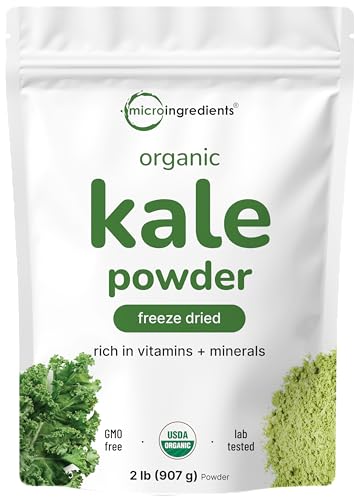
Sustainably US Grown, Organic Kale Powder, 2 Pounds | Fresh Freeze Dried Source | Nutrient-Dense Greens Superfood | Kale Tea and Green Drink Mix | 907 Servings, No GMOs, Vegan Friendly
- Organic Kale Powder: Nutrient-dense leafy greens from the US
- Large 2 Pound Supply: 907 servings for long-lasting use
- Freeze-Dried for Potency: Retains nutrients and purity
As an affiliate, we earn on qualifying purchases.
As an affiliate, we earn on qualifying purchases.
How Do Leafy Greens Compare in Nutritional Benefits?

While not all leafy greens contain identical nutrients, they generally offer impressive health benefits, making them a valuable addition to your diet. Their flavor profiles vary from mild and slightly bitter to peppery and robust, which can influence how you incorporate them into meals. Nutrient density is a key factor that distinguishes leafy greens from other vegetables; many are packed with vitamins A, C, K, and folate, along with minerals like calcium and iron. Some greens, like kale and collards, tend to be more nutrient-dense, providing a higher concentration of nutrients per serving. Others, such as lettuce, may be lower in calories but still contribute essential hydration and fiber. Additionally, variety in leafy greens ensures you enjoy a broader spectrum of nutrients and health benefits. Incorporating a diverse range of leafy greens can also help prevent nutrient deficiencies and support overall well-being. Choosing a wide range of greens can maximize your intake of different phytochemicals and antioxidants, further enhancing your health benefits. Including a mix of leafy greens can also add more flavor diversity to your meals, making healthy eating more enjoyable. Overall, choosing a variety ensures you maximize nutritional benefits and enjoy diverse flavor experiences. Nutrient density is a crucial aspect to consider when selecting leafy greens for optimal health benefits.

Organicgirl Baby Spring Greens Mix, 10 Oz
- Organic USDA Certification: USDA Organic certified greens
- Rich in Vitamins: High in Vitamins K and C
- Triple-Washed: Pre-washed for convenience
As an affiliate, we earn on qualifying purchases.
As an affiliate, we earn on qualifying purchases.
What Do Leafy Greens Taste Like and How Do They Feel in Your Mouth?
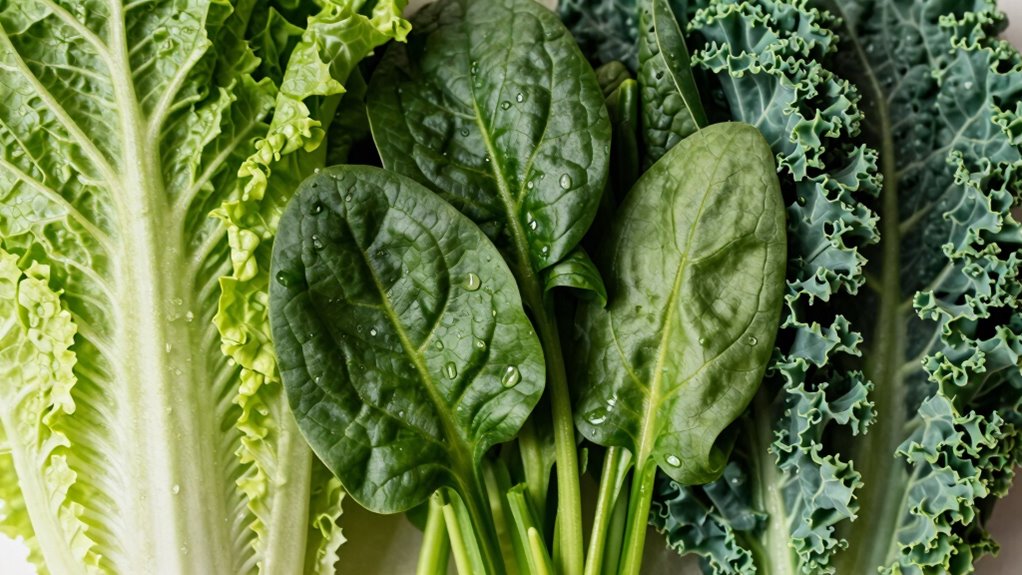
The flavor and mouthfeel of leafy greens can vary widely, influencing how you might incorporate them into your meals. Different greens have distinct flavor profiles—some are mild and slightly sweet, like butter lettuce, while others are more bitter or peppery, such as arugula or radicchio. Texture variations also play a big role; tender greens melt in your mouth, whereas thicker leaves like kale offer a chewy, hearty feel. Spinach and lettuce provide a soft, smooth sensation, perfect for salads, while collard greens feel more substantial and slightly coarse. These differences affect how you experience each green, making some better suited for raw salads and others ideal for cooking or blending into smoothies. Understanding these taste and mouthfeel traits helps you choose the right greens for every dish.

Goya Arroz con Gandules Starter Kit with Sofrito Cooking Base, Tomato, 15oz
- Complete Arroz con Gandules Kit: Includes sofrito, tomato sauce, peas, and seasoning
- Authentic Puerto Rican Flavor: Easy to prepare traditional rice dish
- Four Essential Ingredients: Sofrito, tomato sauce, gandules, and Sazón
As an affiliate, we earn on qualifying purchases.
As an affiliate, we earn on qualifying purchases.
How Do Growing Conditions Affect Leafy Green Quality?
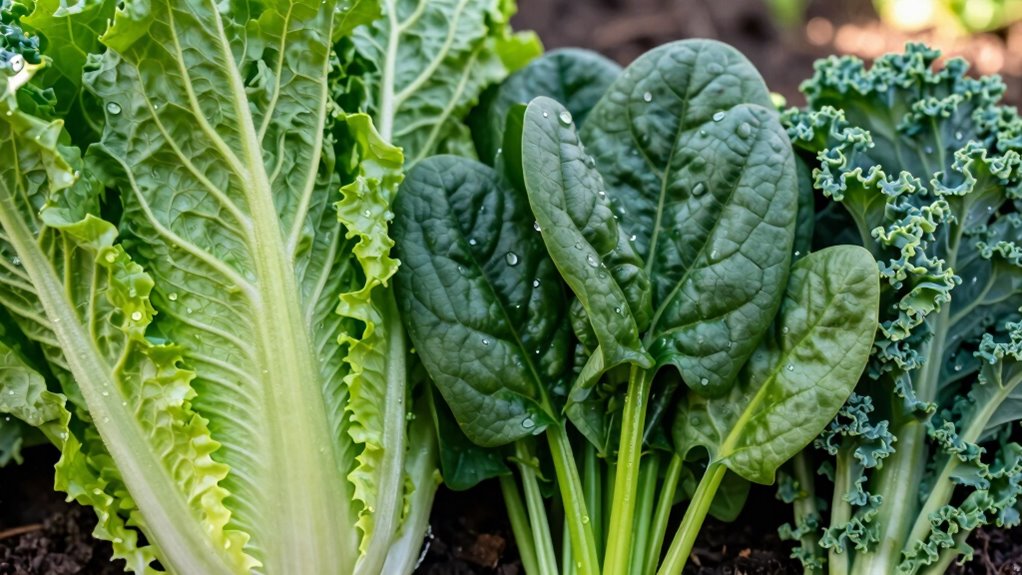
Growing conditions play a crucial role in determining the overall quality of leafy greens. When soil nutrients are rich and balanced, your greens develop vibrant colors and robust flavors. Adequate sunlight exposure boosts photosynthesis, leading to crisper leaves and higher nutrient content. Poor soil or insufficient sunlight can result in pale, weak, or bitter greens. Additionally, maintaining optimal soil health ensures the plants can absorb essential nutrients more effectively, enhancing their overall quality. Proper drainage prevents waterlogging, which can lead to root rot and other diseases that compromise leaf quality. Overwatering or poor drainage can cause rot and disease. Temperature fluctuations impact leaf tenderness and growth rate. Ensuring consistent watering practices helps maintain healthy leaf development and prevents stress on the plants.
How to Incorporate a Variety of Leafy Greens Into Your Diet for Maximum Benefits
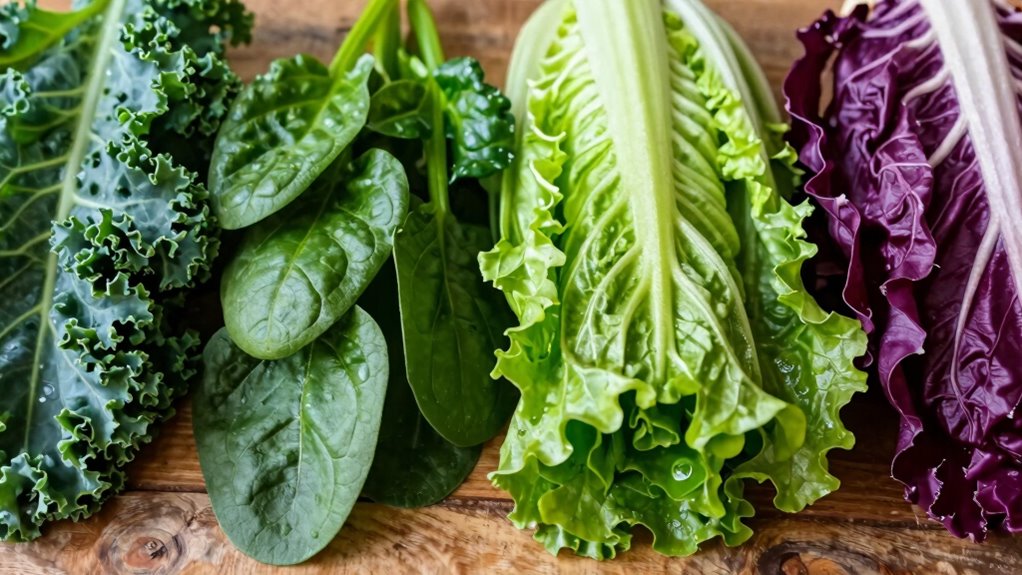
Incorporating a variety of leafy greens into your diet can markedly boost your nutritional intake and keep meals interesting. Start by mixing greens in your salads—combine spinach, arugula, and kale for different textures and flavors. Experiment with smoothie recipes by blending greens like Swiss chard, romaine, and collard greens with fruits for a nutrient-packed drink. Rotate your greens regularly to benefit from their unique vitamins and minerals. Use different greens as wraps or add them to stir-fries for variety. Incorporate leafy greens into sandwiches, omelets, or grain bowls for extra crunch and nutrition. Additionally, choosing the right kitchen equipment can make preparing these greens easier and more efficient. By diversifying your greens, you maximize health benefits while preventing meal boredom, ensuring you get a broad spectrum of nutrients every day.
Frequently Asked Questions
Which Leafy Greens Are Best for Raw Salads Versus Cooked Dishes?
For raw salads, you should choose leafy greens like arugula, spinach, or romaine, which offer diverse flavor profiles and a tender texture. For cooked dishes, kale, collard greens, or Swiss chard work best because their nutritional differences shine when they’re cooked, becoming more tender and easier to digest. You’ll enjoy vibrant flavors and health benefits either way, depending on how you prepare them.
How Do Seasonal Changes Influence Leafy Green Availability and Quality?
Oh, the joys of seasonal changes! Climate impacts like temperature swings and unpredictable weather mess with leafy greens’ harvest timing, making them scarce or overly abundant. You’ll find fresh, crisp greens in spring and fall, but summer heat can wilt or spoil their quality. Embrace the chaos, because seasonal shifts are nature’s way of reminding you that even your greens have a personality—sometimes tender, sometimes temperamental.
Are There Any Common Allergies or Sensitivities Related to Specific Leafy Greens?
You might have nutrient sensitivities or allergy triggers when consuming certain leafy greens. For example, some people are allergic to romaine or spinach, experiencing symptoms like itching or swelling. Others may react to compounds in kale or arugula. It’s important to identify your individual sensitivities, as these can cause mild to severe reactions. Always consult a healthcare professional if you suspect an allergy or sensitivity to specific leafy greens, especially if symptoms persist.
What Are the Best Storage Methods to Keep Leafy Greens Fresh Longer?
You can keep leafy greens fresh longer by employing effective hydration techniques and proper storage containers. Rinse and dry them thoroughly, then store in perforated containers or crisper drawers to maintain airflow. Using reusable, airtight storage containers helps prevent moisture loss and spoilage. Remember, hydration techniques like wrapping greens in damp paper towels before storing can extend freshness, ensuring they stay crisp and nutritious for days longer.
How Do Pesticide Residues Vary Among Different Types of Leafy Greens?
You’ll find that pesticide residues vary among leafy greens, with some like spinach often testing higher for pesticides than kale or lettuce. Pesticide testing helps identify these differences, prompting consumers to choose organic or thoroughly washed options. To reduce residue, you can rinse greens thoroughly and soak them in vinegar or a commercial residue reduction solution. These steps help minimize pesticide exposure, making your greens safer and healthier to eat.
Conclusion
Think of leafy greens as a vibrant garden, each type adding its unique flavor and nutrients to your plate. Just like tending different plants yields a richer harvest, diversifying your greens boosts your health. When I started mixing kale, spinach, and arugula, I noticed my energy improve and meals became more exciting. Embrace this colorful variety—your body will thank you for the nourishing, flavorful journey through the leafy green garden of life.