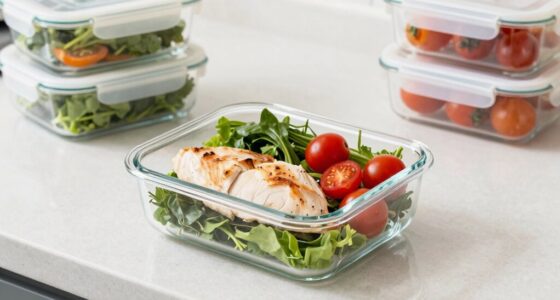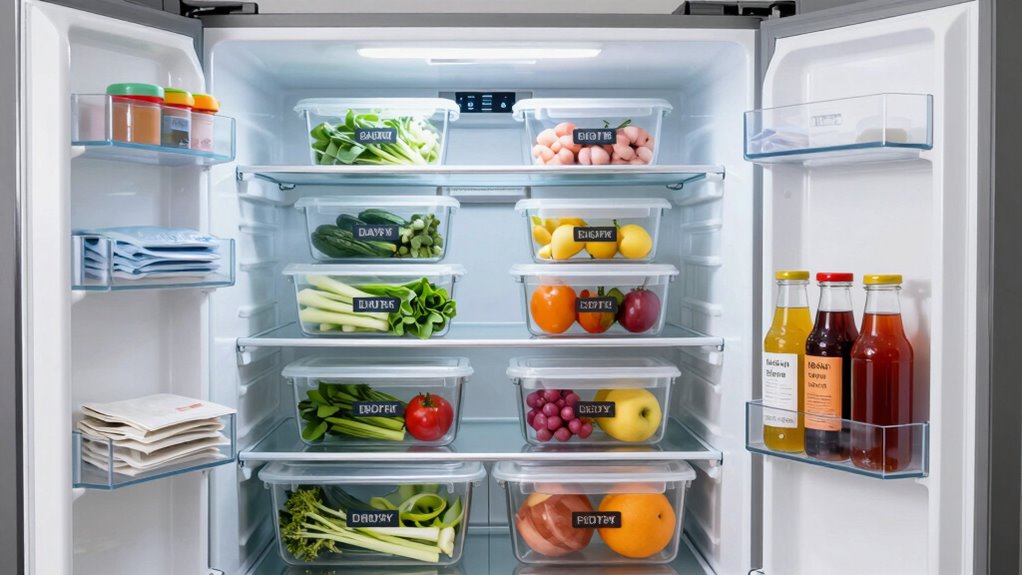
To keep your fridge safe and organized, start by setting it to around 37°F (3°C) and arrange items systematically. Store raw meats on the bottom to prevent cross-contamination, place dairy in the middle or upper shelves, and use crisper drawers for fruits and veggies. Regularly check expiration dates, keep containers labeled, and avoid overcrowding. Proper organization not only enhances safety but also makes life simpler—continue to explore how these tips can transform your fridge.
Key Takeaways
- Designate specific zones for raw meats, dairy, fruits, and vegetables to prevent cross-contamination and ensure proper storage.
- Maintain a consistent fridge temperature around 37°F (3°C) to inhibit bacterial growth and extend food freshness.
- Use clear containers and labels for leftovers and prepped ingredients to improve organization and monitor expiration dates easily.
- Regularly check and discard expired or spoiled foods to prevent contamination and ensure safety.
- Avoid overcrowding to promote proper airflow, consistent cooling, and easier access to items.
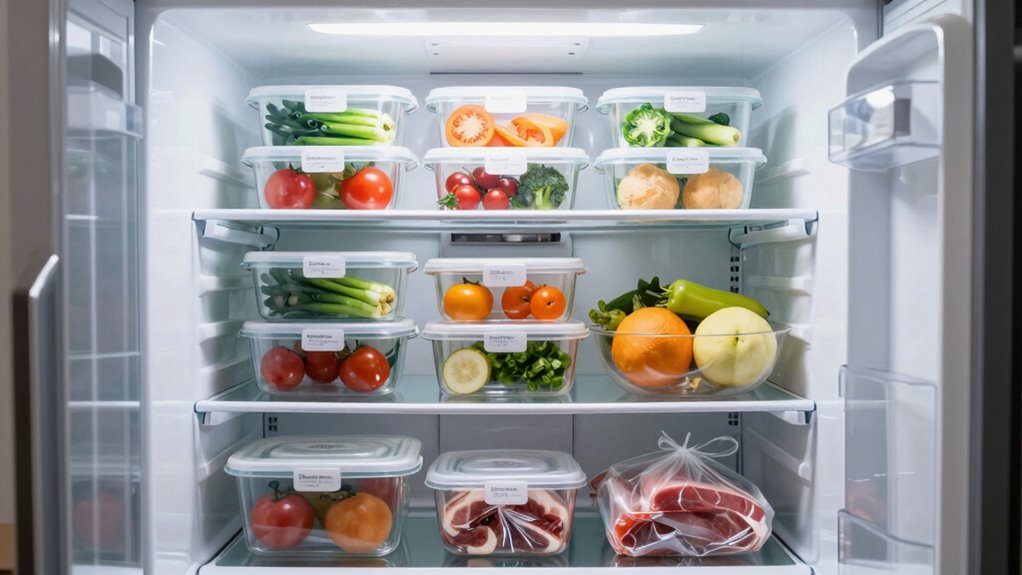
A well-organized fridge is indispensable for maintaining food safety and preventing spoilage. When you keep your fridge properly arranged, it’s easier to find what you need quickly, which streamlines your meal prep and helps you avoid unnecessary waste. One of the key aspects of organization is understanding how temperature control plays an essential role. Your fridge should be set to around 37°F (3°C) to keep perishable foods fresh and safe from bacterial growth. When you maintain consistent temperatures, you reduce the risk of foodborne illnesses and extend the shelf life of your groceries. Proper temperature regulation is also vital for biodiversity and sustainable living, as reducing food waste contributes to less environmental impact. Effective fridge organization begins with creating designated zones for different types of food. Place raw meats on the bottom shelf to prevent juices from dripping onto other items. Keep dairy products like milk, cheese, and yogurt in the middle or upper shelves, where temperatures tend to stay more constant. Fruits and vegetables should go into crisper drawers, which help regulate humidity and keep produce fresh longer. This systematic arrangement not only enhances food safety but also simplifies meal prep, as you know exactly where everything is without rummaging through clutter. To optimize your fridge’s efficiency, regularly check expiration dates and discard anything that’s spoiled or past its prime. When you do so, you make space for fresh ingredients and prevent cross-contamination. Incorporating clear containers and labels for leftovers and prepped ingredients can significantly improve organization and reduce clutter. This makes meal prep faster and more organized, saving you time during busy weekdays. Also, avoid overcrowding the fridge, as proper airflow is necessary to maintain even temperatures and keep all foods safely chilled. Temperature control is also essential when you’re planning your grocery shopping. Be mindful of how long perishable items sit in your cart or on your counter before they’re refrigerated. The quicker you get items into a well-maintained fridge, the safer they stay. Regularly monitoring temperature stability helps ensure consistent cooling, which is crucial for food safety. Additionally, incorporating energy-efficient appliances can help reduce your overall energy consumption while maintaining optimal refrigeration temperatures. During weekly meal prep, keep prepared foods at the correct temperature and store them in airtight containers to preserve freshness and prevent spoilage. Using temperature monitoring devices can help you achieve this goal more accurately. This habit not only promotes food safety but also makes it easier to assemble meals without last-minute frantic searches or worry about unsafe leftovers. In the end, a tidy, well-organized fridge isn’t just about aesthetics—it’s about creating a safe environment for your food and making your daily routines smoother. By focusing on proper temperature control, strategic placement, and regular upkeep, you guarantee that your fridge becomes a reliable tool for healthy, stress-free meal prep. With these practices in place, you can enjoy fresher ingredients, less waste, and greater peace of mind knowing your food stays safe and delicious longer.

Stackable Refrigerator Organizer Bins, 6 Pack Clear Kitchen Organizer Container Bins with Handles and 20 PCS Plastic Bags for Pantry, Cabinets, Shelves, Drawer, Freezer – Food Safe, BPA Free 10"L
- Stackable Design: Maximize storage with stackable bins
- Portable Handles: Easy grip handles for portability
- Includes Plastic Bags: 20 airtight plastic storage bags
As an affiliate, we earn on qualifying purchases.
As an affiliate, we earn on qualifying purchases.
Frequently Asked Questions
How Often Should I Clean My Fridge for Optimal Safety?
You should clean your fridge at least once a month for guaranteed safety. Follow a weekly cleaning schedule to keep everything fresh and bacteria-free. Pay special attention to the fridge door seals, wiping them down thoroughly to prevent mold and bacteria buildup. Regular cleaning not only prolongs the fridge’s lifespan but also ensures your food stays safe and fresh. Consistency is key for maintaining a hygienic and efficient fridge.
What Are the Best Containers to Prevent Cross-Contamination?
When it comes to preventing cross-contamination, using the right containers is key. You should opt for airtight containers that keep food sealed tight and prevent leaks. Go for BPA-free options to avoid harmful chemicals leaching into your food. These containers create a barrier, ensuring different foods don’t mingle and stay fresh longer. By choosing the right storage, you’re playing it safe and keeping your fridge organized and hygienic.
How Do I Organize Leftovers to Ensure They Stay Fresh?
To keep leftovers fresh, start by labeling each container with the date and contents. Use clear containers for easy identification and practice portion control to prevent spoilage. Store leftovers in small, airtight containers to maintain freshness and make reheating easier. Organize your fridge so leftovers are visible and accessible, reducing waste and ensuring you consume them while still fresh. This strategy keeps your food safe and your fridge tidy.
What Temperature Should My Fridge Be Set to for Food Safety?
Your fridge should be set to 37°F (3°C) for ideal food safety—any warmer and you risk turning leftovers into bacteria breeding grounds! When meal prepping, use temperature zones wisely: keep raw meats on the bottom to prevent cross-contamination and veggies in the crisper. This precise temperature setting and zone organization keep your food safe, fresh, and ready to enjoy without fear of spoilage or illness.
How Can I Quickly Identify Spoiled or Expired Foods?
To quickly identify spoiled or expired foods, check expiration labels first. Look for signs like a sour smell, slimy texture, or unusual color changes, which indicate spoilage. Trust your senses—if something smells off or looks strange, it’s best to discard it. Regularly inspecting your fridge and familiarizing yourself with common spoiled signs helps prevent foodborne illnesses and keeps your food safe longer.
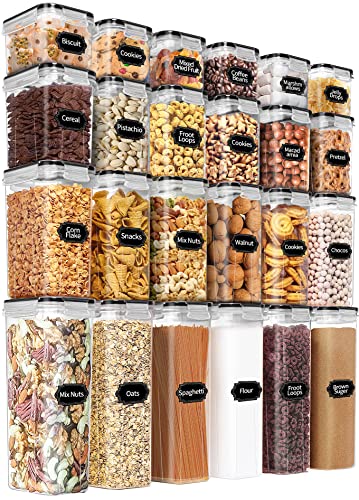
PRAKI Airtight Food Storage Containers Set with Lids – 24 PCS, BPA Free Kitchen and Pantry Organization, Plastic Leak-proof Canisters for Cereal Flour & Sugar – Labels & Marker
- Set Includes 24 Containers: Four sizes for versatile storage
- Multiple Sizes: Large, medium, small, tall options
- Secure Sealing: Silicone strip and locking lids
As an affiliate, we earn on qualifying purchases.
As an affiliate, we earn on qualifying purchases.
Conclusion
By keeping your fridge organized, you not only make food easier to find but also considerably boost safety and freshness. A well-structured fridge minimizes cross-contamination and spoilage, giving you peace of mind with every meal. Trust the theory that order equals safety—your health depends on it. Take a few minutes to arrange your fridge today, and enjoy the convenience and confidence that come with a safer, more efficient kitchen.
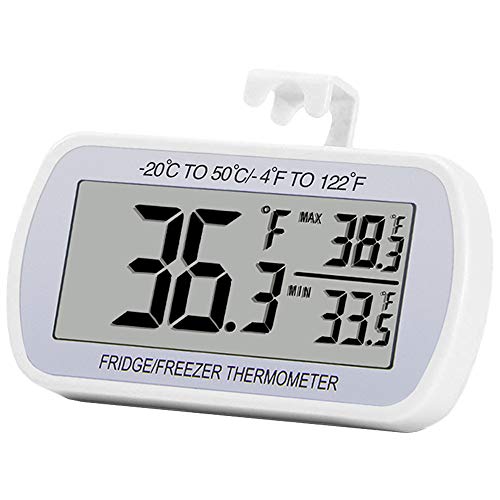
Refrigerator Thermometer Digital Fridge Freeze Room Thermometer Waterproof Large LCD Display Max/Min Record Function, White
- Large LCD Display: Clear, easy-to-read temperature readings
- Wide Temperature Range: -4°F to 122°F with high accuracy
- Max/Min Temperature Records: Track temperature fluctuations over time
As an affiliate, we earn on qualifying purchases.
As an affiliate, we earn on qualifying purchases.
![[2 Pack] Upgraded 2188656 Fridge Crisper Drawer Humidity Control Drawer UPPER & 2188664 Crisper Bin LOWER for Whirlpool Fridge Crisper Drawer,Kenmore Whirlpool Refrigerator Drawer Replacement Parts](https://m.media-amazon.com/images/I/41zcz8RDQZL._SL500_.jpg)
[2 Pack] Upgraded 2188656 Fridge Crisper Drawer Humidity Control Drawer UPPER & 2188664 Crisper Bin LOWER for Whirlpool Fridge Crisper Drawer,Kenmore Whirlpool Refrigerator Drawer Replacement Parts
- Durable, eco-friendly materials: Made with high-quality, food-grade materials
- Humidity control for upper drawer: Adjust humidity to keep produce fresh
- Lower drawer for meats and vegetables: Convertible storage with clear design and handle
As an affiliate, we earn on qualifying purchases.
As an affiliate, we earn on qualifying purchases.