
To cook with spices without bitterness, start by roasting spices in a dry skillet over medium heat to boost flavor and aroma, stirring constantly to avoid burning. Store spices properly in airtight containers away from heat and light to preserve freshness, and handle them carefully. When cooking, use gentle simmering and add a splash of acid like lemon juice or vinegar to balance flavors. For more tips on mastering spice use and avoiding bitterness, keep exploring.
Key Takeaways
- Properly roast spices to release flavor without burning, which causes bitterness.
- Store spices in airtight containers, away from heat and light to maintain freshness.
- Balance flavors by adding a splash of acid like lemon juice or vinegar to counteract bitterness.
- Use gentle cooking techniques and control heat to prevent overcooking spices.
- Choose fresh, high-quality spices to ensure vibrant flavor and reduce bitterness risk.

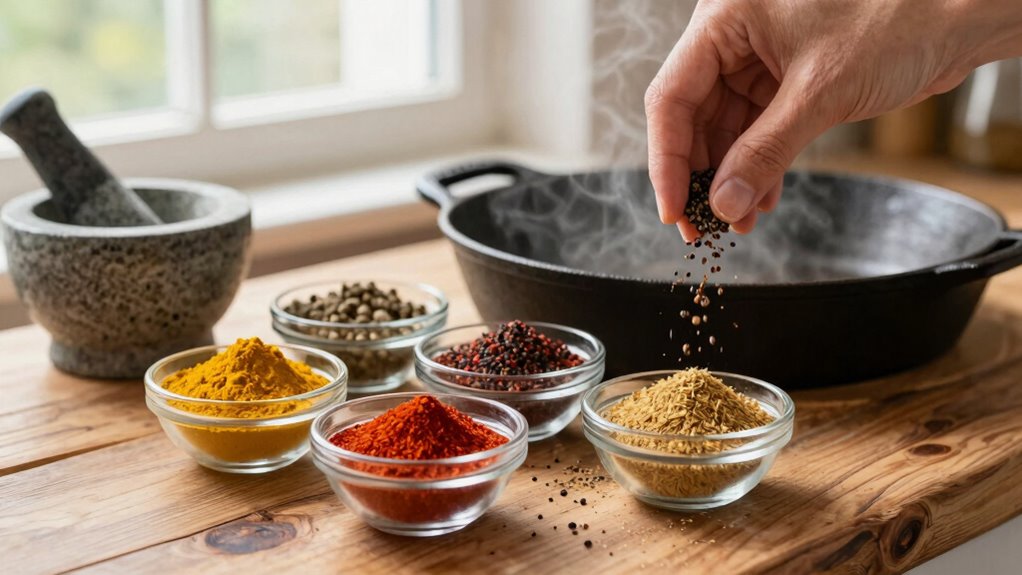
Spices can elevate any dish, but when they turn bitter, they can ruin the entire meal. The good news is that many bitter flavors come from improper handling or overuse, and you can easily prevent this with a few simple techniques. One effective method is spice roasting. When you toast spices in a dry skillet over medium heat, you release essential oils and deepen their flavor, which can actually reduce bitterness. Keep a close eye and stir constantly to prevent burning, as burnt spices become bitter quickly. Roasting can also help you gauge the spice’s aroma, ensuring you’re using it at its peak flavor. This step not only enhances taste but also minimizes the chance of bitterness sneaking into your dish. Additionally, understanding the proper handling of spices can help you maintain their best flavor and avoid bitterness from improper storage or preparation. Proper storage, such as keeping spices in airtight containers away from heat and light, is crucial to preserving their fresh aroma and preventing flavor degradation. Ensuring spices are stored correctly can significantly impact their flavor preservation and overall quality.
Another key to avoiding bitterness involves acid balancing. Many bitter flavors in spices or dishes result from imbalance—too much heat, overcooking, or using spices that need a bit of acidity to shine. Adding a splash of acid, like lemon juice, vinegar, or even a dash of tamarind, can brighten flavors and cut through any bitterness. When you notice a dish turning bitter, try balancing it with acidity before adding more spices or adjusting other seasonings. This technique works especially well when working with spices like turmeric or cumin, which can develop bitter notes if overused or cooked too long. Incorporating cooking techniques that focus on gentle simmering and careful timing can also help preserve spice flavor without bitterness. By controlling cooking temperatures and timing, you can better manage how spices develop and prevent bitterness from excessive heat. Paying attention to spice quality—using fresh, high-quality spices—also makes a significant difference in avoiding bitterness and achieving optimal flavor.
As an affiliate, we earn on qualifying purchases.
Frequently Asked Questions
Can Storage Methods Affect the Bitterness of Spices?
Yes, storage methods greatly affect spice bitterness. Proper storage optimization helps preserve flavor and prevents spices from becoming bitter. Keep spices in airtight containers, away from heat, light, and humidity, to maintain their potency. Avoid storing spices near the stove or in damp areas, as exposure to these elements accelerates flavor degradation. By optimizing storage, you guarantee your spices stay fresh, flavorful, and free from bitterness when you cook.
Are There Specific Spices More Prone to Bitterness?
Some spices are more prone to bitterness, especially when overused or poorly stored. Cumin, turmeric, and coriander can develop bitterness if burned or stored improperly. To achieve flavor enhancement, choose fresh, high-quality spices and use them carefully. Selecting spices wisely, avoiding overcooking, and balancing flavors ensure your dishes stay vibrant and delicious without bitterness. Proper spice selection and handling make all the difference in your cooking.
How Does Age Impact a Spice’s Flavor Profile?
As spices age, their flavor profile changes, often becoming dull or losing intensity. You’ll notice that spice freshness diminishes with time, while aging flavor can introduce bitterness or a stale taste. To keep your dishes vibrant, always use fresh spices and store them properly. Avoid old, stale spices, and replace them regularly to maintain maximum flavor, ensuring your cooking remains flavorful and aromatic.
Should I Toast Spices Before Adding to Dishes?
Yes, you should toast spices before adding them to dishes. Spice roasting releases essential oils, which enhances their aroma and flavor, making your dishes more vibrant. Toasting also helps reduce bitterness and brings out deeper, richer notes. Just heat a dry skillet over medium heat, stir spices frequently, and remove once fragrant. This simple step maximizes flavor enhancement and adds a warm, inviting depth to your cooking.
Can Marinating Spices Reduce Bitterness?
Yes, marinating spices can reduce bitterness by allowing flavors to meld and mellow before cooking. When you soak spices in a liquid—like oil, vinegar, or yogurt—you promote better flavor blending, which balances bitterness and enhances overall taste. This process helps achieve better spice blending, ensuring your dishes have a harmonious flavor profile. So, marinate your spices beforehand to enjoy richer, less bitter dishes with well-rounded flavors.
airtight spice storage containers
As an affiliate, we earn on qualifying purchases.
As an affiliate, we earn on qualifying purchases.
Conclusion
Now that you know the secret to avoiding bitterness, imagine the incredible dishes you’ll create. But there’s one last trick that’ll elevate your spice game even further—something many overlook. Are you ready to reveal that final step and truly transform your cooking? Keep experimenting, stay curious, and soon you’ll master the art of spice perfection. The best flavors are just waiting to be discovered—are you prepared to take your culinary journey to the next level?
As an affiliate, we earn on qualifying purchases.
As an affiliate, we earn on qualifying purchases.