Sous vide is an easy way for home cooks to achieve restaurant-quality dishes with minimal stress. You’ll need simple equipment like a reliable immersion circulator, a container, and vacuum or zip-top bags. Just season your ingredients, seal them, and set the water bath to the right temperature—no constant monitoring needed. Perfect your skills by understanding how precise temperature control keeps food tender, juicy, and safe. Keep exploring to reveal even more sous vide secrets.

Get health and wellness essentials delivered free with Prime
- Fast, free delivery on millions of items
- Prime Video, Amazon Music and more included
- Member-only deals all year
Key Takeaways
- Use an immersion circulator and water bath for precise temperature control and even cooking.
- Seal ingredients properly in vacuum or zip-top bags to prevent water ingress.
- Set the correct temperature and time based on the desired doneness for consistent results.
- Minimal monitoring is needed; focus on preparation and equipment maintenance.
- Understand basic safety and cleaning practices to ensure a stress-free, enjoyable experience.
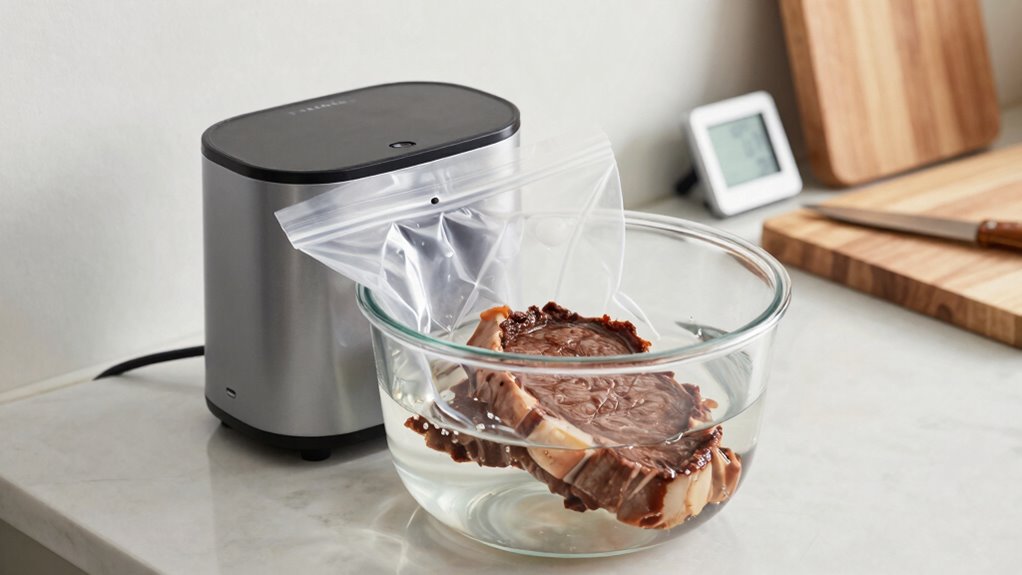
Have you ever wondered how professional chefs achieve perfectly cooked meats and tender vegetables every time? The secret often lies in precise cooking techniques combined with the right equipment essentials. Enter sous vide—a method that’s revolutionized home cooking by making it easier to produce restaurant-quality results without stress or guesswork. With sous vide, you don’t need to be a seasoned chef to master the art of perfectly cooked dishes. Instead, you rely on a few simple principles and tools to get consistent results every time.
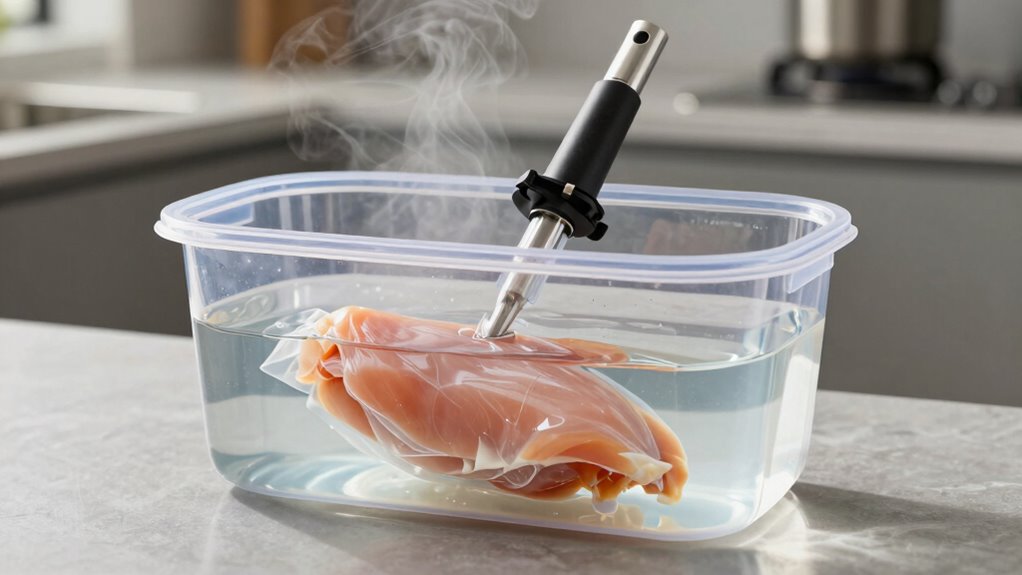
At its core, sous vide is about controlling temperature with incredible accuracy. Instead of traditional methods that can lead to overcooking or uneven results, you cook food in a water bath at a precisely regulated temperature. This technique ensures your meat stays tender and juicy, and vegetables retain their vibrant flavor and texture. To get started, you’ll need some equipment essentials: a reliable immersion circulator, a large container or pot for water, and vacuum-sealable bags or zip-top bags suitable for sous vide. The immersion circulator is the heart of the process—it heats and circulates water, maintaining a steady temperature so your food cooks evenly. Once you set your desired temperature, the circulator takes care of the rest, allowing you to focus on preparing your ingredients.
Sous vide uses precise water temperature control for perfectly cooked, tender meats and vibrant vegetables every time.
When it comes to cooking techniques, the key is in the preparation and timing. Season your proteins or vegetables as desired, then vacuum-seal or double-bag them to prevent water from seeping in. Drop the bag into the water bath, set your timer based on the recipe, and let the magic happen. Because the water maintains a consistent temperature, you don’t have to worry about constantly checking or adjusting the heat. This makes sous vide an ideal method for busy home cooks who want perfect results without obsessing over stove temperatures or oven settings. Additionally, precise temperature control allows for more consistent doneness and texture, which is especially beneficial for beginners learning to perfect their dishes. Understanding how temperature regulation works can help you better customize your cooking process and achieve the desired results every time. Knowing the cooking science behind sous vide can also help you troubleshoot and refine your techniques. Gaining insight into the food safety aspects of sous vide is also crucial for ensuring your meals are both delicious and safe to eat.
Cleaning and maintaining your equipment is straightforward—just rinse and dry the immersion circulator and wash your bags after each use. As you become more comfortable with the process, you’ll notice how the precise control allows you to experiment with different textures and doneness levels that are hard to achieve through traditional cooking. Whether you’re preparing a tender steak, succulent chicken breast, or perfectly cooked vegetables, mastering these cooking techniques and understanding your equipment essentials will transform your kitchen into your personal sous vide station. It’s a no-stress, highly dependable way to elevate your home-cooked meals to restaurant-quality standards. Learning how to control temperature precisely is key to unlocking the full potential of sous vide cooking.
immersion circulator for sous vide
As an affiliate, we earn on qualifying purchases.
As an affiliate, we earn on qualifying purchases.
Frequently Asked Questions
Can I Use a Regular Pot Instead of a Sous Vide Machine?
Yes, you can use a regular pot instead of a sous vide machine, but it requires some adjustments. Alternative cooking methods involve controlling temperature precisely, which is harder with a regular pot. You’ll need a thermometer and to monitor water temperature constantly, unlike the consistent heat from equipment comparisons like a sous vide device. While doable, it’s less convenient and less precise, making precision cooking more challenging.
How Do I Prevent Water Evaporation During Long Cooks?
Think of water level management like keeping a boat steady on the water’s surface. To prevent evaporation during long cooks, you should regularly check and add water if needed. Use a large, covered container or place a lid or plastic wrap over the water to act as a barrier, helping with evaporation control. This way, you keep the water at a consistent level, ensuring your food cooks evenly and safely.
Is Sous Vide Safe to Eat Without Searing?
Yes, sous vide is safe to eat without searing because the controlled temperature guarantees food safety by killing harmful bacteria. However, searing offers benefits like enhanced flavor and texture, making your dish more appealing. If you prefer a no-sear approach, make sure your food reaches the recommended internal temperature for safety, but for maximum taste and appearance, a quick sear post-cook can be worthwhile.
What Are the Best Foods to Start With for Beginners?
As a beginner, start with simple foods like chicken breasts, salmon, and vegetables. These items have forgiving cooking temperatures and are easy to get right. Always guarantee proper cooking temperature for food safety—like 145°F for salmon or 165°F for chicken—to prevent any risk. Keep it straightforward, monitor the temperature carefully, and you’ll enjoy safe, perfectly cooked meals without stress.
How Do I Clean and Maintain My Sous Vide Equipment?
To keep your sous vide equipment in top shape, establish regular cleaning routines by wiping down the device after each use and descale the water bath if needed. Always unplug and detach parts before cleaning. Proper maintenance extends equipment longevity, ensuring consistent results and safe cooking. Use gentle soap and a soft cloth for cleaning, and check manufacturer instructions for specific care tips to prevent damage.
vacuum sealer bags for sous vide
As an affiliate, we earn on qualifying purchases.
As an affiliate, we earn on qualifying purchases.
Conclusion
Now that you know the basics of sous vide, you’re ready to cook with confidence, experiment with flavors, and enjoy perfectly cooked meals every time. Embrace the precision, appreciate the ease, and savor the results. With sous vide, you’ll master the art of effortless cooking, elevate your meals, and enjoy the process as much as the delicious dishes you create. So, plunge in, stay curious, and let your kitchen adventures begin.
large water bath container for sous vide
As an affiliate, we earn on qualifying purchases.
As an affiliate, we earn on qualifying purchases.
As an affiliate, we earn on qualifying purchases.
Cold & flu season Picks
humidifiers
As an affiliate, we earn on qualifying purchases.