Nuts and seeds are nutrient-rich snacks that provide healthy fats, protein, fiber, and essential vitamins and minerals. They support heart health, reduce inflammation, and help with weight management. To get the most benefits, choose fresh, minimally processed options, store them properly, and control portion sizes. You can add them to meals, snacks, or use as toppings for extra flavor and crunch. Keep exploring to discover simple tips for maximizing their health benefits.

Get health and wellness essentials delivered free — and shop member deals
- Fast, free delivery on millions of items
- Access to Prime Big Deal Days deals on October 6–7
- Prime Video, Amazon Music and more included
Key Takeaways
- Understand the nutritional benefits of nuts and seeds, including healthy fats, protein, fiber, and essential vitamins.
- Learn how to select fresh, high-quality nuts and seeds, and store them properly to maintain flavor and nutrients.
- Discover practical ways to incorporate nuts and seeds into your meals and snacks for balanced nutrition.
- Practice portion control and avoid added sugars or processed varieties to maximize health benefits.
- Be aware of potential allergens, cross-contamination, and safety tips for healthy and safe consumption.
As an affiliate, we earn on qualifying purchases.
What Are Nuts and Seeds, and Why Are They Nutritional Powerhouses?

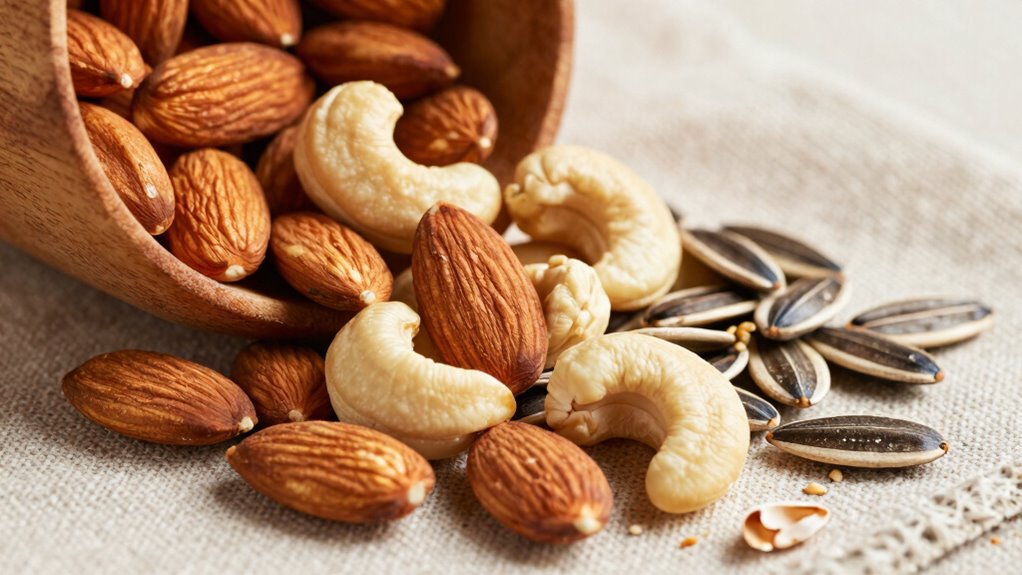
Nuts and seeds are small, nutrient-dense foods that pack a powerful punch of health benefits. Their nutritional profiles include healthy fats, protein, fiber, vitamins, and minerals that support overall health. These tiny powerhouses help improve heart health, boost energy, and strengthen your immune system. Nuts such as almonds, walnuts, and cashews, along with seeds like chia, flax, and sunflower, provide essential nutrients that your body needs daily. Their combination of healthy fats and antioxidants can reduce inflammation and lower cholesterol levels. Because they’re packed with fiber, they also promote digestion and help you feel full longer. Incorporating nuts and seeds into your diet is an easy way to boost your intake of crucial nutrients and enjoy long-term health benefits. Including a variety of nuts and seeds in your diet ensures you receive a broad spectrum of nutrients essential for health, supporting your overall well-being. Additionally, choosing sustainably sourced nuts and seeds can contribute to biodiversity conservation and promote environmentally responsible practices. Being aware of e-bike laws can also help you incorporate healthy, environmentally friendly transportation options into your lifestyle.
As an affiliate, we earn on qualifying purchases.
How to Choose the Best Nuts and Seeds for Your Diet
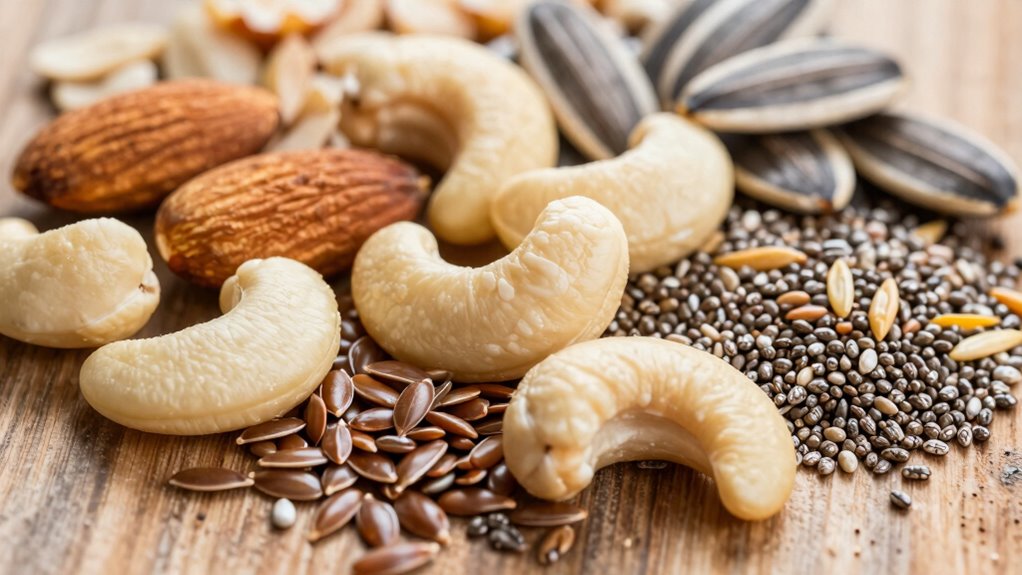
Wondering how to choose the best nuts and seeds for your diet? Focus on flavor combinations that suit your taste and nutritional goals. When sourcing, look for labels indicating freshness, organic certification, and minimal processing. Freshness impacts flavor and texture, so buy from reputable sources or local markets. Consider variety—mixing different nuts and seeds adds diversity to your diet. Use these tips:
| Nut/Seed | Flavor Profile | Sourcing Tips |
|---|---|---|
| Almonds | Mild, slightly sweet | Opt for raw, organic options |
| Chia Seeds | Nutty, earthy | Store in airtight containers |
| Walnuts | Bitter, rich | Check for freshness, avoid rancid |
| Flaxseeds | Nutty, subtle flavor | Grind before use for better absorption |
| Cashews | Creamy, sweet | Choose unsalted, raw varieties |
Choosing high-quality nuts and seeds enhances flavor and nutrition. Understanding nutritional content can help you select the best options for your dietary needs. Additionally, proper storage methods are essential to maintain their freshness and flavor. Maintaining optimal storage conditions is crucial to prevent spoilage and preserve their nutritional value. When shopping, pay attention to storage labels to ensure you’re getting the freshest products.
As an affiliate, we earn on qualifying purchases.
Creative Ways to Add Nuts and Seeds to Your Meals and Snacks
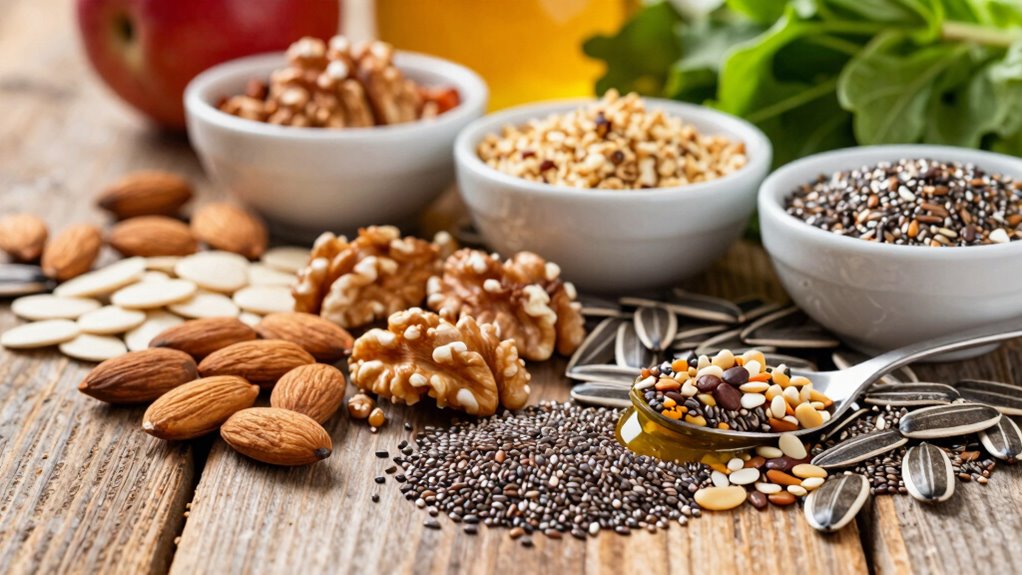
You can boost your breakfast by mixing nuts and seeds into yogurt, oatmeal, or smoothies for added crunch and nutrition. Sprinkling them over salads, soups, or even roasted vegetables makes your meals more flavorful and satisfying. Don’t forget to use nuts and seeds as snack toppers on cottage cheese, fruit, or energy bars to keep your energy levels steady throughout the day. Incorporating muscle recovery techniques with your snacks can further support your overall wellness. Using nuts and seeds as part of your nutritional strategy can also enhance your nutrient intake and health benefits. Staying informed about latest tech gadgets that help monitor your nutrition can help optimize your health journey. Implementing proper application methods can ensure you get the most benefit from your added nuts and seeds. Additionally, exploring home wellness tools can provide valuable insights to tailor your diet for better results.
Incorporate Into Breakfast Dishes
Adding nuts and seeds to your breakfast is a simple way to boost flavor, texture, and nutrition from the moment you wake up. You can experiment with breakfast flavor combinations, like pairing crunchy almonds with creamy yogurt or sprinkling chia seeds over smoothie bowls. Use nutrient pairing strategies by combining nuts and seeds with protein-rich ingredients, such as eggs or cottage cheese, to create balanced, energizing meals. Incorporate chopped walnuts into oatmeal for added crunch or sprinkle flaxseeds onto toast with avocado. These small tweaks make your breakfast more satisfying and nutrient-dense. Plus, they add visual appeal and variety, encouraging you to start your day with wholesome, delicious choices that support your health goals.
Use As Snack Toppers
Have you ever considered how nuts and seeds can transform ordinary snacks into flavorful, nutrient-packed treats? Sprinkling them on yogurt, salads, or popcorn adds exciting flavor combinations and delightful texture variations. For example, crunchy almonds or sesame seeds create contrast against soft fruits or creamy dishes. Tossing chopped walnuts onto oatmeal boosts both crunch and richness. Seeds like chia or sunflower seeds bring subtle nuttiness and a bit of chewiness, elevating simple snacks. These toppings not only enhance taste but also boost nutritional value. Incorporating nutritional benefits into your snack preparation process can help you discover new flavor pairings and innovative presentation ideas. Using nuts and seeds as snack toppers is a simple way to make your snacks more interesting, satisfying, and healthful—all while experimenting with different flavor and texture pairings. Additionally, understanding the health benefits of nuts and seeds can motivate you to include more of these superfoods in your daily diet. Exploring nutrient-dense foods can further inspire creative ways to boost your overall nutrition.
As an affiliate, we earn on qualifying purchases.
Common Mistakes to Avoid When Eating Nuts and Seeds
When eating nuts and seeds, you need to be mindful of portion sizes to avoid overeating. Keep an eye out for added sugars on packaging, which can turn a healthy snack into a less nutritious one. Also, be aware of potential allergens, especially if you have sensitivities or allergies, to prevent adverse reactions. Additionally, choosing products with minimal processing can help preserve their nutritional benefits. Incorporating a variety of nutrient-dense options can further enhance the health benefits of your snack choices. Proper knife skills can also assist in preparing nuts and seeds efficiently, ensuring you handle them safely and effectively. Being aware of text case conversion tools can help when organizing your notes or recipes for easier reading and sharing. Taking the time to understand natural wellness principles can further support your holistic health journey.
Mind Portion Sizes
Do you often find yourself overeating nuts and seeds without realizing it? Mindful portion sizes are essential for maintaining a healthy diet. Pay attention to your portion control to avoid consuming too many calories. Here are four tips to help you manage serving sizes:
- Use small bowls or containers to serve nuts and seeds, preventing mindless snacking.
- Measure out single servings instead of eating directly from the package.
- Familiarize yourself with standard serving sizes—about a handful or 1 ounce.
- Avoid eating straight from large bags; instead, portion out your snack beforehand.
Watch For Added Sugars
While nuts and seeds are healthy snacks, many products contain added sugars that can quickly turn a nutritious choice into a calorie-rich treat. Sweetened varieties, like honey-roasted or sugar-coated nuts, may taste great but often come with hidden additives that boost sugar content. Always check labels carefully; what seems like a healthy snack could be loaded with unnecessary sweetness. Hidden additives, including syrups and flavorings, can undermine your health goals by increasing calorie intake without providing additional nutrients. Opt for plain, unsweetened options whenever possible, and be cautious of flavored varieties that list sugar or sweeteners early in the ingredient list. By paying attention to labels, you guarantee your nuts and seeds stay a wholesome, low-sugar snack. Reading ingredient labels helps you identify hidden sugars and make better choices.
Beware of Allergens
Have you ever overlooked potential allergies when snacking on nuts and seeds? Allergy awareness is vital to avoid serious health issues. First, always check labels for allergy warnings, especially for common allergens like peanuts and tree nuts. Second, be cautious of cross contamination risks in packaged products, as shared processing equipment can transfer allergens. Third, try new nuts and seeds in small amounts initially to test your reaction. Fourth, if you have known allergies, carry an emergency allergy kit, including antihistamines or an EpiPen. Staying vigilant helps prevent accidental exposure and allergic reactions. Remember, even a tiny trace of an allergen can be dangerous, so always prioritize safety and informed choices when enjoying nuts and seeds.
How to Store Nuts and Seeds for Freshness and Longevity
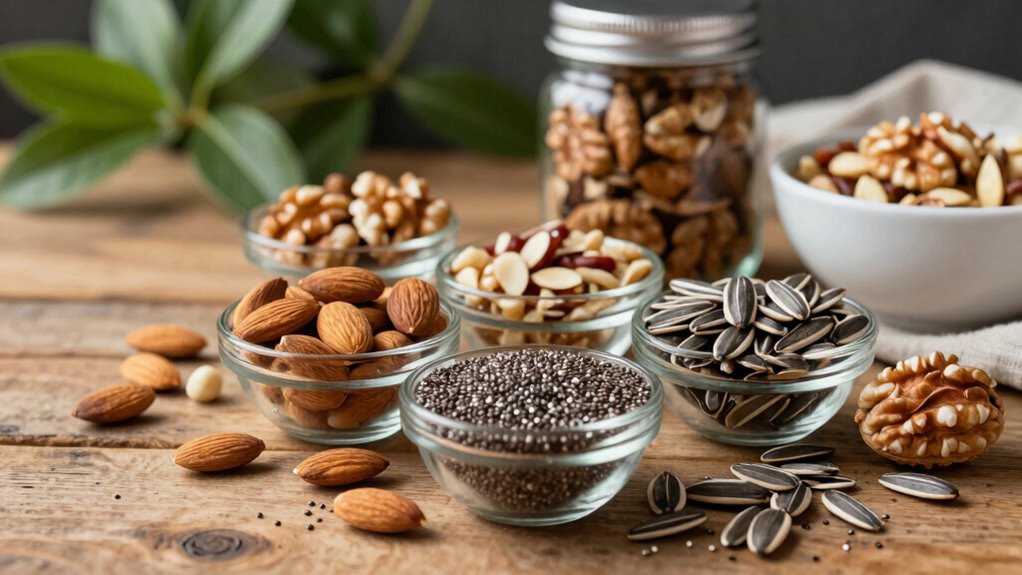
To keep nuts and seeds fresh and flavorful for as long as possible, proper storage is essential. Choose airtight storage containers to prevent exposure to air, which can cause rancidity. Keep them in a cool, dark place like a pantry or cupboard, away from direct sunlight and heat. For longer shelf life, consider refrigerating or freezing your nuts and seeds—just make certain they’re in sealed containers to avoid moisture and odor transfer. When storing, think about flavor pairings; some nuts and seeds absorb nearby odors, so keep strong-smelling items separate. Properly sealed containers help preserve their natural taste and crunch, making your snacks more enjoyable over time. With these tips, you’ll maximize freshness and enjoy your nuts and seeds whenever you like.
Health Benefits of Eating Nuts and Seeds Regularly
Eating nuts and seeds regularly offers a wealth of health benefits that can boost your overall well-being. Incorporating a variety of seed varieties and increasing nut consumption can improve heart health, support brain function, and boost your immune system. Nut consumption is linked to reducing bad cholesterol, which lowers the risk of cardiovascular disease. Different seed varieties, like chia and flaxseeds, are rich in omega-3 fatty acids, aiding in inflammation reduction. Additionally, nuts and seeds provide essential nutrients like vitamin E, magnesium, and fiber, promoting digestion and energy levels. Regular consumption can also help with weight management by keeping you full longer. By making nuts and seeds a daily habit, you’re investing in your long-term health and crucial.
Frequently Asked Questions
Are There Any Nuts or Seeds That Are Allergen-Free?
Most nuts and seeds pose allergen risks, especially for those with nut allergy awareness or seed allergy risks. However, some options like sunflower seeds or pumpkin seeds are less common allergens, but they can still trigger reactions. Always check labels and consult with a healthcare professional before trying new nuts or seeds, especially if you have known allergies. It’s better to be cautious and guarantee your safety with allergen-free choices.
How Much Nuts and Seeds Should I Eat Daily?
You should aim for about a handful of nuts and seeds daily, roughly 1 to 2 ounces, following nut consumption guidelines and seed intake recommendations. This amount supports heart health, provides healthy fats, and boosts energy. Balance your intake by choosing a variety of nuts and seeds, and watch your portion sizes to avoid excess calories. Incorporate them into your meals and snacks for steady, nutritious benefits.
Can Nuts and Seeds Help With Weight Loss?
Yes, nuts and seeds can support weight loss when you practice portion control because they’re nutrient-dense, offering healthy fats, fiber, and protein that keep you full longer. By eating small, controlled amounts, you benefit from their nutritional value without overloading on calories. Incorporate them into your diet thoughtfully, and you’ll find they help curb hunger and promote healthy weight management.
Are Roasted Nuts and Seeds as Healthy as Raw Ones?
Roasted nuts and seeds are like a symphony, offering richer flavor enhancement and delightful texture variation. While roasting can slightly diminish some nutrients, they’re still as healthy as raw ones, especially if you avoid added oils or salt. Roasting brings out the natural oils, making them more flavorful and crunchier. So, enjoy roasted nuts and seeds for their taste and texture, knowing they still retain many health benefits.
Do Nuts and Seeds Contain Any Harmful Substances?
Nuts and seeds can contain harmful substances like natural toxins and trace amounts of toxic compounds, especially if not stored properly or eaten in excess. For instance, some varieties have natural toxins like solanine or phytic acid, which can cause issues if consumed heavily or raw. However, roasting or soaking often reduces these risks. You should enjoy nuts and seeds in moderation, and choose properly stored, high-quality options to minimize potential health concerns.
Conclusion
By choosing quality, storing properly, and incorporating nuts and seeds into your daily routine, you maximize their benefits. Embrace variety, experiment creatively, and stay mindful of common mistakes. In doing so, you nourish your body, boost your health, and enjoy delicious, nutritious snacks. Remember, consistency is key—consistently select, consistently store, and consistently enjoy these nutrient-dense powerhouses. Make nuts and seeds a smart, simple part of your lifestyle and reap their lifelong rewards.
Fall Picks
fall essentials
As an affiliate, we earn on qualifying purchases.