

Choosing the right vinegar for cooking depends on its fermentation and aging process, which shape its flavor and acidity. Apple cider vinegar offers a balanced tang perfect for dressings and baking. Balsamic vinegar, aged in barrels, adds sweetness and depth, ideal for drizzling. Red wine vinegar provides boldness for hearty dishes, while white wine vinegar is light and versatile. Understanding these differences helps you make better culinary choices — and there’s more to discover that can elevate your dishes even further.

Get health and wellness essentials delivered free with Prime
- Fast, free delivery on millions of items
- Prime Video, Amazon Music and more included
- Member-only deals all year
Key Takeaways
- Different vinegar types offer unique flavors suitable for specific dishes, from fruity apple cider to robust red wine.
- Acidity levels vary, impacting taste and culinary uses, with lighter vinegars ideal for delicate salads and heavier ones for hearty dishes.
- Aging processes, like in balsamic vinegar, develop deeper, complex flavors, enhancing their culinary versatility.
- Understanding fermentation methods helps in choosing the right vinegar to balance flavors and enhance recipes.
- Selecting the appropriate vinegar based on flavor profile and acidity improves dish quality and overall taste.
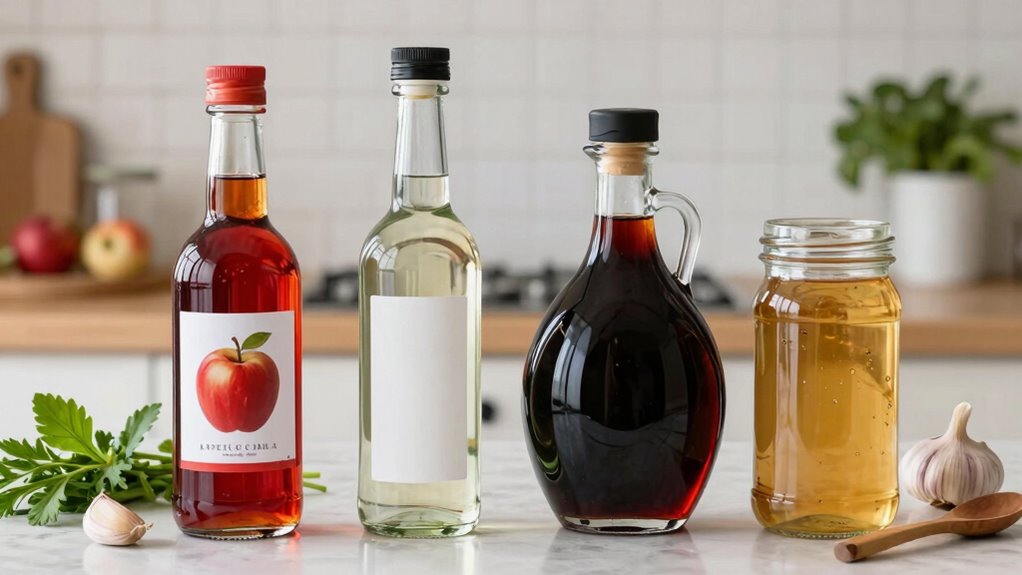
Vinegar is a versatile ingredient that adds acidity and depth to a wide range of dishes, but choosing the right type can make a significant difference in flavor. Understanding the fermentation process behind different vinegars helps you grasp why their acidity levels vary and how that impacts your cooking. Vinegar is made through fermentation, where yeast and bacteria convert sugars into alcohol and then into acetic acid. This process influences not only the flavor profile but also the acidity levels, which can range from mild to sharp. Knowing these differences allows you to select the perfect vinegar for your recipes, whether you want a subtle touch or a punch of tang.
For example, apple cider vinegar, produced through the fermentation of apple juice, tends to have a moderate acidity level and a slightly fruity flavor. Its fermentation process gives it a balanced tang that works well in salad dressings, marinades, and even baking. Meanwhile, balsamic vinegar undergoes a longer aging process, often in wooden barrels, which enhances its sweetness and complexity. Its acidity level is generally lower than other vinegars, making it suitable for drizzling over cheese or roasted vegetables without overpowering the dish. Red and white wine vinegars are also popular options, both derived from fermented wine. Red wine vinegar offers a bold, robust flavor, ideal for hearty dishes and reductions, whereas white wine vinegar is lighter and more delicate, perfect for lighter salads and sauces. Additionally, understanding the fermentation process behind each type can help you better appreciate their unique qualities and uses in cooking. Recognizing the differences in acidity levels is key to selecting the right vinegar for your culinary needs. Exploring different fermentation methods can also provide insight into how each vinegar develops its distinct characteristics over time. Moreover, learning about the aging process can deepen your understanding of how flavor profiles are enhanced through time. A better understanding of vinegar can elevate your cooking and help you create more balanced and flavorful dishes.
best apple cider vinegar for cooking
As an affiliate, we earn on qualifying purchases.
As an affiliate, we earn on qualifying purchases.
Frequently Asked Questions
Which Vinegar Has the Longest Shelf Life?
White distilled vinegar has the longest shelf life because its high acidity preserves it well over time. You can store it for years without quality loss, thanks to vinegar preservation. To extend shelf life further, keep it in a cool, dark place and make sure the bottle is tightly sealed. Proper storage prevents spoilage and maintains vinegar’s potency, making it a reliable choice for long-term use in your kitchen.
Are There Health Benefits Associated With Specific Vinegar Types?
Yes, certain vinegar types offer health benefits. Apple cider vinegar may help with digestion, blood sugar regulation, and weight management. Balsamic vinegar contains antioxidants that support heart health. Rice vinegar can aid digestion and improve gut health. While these benefits vary, incorporating these vinegar types into your diet can boost your overall wellness. Remember, moderation is key, and consulting a healthcare professional is always a good idea before making significant changes.
Can Flavored Vinegars Be Used for Cooking?
Yes, flavored vinegars can be used for cooking. They add unique flavor pairings and enhance dishes with their distinctive tastes. Their culinary versatility makes them perfect for salad dressings, marinades, and finishing touches on cooked foods. You can experiment with different flavors to match your recipes, creating vibrant, flavorful meals. Just remember to balance the intensity of the flavored vinegar to avoid overpowering your dish’s natural flavors.
How Do I Store Vinegar to Maintain Quality?
Sure, storing vinegar is as exciting as watching paint dry, but it’s essential. Keep your vinegar in cool, dark places, and always use airtight storage containers to prevent evaporation and maintain vinegar acidity. Light and heat can degrade quality over time, so avoid clear bottles in sunlight. Proper storage keeps your vinegar sharp and flavorful, turning mundane shelf life into a simple act of preservation.
Is There a Difference Between Organic and Non-Organic Vinegars?
Yes, there’s a difference between organic and non-organic vinegars. Organic vinegar has organic certification, meaning it’s made from organic ingredients without synthetic pesticides or fertilizers. Non-organic vinegars might contain additives or preservatives that aren’t allowed in organic products. If you prefer a natural option, go for organic; if you’re okay with additives, non-organic vinegar can be a more affordable choice.
aged balsamic vinegar for salads
As an affiliate, we earn on qualifying purchases.
As an affiliate, we earn on qualifying purchases.
Conclusion
Now that you know the different vinegar types, you’re all set to elevate your cooking game. Each variety brings its own unique flair, making your dishes stand out. Don’t be afraid to experiment and find what suits your palate best. Remember, variety is the spice of life—and in this case, the secret ingredient to mastering your kitchen. With this knowledge in your back pocket, you’re ready to turn the mundane into the extraordinary.
red wine vinegar for hearty dishes
As an affiliate, we earn on qualifying purchases.
As an affiliate, we earn on qualifying purchases.
As an affiliate, we earn on qualifying purchases.
Cold & flu season Picks
humidifiers
As an affiliate, we earn on qualifying purchases.